Key points on railway car floor bonding
- The maintenance and refurbishment of a railway car floor require materials suited to different functions.
- The solution involves bonding the linoleum to a plywood panel and sealing the perimeter.
- Korapur® 672/80-TH650 ensures the bonding of the flooring.
- Körapop™ 240 is a perfect product for perimeter sealing.
- EN 45545-2 documentation supports the selection of tested materials for interior applications on railway vehicles.
In the railway sector, the maintenance and refurbishment of an interior floor is not just about replacing the flooring. The chosen material must be consistent with the substrate, the required function, and the requirements specified for components used in railway vehicles.
For this application, Mascherpa recommends two products H.B. Fuller with different functions: a two-component polyurethane adhesive for bonding the linoleum and an SMP/MSP sealant for perimeter sealing.

Why bonding and sealing are two different requirements
In the maintenance and refurbishment of a railway car floor, bonding and sealing do not serve the same function.
- Bonding concerns the adhesion between the linoleum flooring and the plywood panel. At this stage, a technology capable of creating continuity between two different substrates is required.
- Sealing, on the other hand, addresses the floor perimeter. Here the requirement is not to bond a large surface, but to seal the edges and connection points with an elastic and adherent material.
Precisely because of this application difference, there are two solutions applicable to railway floor maintenance: Korapur® 672/80-TH650 for bonding and Körapop™ 240 for perimeter sealing.
Bonding linoleum to plywood panel
Bonding linoleum to plywood panel requires an industrial adhesive compatible with both the flooring and the substrate. Korapur® 672/80-TH650, a two-component polyurethane system consisting of adhesive and hardener, is suitable for applications where different materials must be joined.
Polyurethane technology enables working on the adhesion between two surfaces with different characteristics. In the maintenance and refurbishment of railway flooring, this product ensures continuity between the linoleum flooring and the underlying panel, avoiding treating the installation as a simple surface coupling.
Products in the Korapur® range are used in the transportation sector, in industrial assembly, and in sandwich panels, and are suitable for various substrates, including wood, composite materials, PVC, polyurethane, aluminum, and steel. This characteristic makes Korapur® 672/80-TH650 consistent with an application where the floor is composed of different materials that must work together.
A further relevant aspect concerns preparation of the substrate. To ensure proper adhesion, surfaces must be dry, clean, degreased, and free from dust. In railway maintenance, this step is an integral part of bonding quality and proper installation of the new flooring.

Perimeter sealing of railway flooring
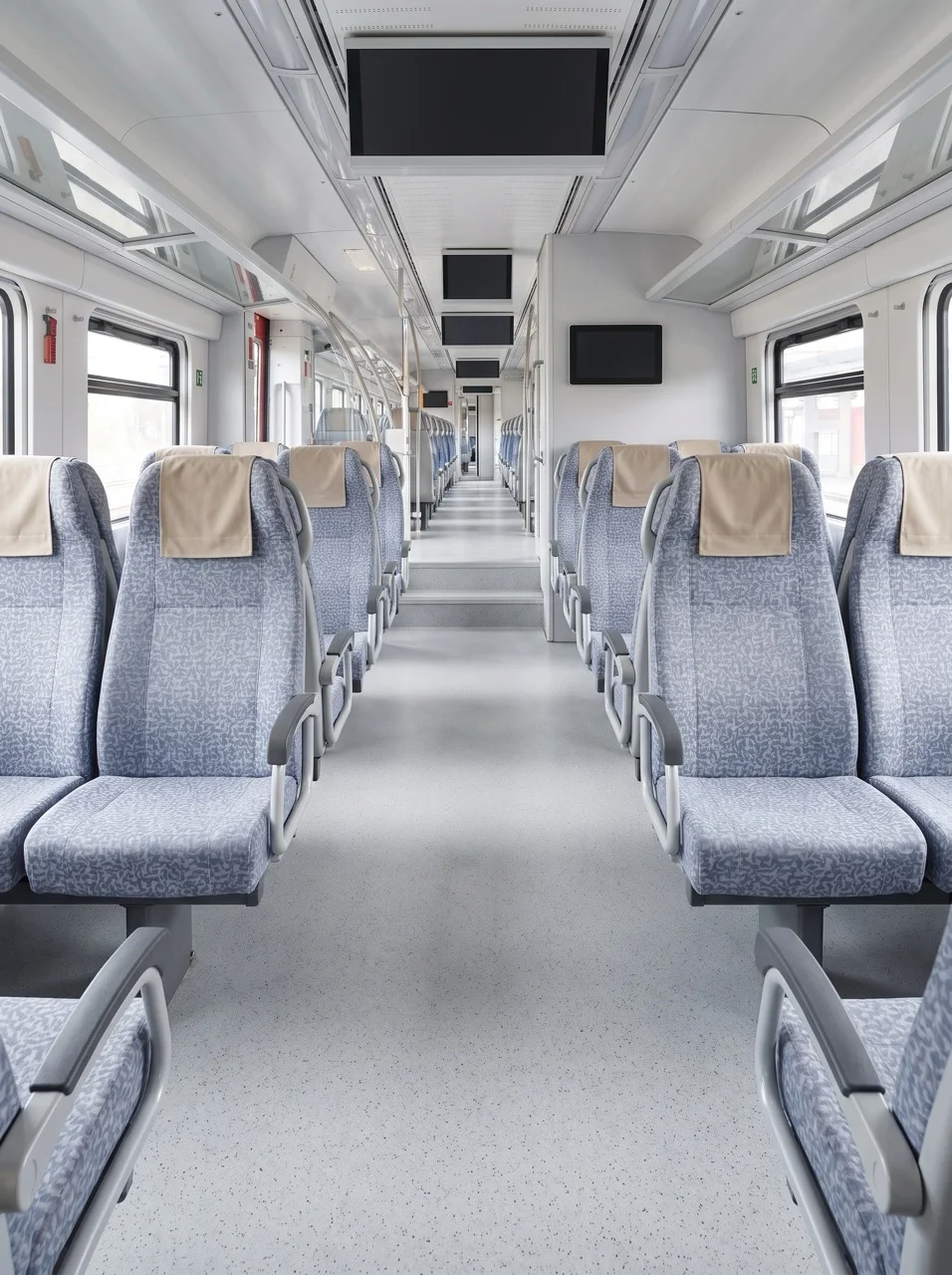
Railway floor maintenance may include, in addition to bonding the linoleum, also sealing its perimeter. In this area the requirement changes: it is not about bonding an extensive surface, but about sealing the edges and connection points where the floor meets walls, interior elements, and different substrates.
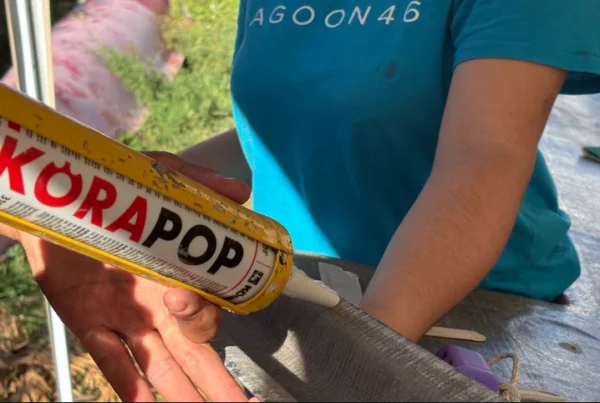
Körapop™ 240, an SMP/MSP technology sealant, is based on silane modified polymer. Its function is to complete the floor refurbishment with an elastic and continuous seal along the perimeter, addressing areas where the adhesive used for the flooring is not the most suitable solution.
SMP/MSP technology is consistent with applications requiring adhesion and the ability to follow connection points. In a railway car floor, this means managing the lateral areas and edges with a material dedicated to sealing, distinct from the adhesive chosen for the main surface.
Körapop™ 240 is also linked to the EN 45545-2 standard, relevant for materials and components used in railway vehicles. For an interior application such as car flooring, this element reinforces the consistency of the choice with respect to sector requirements.

The role of EN 45545-2 standard in railway materials
In railway vehicles, materials used in interiors must meet specific requirements for fire behavior.
The EN 45545-2 standard defines fire reaction requirements for materials and components used in railway vehicles. The objective is to contribute to safety by limiting the development of flames, smoke, and toxic gases.
The solutions for bonding and sealing ensure compliance of tested materials with EN 45545-2 requirements. This aspect is relevant because the floor is part of the car’s interior environment.
Compliance must always be read in relation to the tested materials and the conditions reported in the available technical documentation.
Adhesives and sealants for railway floor maintenance
The maintenance and bonding of a railway car floor require a technical evaluation that brings together flooring, substrate, application function, and sector requirements.
Korapur® 672/80-TH650 and Körapop™ 240 allow managing two complementary phases of floor maintenance and refurbishment: bonding the linoleum to plywood and perimeter sealing.
For maintenance, repair, or refurbishment work on railway floors, the choice of material cannot be generic. It must start from the actual application, the substrates involved, and the requirements demanded by the context of use.
To evaluate adhesives and sealants suitable for your railway application, contact Mascherpa experts.