
Brands

DOWSIL™

Since its first pioneering research in silicones, DOWSIL™ has gained the experience that has made it a leading authority in silicones worldwide.
DOWSIL™ silicones, play a key role in helping industry meet the needs of the future.

DOWSIL™ Adhesives and Sealants

Many components in the automotive, electronics, electrical, and engineering industries require sealing or gaskets to protect against dust and moisture or to prevent gas and liquid leakage.

  • Typical characteristics of DOWSIL™ sealants are:
  • Excellent resistance to prolonged compression, even at extreme temperatures
  • Good adhesion to all substrates
  • Long-term stability over a wide temperature range ( -60°C to > 200°)
  • Resistance to oil, water, coolants, detergents and many other chemicals
  • Resistance to different climatic factors (UV, ozone, oxidation)
  • Excellent electrical properties
  • Low flammability and toxicity near heat sources
  • They do not require solvents during the process.

Products

All products Dowsil

Filter products by their attributes: brand, technology, applications…

Discover

DOWSIL™ Electronic Protection Products

DOWSIL™ has always been a leading global authority on silicones. The Electronics Division is entirely dedicated to the development of products and technologies dedicated to the world of electronics, starting from semiconductor manufacturing to the assembly stage.
In electronics, silicones are preferred for the following characteristics: excellent dielectric properties, excellent weathering resistance, stability over a wide temperature range, good adhesion on a wide variety of substrates, lower stress on components, resistance to ultraviolet rays and chemicals.The products can be used for applications in modules, connectors, sensors, PCBs, and many more.

The DOWSIL™ range includes:

  • Silicone adhesives and sealants, designed for clamping components, sealing joints, and protecting delicate components
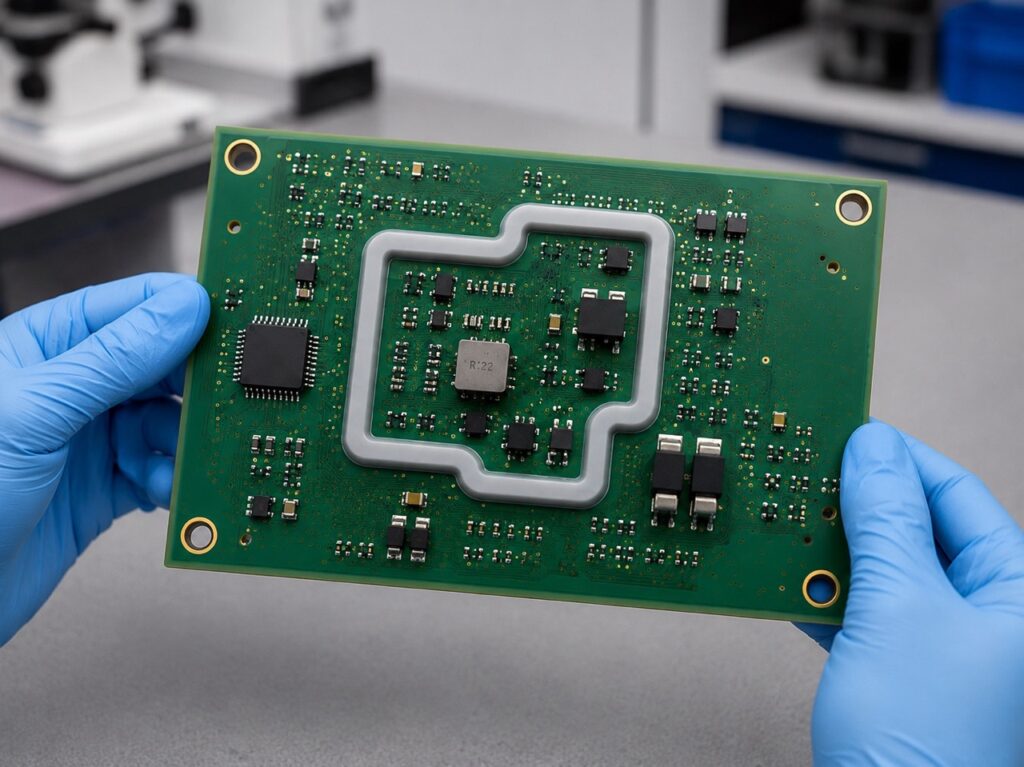
  • Conformal Silicone Coatings for protecting printed circuit boards from moisture, contaminants, mechanical abrasion, thereby preventing short circuits and increasing board life. Products conform to the circuit by protecting it for a long time
  • Silicone-based encapsulants and gels designed to electrically insulate and protect electronic components from harsh chemicals, mechanical stress, and external tampering. Gels are particularly suitable for sensitive components
  • Thermoconductors developed to meet the increasing needs to dissipate heat in components that are becoming smaller, more powerful, and faster. Dowsil thermal conductives are available both in ‘wet’ form, that is, to be cured, and in film or mat form.

Products

    • Mixing ratio mixture 1:1
    • Thermally conductive silicone
    • Platinum curing system
    • Polymerization at room temperature
    • Provides long-term stability
    • Polymerizes without exothermia
    • Thixotropic, non-sagging
    • Resistant to ozone and ultraviolet degradation
    • Provides high cooling performance
    • Mixing ratio mixture 1:1
    • Thermally conductive silicone
    • Platinum curing system
    • Polymerization at room temperature
    • Provides long-term stability
    • Polymerizes without exothermia
    • Thixotropic, non-sagging
    • Resistant to ozone and ultraviolet degradation
    • Provides high cooling performance
    • Two-component 1:1 optical silicone
    • Molding resin for optical applications
    • High light transmittance
    • Low chromatic dispersion
    • UV and heat resistant
    • High surface detail replication
    • High Shore A
    • Fast heat curing
    • Two-part silicone adhesive
    • Non-sag
    • Fast low-temperature cure
    • Accelerated cure at moderate temperature (80 °C)
    • Rapid adhesion development.
    • The formulation includes a scavenger to reduce void formation and a UV indicator to facilitate inspection operations.
    • Maintains physical and electrical properties across a wide range of operating conditions.
    • Primerless adhesion
    • High electrical conductivity (silver-based filler)
    • Electromagnetic shielding (EMC) over a wide frequency range
    • High elongation for stress relief (>20%)
    • Non-slump adhesive (non-flowable)
    • UV traceability for inspection
    • Good adhesion on various substrates
    • Solvent-free formulation
    • Low viscosity, spray applicable
    • Fast UV cure with secondary moisture cure
    • Solvent-free
    • UV indicator for inspection
    • Good adhesion to PCB materials
    • Reduced oxygen inhibition
    • Medium viscosity
    • Abrasion-resistant elastoplastic surface
    • Solvent-based coating
    • High solid content
    • UV indicator for inspection
    • Room temperature vulcanization (RTV)
    • Good adhesion on rigid and flexible PCBs
    • One-part dielectric gel
    • Transparent
    • Hot polymerization
    • Low viscosity
    • Very soft gel
    • Suitable for PCB potting and electronic component protection
    • Electrical insulation and environmental protection
    • Extended temperature range (-60°C / +200°C)
    • No mixing required
    • Non-curing
    • High thermal conductivity
    • Low thermal resistance
    • Solvent-free formulation
    • Thixotropic - low flowability
    • Applicable via screen printing, stencil or dispensing
    • Ability to achieve thin thicknesses
    • Non-curing
    • High thermal conductivity
    • Stable on vertical surfaces
    • Gap filling capacity up to 1.0 mm
    • Thermally conductive silicone material
    • Low thermal resistance and good high-temperature stability
    • Low density
    • Room temperature or heat-accelerated polymerization
    • Non-sagging, stable even on vertical surfaces
    • Soft and deformable material with stress relief function
    • Slightly tacky surface after curing
    • No exotherm during curing
    • No exotherm during curing
    • Room temperature or heat-accelerated polymerization
    • High stability during thermal cycles up to 150°C (peak 175°C)
    • Maintains vertical position
    • Controlled low silicone volatility
    • Soft and elastomeric material after polymerization
    • Gel is a two-component addition-cure silicone gel
    • Clear and flowable,
    • Designed for optically clear potting and coupling applications in displays and LED lighting systems.
    • High transparency
    • Reduced yellowing
    • High surface adhesion
    • Good stress absorption capacity
    • Provides mechanical protection, electrical insulation and long-term reliability.
    • Can cure at room temperature or with thermal acceleration.
    • One-component silicone conformal coating
    • Translucent
    • Low viscosity
    • Moisture cure (RTV)
    • Solvent-free
    • Provides environmental resistance
    • Dielectric protection
    • Long-term reliability even in harsh environmental conditions
    • UL recognized and includes a UV indicator for coating inspection.
    • Two-part silicone elastomer encapsulant
    • Low thermal vacuum outgassing
    • Physical and electrical stability
    • Wide operating temperature range.
    • Certified to NASA requirements for extreme environment applications.
    • Single-component silicone conformal coating
    • Transparent
    • Thermal polymerization
    • Designed for the protection of rigid and flexible printed circuit boards.
    • Low viscosity
    • Without added solvents
    • Cures into a soft, low-stress elastomer, reducing stress on electronic components.
    • Incorporates a UV indicator to facilitate automated inspection
    • UL, IPC and MIL certified.
    • One-part condensation cure silicone sealant
    • Space grade
    • Non-sag
    • Low controlled volatility
    • Cures at room temperature upon exposure to moisture
    • Does not require mixing
    • Designed for aerospace applications
    • Provides high elongation
    • Good physical and electrical stability
    • Complies with NASA low outgassing requirements
    • Protects components from extreme temperatures, high humidity, thermal shock, radiation, atomic oxygen, and mechanical vibration
    • Black one-component silicone adhesive
    • Thixotropic and non-sagging
    • Thermal addition cure polymerization
    • High tensile strength
    • Reduced void formation after curing, even on sensitive substrates
    • UL 94 V-0 rated
    • Moderate thermal conductivity
    • One part: no ovens or curing required
    • Pulls heat away from critical components
    • Solvent-free formulation
    • Easy application
    • Low thermal resistance
    • High thermal conductivity
    • Good stability and reliability
    • Mixing ratio mixture 1:1
    • Thermally conductive silicone
    • Platinum curing system
    • Polymerization at room temperature
    • Provides long-term stability
    • Polymerizes without exothermia
    • Thixotropic, non-sagging
    • Resistant to ozone and ultraviolet degradation
    • Provides high cooling performance
    • Good thermal conductivity
    • Low oil bleed
    • Stable at high temperatures
    • Mixing ratio: 1 to 1
    • Highly fluent
    • Self-leveling
    • Versatile thermal polymerization
    • Ensures heat flow away from components
    • With 7 mil glass microspheres
    • Check the thickness of the adhesion line
    • Without added solvents
    • Can be used as a printable PAD
    • Can replace the traditional manufactured pad
    • Use as a gap filler
    • Dispensed or printed through manual or automated processes
    • Deposit of features for precise coverage of components
    • Lower cost of ownership than manufactured pads
    • Excellent thermal performance
    • Soft, stress-relieving and shock-dampening
    • Reworkable
    • Polymer matrix helps reduce pump out
    • Fluid
    • Good thermal conductivity
    • Low thermal resistance
    • Does not polymerize
    • Heat removal from PCB system components
    • Possible to obtain bond line thickness (BLT).
    • One-component adhesive
    • Thermally conductive
    • Polymerizes with moisture
    • Fast drying to the touch
    • Good adhesion
    • Self-leveling
    • Controlled volatility (controlled migration of silanes)
    • Polymerization at room temperature
    • Long-term performance stability up to 150°C
    • Low compression stress
    • Maintains upright position (cured or uncured state)
    • Controlled volatility of silicone
    • Not smooth
    • Moderate thermal conductivity
    • Does not require ovens or curing
    • Heat flow away from circuit components can increase reliability
    • Rapid polymerization in RT, without notches
    • Not smooth
    • Higher thermal conductivity
    • Controlled volatility of silicone
    • No mixing required
    • Polymerization at room temperature
    • Faster processing at room temperature
    • Used if increased flame resistance is required
    • Solvent-free formulation
    • Sliding
    • Does not polymerize
    • Able to achieve bond line thickness
    • Very low thermal resistance
    • High thermal conductivity
    • Wicks heat away from sensitive components
  • No mixing required No reaction exotherm during curing Excellent primerless adhesion on many substrates Excellent performance across a wide temperature range Cures into soft, low-stress elastomers Controlled volatility (controlled silane migration)
    • No solvent added
    • Polymerization at room temperature
    • Slight thermal acceleration can speed up in-line processing
    • Good adhesion to many substrates
    • Allows use with many low-solids lead-free solder
    • Soft coating improves reliability against stresses
    • Cures to a robust surface
    • Resilient and abrasion resistant
    • Solvent-based resin coating
    • Polymerization at room temperature
    • Possibility of acceleration after solvent spillage
    • UV indicator for inspection
    • Allows use with many low-solids lead-free solder
    • Low viscosity improves flow and
    • fill tight spaces and gaps
    • Rapid polymerization
    • Very low viscosity
    • Controlled volatility of silicone
    • Solvent-free
    • Excellent smoothness, filling or self-leveling after distribution
    • Polymerizes into a soft, low-stress elastomer
    • Coating can improve reliability against stresses
    • Rapid polymerization
    • Sliding
    • Polymerizes into a soft, low-stress elastomer
    • Controlled volatility of silicone
    • No solvent added
    • Polymerization at room temperature
    • Faster processing at room temperature with thermal acceleration
    • Soft coating can improve reliability against stresses
    • Can be used if flame resistance required
    • Cures to an elastoplastic surface
    • Resilient and abrasion resistant
    • Solvent-based resin coating
    • Polymerization at room temperature
    • The optional thermal acceleration (after solvent wilting)
    • UV indicator enables automated inspection
    • Allows use with many low-solids lead-free solder
    • Reduced VOC content
    • Emission recovery can be simplified for VOCs in some U.S. states
    • Rapid polymerization in RT, without notches
    • Medium viscosity
    • Polymerizes into a soft, low-stress elastomer
    • Without added solvents
    • Slight thermal acceleration can speed up in-line processing
    • Soft coating can improve reliability against stresses
    • No solvent added
    • Polymerization at room temperature
    • It can speed up in-line processing
    • Good adhesion to many substrates
    • Allows use with many low-solids lead-free solder
    • Improves reliability against stresses
    • Promotes flow and filling of narrow spaces and crevices
    • Medium viscosity
    • Low VOC content
    • Abrasion resistance
    • Good dielectric properties
    • Good adhesion to many substrates
    • Polymerization at room temperature
    • Stable and flexible over a wide temperature range
    • Single-component, does not require mixing
    • Good fluidity
    • After dispensing, it is capable of flowing, filling or self-leveling
    • Faster inline machining with optional thermal acceleration
    • No solvent added
    • Allows use with many low-solids lead-free solder
    • Soft coating improves reliability against stresses
    • UV indicator enables automatic inspection
    • Cures to an elastoplastic surface
    • Resilient and abrasion resistant
    • Single-component solvent-based resin coating
    • Polymerization at room temperature
    • It can speed up in-line processing
    • UV indicator enables automatic inspection
    • Allows use with many low-solids lead-free solder
    • Green when mixed
    • Rapid polymerization at room temperature
    • Reduces the risk of loading errors
    • UV curing in 1 part
    • Very soft
    • Suitable for very low temperatures
    • Does not require mixing
    • UV rays for fast processing speed
    • Polymerization secondary to moisture
    • The gel remains flexible even at very low temperatures
    • Long processing time
    • Resistant to fuels and solvents
    • Offers processing flexibility
    • Used where resistance to fuels or solvents is required
    • When properly mixed, the gel is green
    • Conditional adhesion without primer at room temperature
    • Hardened gel for increased mechanical strength
    • UV indicator enables automatic inspection
    • Increased flame resistance
    • Rapid polymerization
    • Suitable for very low temperatures
    • Rapid thermal polymerization to speed up processing
    • Gel remains flexible in ultra-low temperature applications
    • Slow-curing two-component silicone dielectric gel
    • Good flame resistance
    • Good mechanical strength
    • Contains UV indicator for inspection
    • Adhesion without the use of primer
    • Cures extremely softly
    • Designed to insulate circuits from the damaging effects of moisture
    • Provides electrical insulation for high voltages
    • Protects circuits and interconnections from thermal stresses
    • Low viscosity
    • Odorless
    • Low viscosity
    • Good thermal conductivity
    • Mixing ratio 1 to 1
    • Polymerization at room temperature
    • Easy to mix and use
    • Good smoothness for fast processing and short cycle times
    • Promotes heat dissipation
    • Polymerization at room temperature
    • Low viscosity - ease of processing
    • Self-adhesive - no primer required
    • Reliable optical performance in difficult conditions
    • Reduces pressure on components
    • Effectively dissipates heat
    • Avoids delamination problems
    • The rapid polymerization
    • Optimized processing time
    • Allows for the implementation of complex projects
    • No additional dielectric barrier required
    • Allows for quick filling
    • It is suitable for high-throughput production processes.
    • Filling allows easy control of the process
    • Meets certification requirements
    • Two-component thermal conductive encapsulant
    • Suitable for PCB system
    • Protection in harsh environmental and thermal conditions
    • Can be used at room temperature
    • Used in the production of electrical products, PCBs and modules
    • Good adhesion to aluminum
    • Excellent dielectric properties
    • Good smoothness
    • Easy dispensing
    • Good flexibility for easy processing
    • Good adhesion without the use of primer
    • Mellow
    • Controlled volatility of silicone
    • Single-component - No mixing required
    • Polymerization at room temperature
    • Self-extinguishing UL94 V-0
    • Low ionic impurities
    • Very high thermal conductivity
    • Loaded silver
    • Good adhesion to Ni, Al, laminate and silicon
    • Microelectronic grade material
    • High electroconductive performance
    • Good adhesive performance for TIM1 applications
    • Two-component - Mixing ratio 1:1
    • Hot polymerization
    • High tensile strength
    • Good processing time after mixing
    • No solvent added
    • Fast and versatile polymerization controlled by temperature
    • Self-leveling
    • Mellow
    • Two-component - 10:1 mixing ratio
    • High tensile strength
    • Good processing time after mixing
    • Hot polymerization
    • Electromagnetic shielding
    • Easy to dose and cure at room temperature
    • Dow's unique formulation enables adhesion to a variety of substrates
    • Durable mechanical and conductive properties, reliable performance
    • Fluid
    • Hot polymerization
    • Good thermal conductivity values
    • No solvent added
    • Single-component - No need to mix separate components
    • Fast and versatile polymerization controlled by temperature
    • Fills and self-levels after dispensing
    • Heat dissipation from PCB systems to increase reliability
    • Volatility-controlled silicone
    • Polymerizes into a soft and elastic elastomer
    • No solvent added
    • Single-component - No mixing required
    • Polymerization at room temperature
    • Rapid polymerization in RT
    • Low viscosity
    • Controlled volatility of silicone
    • No solvent added
    • Rapid polymerization in RT
    • Mellow
    • High elongation
    • Controlled volatility of silicone
    • Single-component - No mixing required
  • Good tensile strength High adhesive capacity Low thermal conductivity Good weather resistance Two-component with room temperature curing Stable even at high temperatures
    • Cures at room temperature
    • Pasty consistency
    • It does not drip
    • Easy to apply
    • High elongation
    • Stable and flexible over a wide temperature range
    • Mellow
    • High tensile strength and elongation resistance
    • High thermal stability
    • Single component - Does not require mixing
    • Polymerization at room temperature
    • Single-component
    • Does not require mixing
    • Good fluidity
    • Capable of flowing, filling or self-leveling
    • Polymerization at room temperature
    • No solvent added
    • UV indicator for manual and automatic inspections
    • Mellow
    • Polymerization in rapid RTV
    • Good "green" resistance
    • Single-component - No mixing required
    • Polymerization at room temperature
    • Fast skin time
    • High self-extinguishing
    • Mellow
    • High elongation by stress reduction
    • Single-component - No mixing required
    • Polymerization at room temperature
    • High self-extinguishing
    • Hot polymerization
    • High tensile strength
    • Single component - Does not require mixing
    • Fast and versatile curing with heat input fill or self-leveling after deployment

All products Dowsil

Filter products by their attributes: brand, technology, applications…

Discover

Lighting DOWSIL™

In Lighting, DOWSIL™ is entirely dedicated to the development of products and technologies specifically dedicated to semiconductor manufacturing, LED packaging, molding of optics, to the assembly stage of lamps and luminaires. The DOWSIL™ range includes:

  • Printable optically transparent silicones for producing optics
    Optical encapsulants that have an optimized refractive index to maximize luminous flux
  • Gels and thermal encapsulants that ensure reliable performance of LED modules even under the harshest conditions, with the best sealing. They protect delicate system components, including connectors, circuits and power supplies, by dissipating damaging heat and absorbing the noise component
  • Thermally conductive thermal interface materials developed to meet the increasing needs for heat dissipation in components that are becoming smaller, more powerful, and faster
  • Adhesives and sealants to form excellent joints and seals on a wide range of substrates commonly used in LED applications
  • Conformal coatings to protect the delicate electronics connected to LEDs from moisture, thermal stress and critical weather conditions.

Photovoltaic DOWSIL™

DOWSIL™ silicone products improve the efficiency, durability, and performance of solar panels and photovoltaic devices, making them more technically and economically viable.
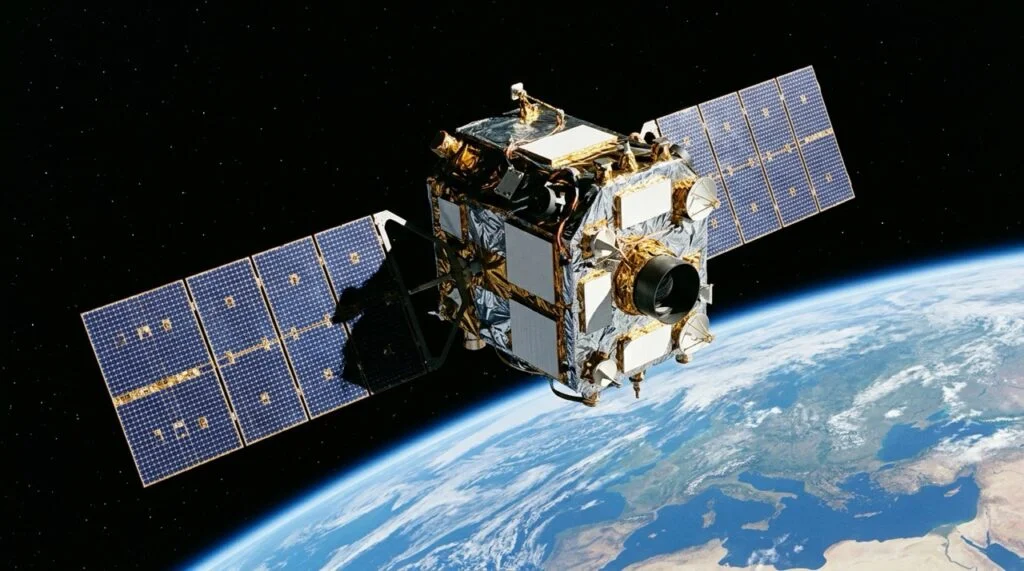
While solar cells are made of silicon, silicones are instead used during module assembly and installation as encapsulating and insulating coatings, adhesives, and sealants.

The most popular applications in the photovoltaic industry are:

  • Coating and encapsulation of cells
  • Encapsulation and bonding of junction-boxes
  • Bonding and sealing of frames, rails and supports
  • Because they can withstand the relentless rays of the sun year after year, silicones are ideal and unsurpassed materials for applications on both solar and photovoltaic (PV) panels.

Learn more about DOWSIL™ adhesives or ask the expert.

Latest articles Dowsil

Sign up for newsletter to receive upcoming articles
Adesivi hot melt per packaging ed etichettatura
Mascherpa at Focus on PCB 2026: The Best of the Show

Mascherpa at Focus on PCB 2026: The Best of the Show
Adesivi hot melt per packaging ed etichettatura
RTV Silicone: Technical Guide to Applications and Advantages

RTV Silicone: Technical Guide to Applications and Advantages

Adesivi hot melt per packaging ed etichettatura
Mascherpa at Focus on PCB 2026: Silicones and Low Pressure Molding for PCBs

Mascherpa at Focus on PCB 2026: Silicones and Low Pressure Molding for PCBs

DOWSIL sealing silicones in Giottiline applications

DOWSIL sealing silicones in Giottiline applications

Silicone adhesive sealants for electronics and aerospace

Silicone adhesive sealants for electronics and aerospace

Fire protection of electric vehicle batteries

Fire protection of electric vehicle batteries

Two-component Silicone Adhesives for Rapid Bonding

Two-component Silicone Adhesives for Rapid Bonding

Video

Subscribe to our YouTube channel

Ask the expert

Do you need support?

Ask the expert