Product Type for Electronics

Electronic protection gel

Dielectric gels are suitable for PCBs and power modules. They serve to protect and insulate.

What are gels for electronics

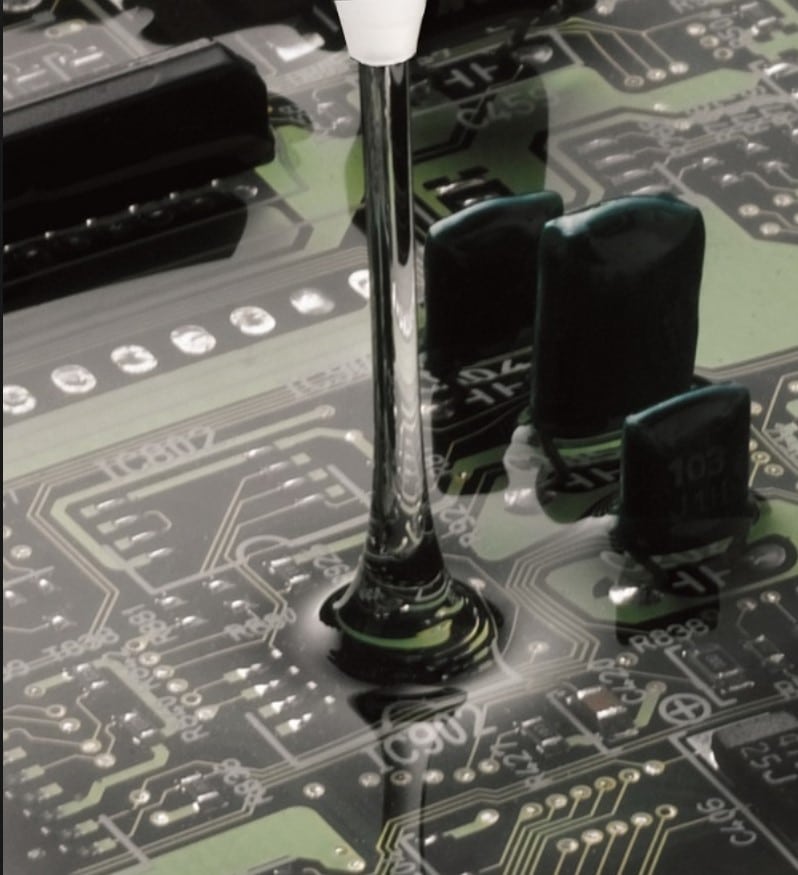
Industry trends require smaller and smaller components with higher and higher powers. This trend requires the presence of higher-performance materials that protect assemblies and their properties. Dielectric gels are suitable for PCBs and power modules and are designed to protect interconnections from environmental conditions and to provide dielectric isolation.

Gels are very soft materials also suitable for thin-layer applications that find its optimization when one needs to minimize stress from thermal cycling, shock, and vibration on particularly delicate components.

Dielectric gel characteristics

  • Most gels feature a sticky surface that naturally adheres to common surfaces without the need for primers; our gels can cross-link at room temperature, can be heat-accelerated, and even be UV-cross-linked.

The advantages of protective gels for electronics

Electronics protective gels guarantee:

  • Protection for interconnections subject to thermal and mechanical stresses
  • Stability under harsh environmental conditions in some cases even to hydrocarbons and aggressive chemicals
  • No housing damage over a wide temperature range.

Why choose Mascherpa

  • Mascherpa’s range includes one- and two-component gels that can cross-link at room temperature, heat-accelerated or even UV-cross-linked; and also gels with thermo-conductive characteristics or high optical transparency

Products

    • One-part dielectric gel
    • Transparent
    • Hot polymerization
    • Low viscosity
    • Very soft gel
    • Suitable for PCB potting and electronic component protection
    • Electrical insulation and environmental protection
    • Extended temperature range (-60°C / +200°C)
    • No mixing required
    • Green when mixed
    • Rapid polymerization at room temperature
    • Reduces the risk of loading errors
    • UV curing in 1 part
    • Very soft
    • Suitable for very low temperatures
    • Does not require mixing
    • UV rays for fast processing speed
    • Polymerization secondary to moisture
    • The gel remains flexible even at very low temperatures
    • Long processing time
    • Resistant to fuels and solvents
    • Offers processing flexibility
    • Used where resistance to fuels or solvents is required
    • When properly mixed, the gel is green
    • Conditional adhesion without primer at room temperature
    • Hardened gel for increased mechanical strength
    • UV indicator enables automatic inspection
    • Increased flame resistance
    • Rapid polymerization
    • Suitable for very low temperatures
    • Rapid thermal polymerization to speed up processing
    • Gel remains flexible in ultra-low temperature applications
    • Slow-curing two-component silicone dielectric gel
    • Good flame resistance
    • Good mechanical strength
    • Contains UV indicator for inspection
    • Adhesion without the use of primer
    • Cures extremely softly
    • Designed to insulate circuits from the damaging effects of moisture
    • Provides electrical insulation for high voltages
    • Protects circuits and interconnections from thermal stresses
    • Low viscosity
    • Odorless
    • Seals and protects PCBs and electronic devices
    • Used for delicate electrical devices
    • Offers excellent flexibility
    • Cures even at room temperature
    • Isolate circuits from harmful effects
    • Special class of encapsulants
    • Polymerizes into an extremely soft material
    • Protects circuits and interconnections
    • Operational over a wide temperature range
    • General use
    • Low viscosity
    • Addition curing system
    • No polymerization by-products
    • Self-healing gel
    • Permanent pressure-sensitive adhesion
    • Excellent dielectric properties
    • Long-term sealing against atmospheric contaminants

All products for the Gel

Filter products by their attributes: brand, technology, applications…

Discover

Reference categories for Gel

Continue browsing the Mascherpa site

Latest articles on the Gel

Sign up for newsletter to receive upcoming articles

Dow silicone materials for EV charging stations

Dow silicone materials for EV charging stations

The new two-component silicone gel DOWSIL™ EG-4000

The new two-component silicone gel DOWSIL™ EG-4000
WHY CHOOSE SILICONE-BASED ENCAPSULANTS AND GELS?

WHY CHOOSE SILICONE-BASED ENCAPSULANTS AND GELS?

PDF

Read PDFs on the Gel

  • There are no PDFs yet for:
    Gel
    , ask the expert if you need an SDS or Data Sheet

Industries

Select your product starting with the relevant industry.

Continued

Ask the expert

Do you need support?

Ask the expert