Key design points of Medusa
- Medusa takes first place at the 1001VELAcup 2026 on its debut, just days after its launch on September 22.
- An R3 class skiff is designed for speed, with shapes inspired by the 49er and structures engineered to reduce weight.
- Medusa features a 3 mm recycled PET core and structural geometries optimized to balance lightness, rigidity, and strength.
- Flax fiber, glass fiber, and biomass-derived resin characterize Medusa’s construction philosophy.
- Mascherpa supported the Revel Sailing Team with composite materials, application technologies, and construction support expertise.
The Revel Sailing Team took first place at the 2026 1001VELAcup with Medusa, the new boat designed and built by students from the University of Genoa. This result came during its regatta debut, just days after its presentation on September 22, rewarding months of work dedicated to the pursuit of performance, lightness, and innovation.
Medusa also represents a further chapter in the collaboration with Mascherpa, which accompanied the team throughout the development process by providing composite materials, technical solutions, and application know-how, helping to bridge the skills acquired in the university environment with industrial sector experience.
Index
- Medusa takes first place at the 1001VELAcup 2026
- Medusa, a skiff designed for speed
- A hull inspired by the 49er
- Lightweight structures and 3 mm core
- A deck layout developed for performance
- Composite materials used in the construction of Medusa
- Flax fiber and glass fiber for the hull
- Recycled PET core and sandwich structures
- Biomass-derived resin and infusion process
- Mascherpa’s technical contribution to the Medusa project
- Medusa, a new milestone for the collaboration between Mascherpa and Revel Sailing Team
Medusa takes first place at the 1001VELAcup 2026
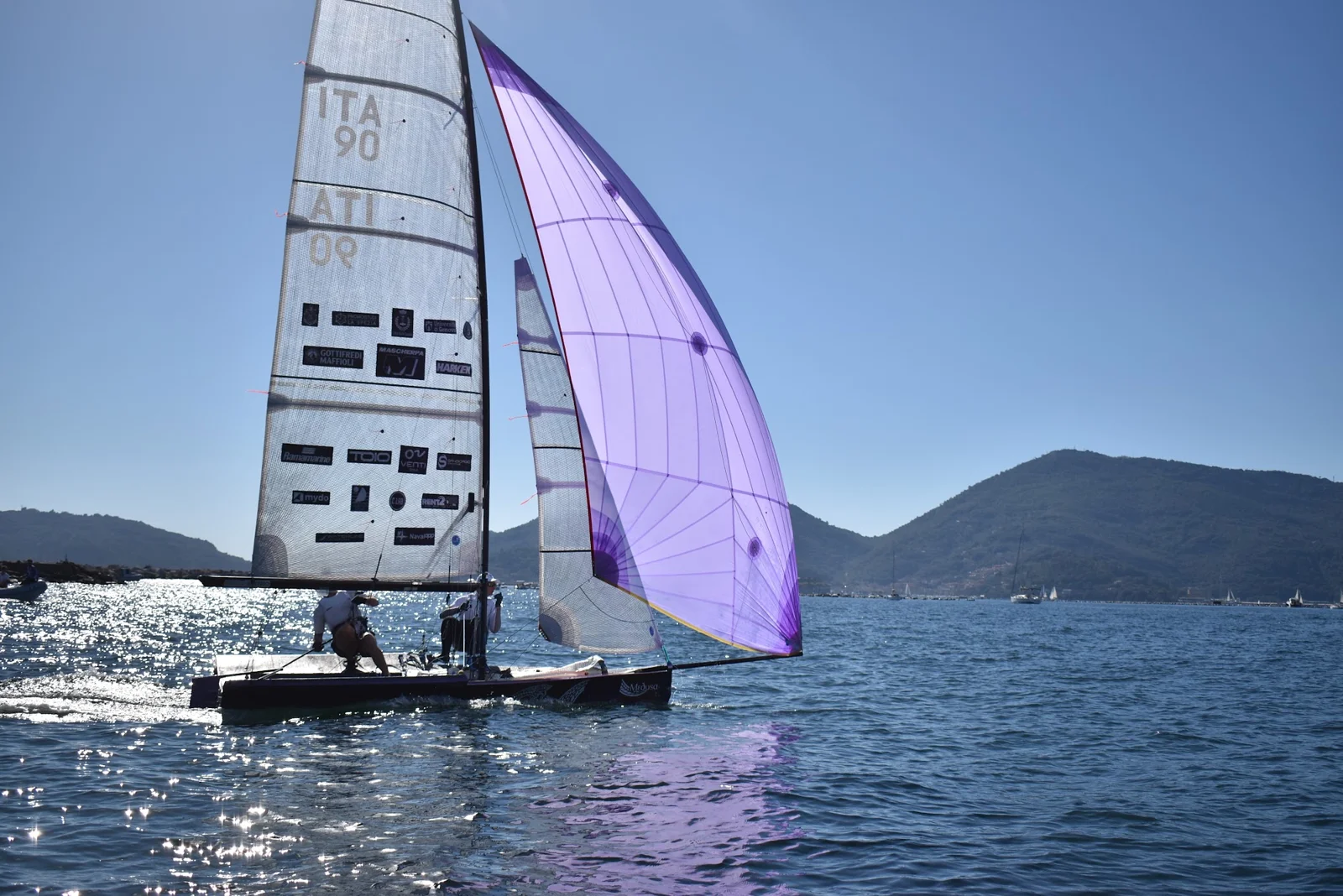
On its regatta debut, Medusa took first place at the 1001VELAcup 2026, held in the waters of La Spezia from September 23 to 27.
Presented only on September 22, the Revel Sailing Team‘s new boat reached the top step of the podium with Camillo De Nardis and Bruno Mantero on board, crowning months of design and construction with a particularly significant victory.
The result is even more valuable considering the project’s history. Medusa was born in January 2026, when the team decided to start building a new boat while initially keeping its development confidential. For several months, the project was known only to team members and us partners as Project X, before the official presentation and launch in September.
From defining the hull shapes to the work in the boatyard, the students faced a journey that required design skills, knowledge of composite materials, and the ability to translate technical choices into components that are truly functional on the water.
This journey includes the contribution of Mascherpa, technical partner of the Revel Sailing Team, which continued to support the students in building their boats by providing materials and application expertise to meet the needs of the new projects.
Medusa, a skiff designed for speed
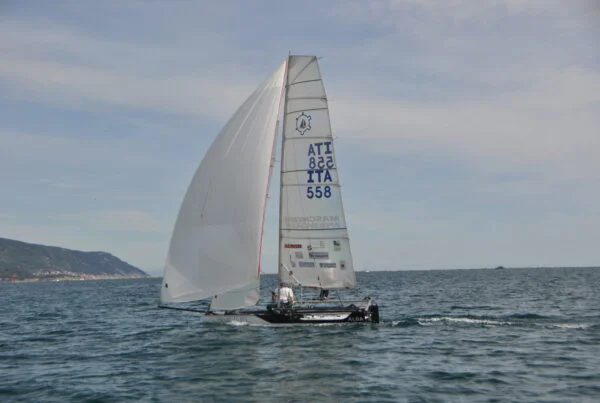
Medusa is an R3 class skiff developed around a precise goal: to achieve the maximum possible speed through design focused on hull shapes, weight distribution, and the behavior of the structures.
The challenge for the Revel Sailing Team was to develop a lightweight, high-performance boat, working on the relationship between weight, stiffness, and strength without sacrificing the construction philosophy that characterizes the project.
A hull inspired by the 49er
The lines of Medusa‘s hull were developed taking inspiration from the 49er, a high-performance sailing class.
This reference guided the study of the geometries, with the aim of obtaining a hydrodynamically efficient hull that is consistent with the characteristics required for the new skiff.
The pursuit of speed also involved the sail plan. Medusa is equipped with a mast derived from the 49er, chosen to develop a configuration particularly oriented toward upwind performance.
Lightweight structures and 3 mm core
One of the most interesting aspects of the project concerns the pursuit of lightness through the optimization of the internal structures.
For Medusa, the Revel Sailing Team chose to use a core of only 3 mm, significantly reducing the thickness compared to the 10 mm used in the previous boat, Alba.
A modification that required a revision of the structural geometries, necessary to compensate for the reduction in sandwich height and maintain the desired ratio between weight, stiffness, and strength.
The students therefore developed structures with C and I-beam sections, geometries that allow for increased structural inertia for the same weight, distributing the material in the areas where it is most effective.
The result is a configuration that expresses one of the main characteristics of the Medusa project: not just reducing the material used, but studying its arrangement based on the required performance.

A deck layout developed for performance
The focus on performance also involved the deck configuration, designed to improve space management and the boat‘s functionality during navigation.
One of the most significant choices was the integration of the wings directly into the hull, which allowed for an expanded floor area, resulting in a more organized and functional layout.
The solution also required the team to tackle the production of large-scale composite components, representing a further step forward in the manufacturing skills acquired during construction.

Composite materials used in the construction of Medusa
The pursuit of performance was accompanied by a commitment to maintaining a careful approach to material selection.
Medusa combines flax fiber, glass fiber, a recycled PET core, and a biomass-derived resin, integrating different materials within a composite structure designed to meet the needs of the new boat.
The choice of materials and processing technologies is one of the main areas of collaboration with Mascherpa, which supports the Revel Sailing Team through its expertise in the marine composites sector.
Flax fiber and glass fiber for the hull
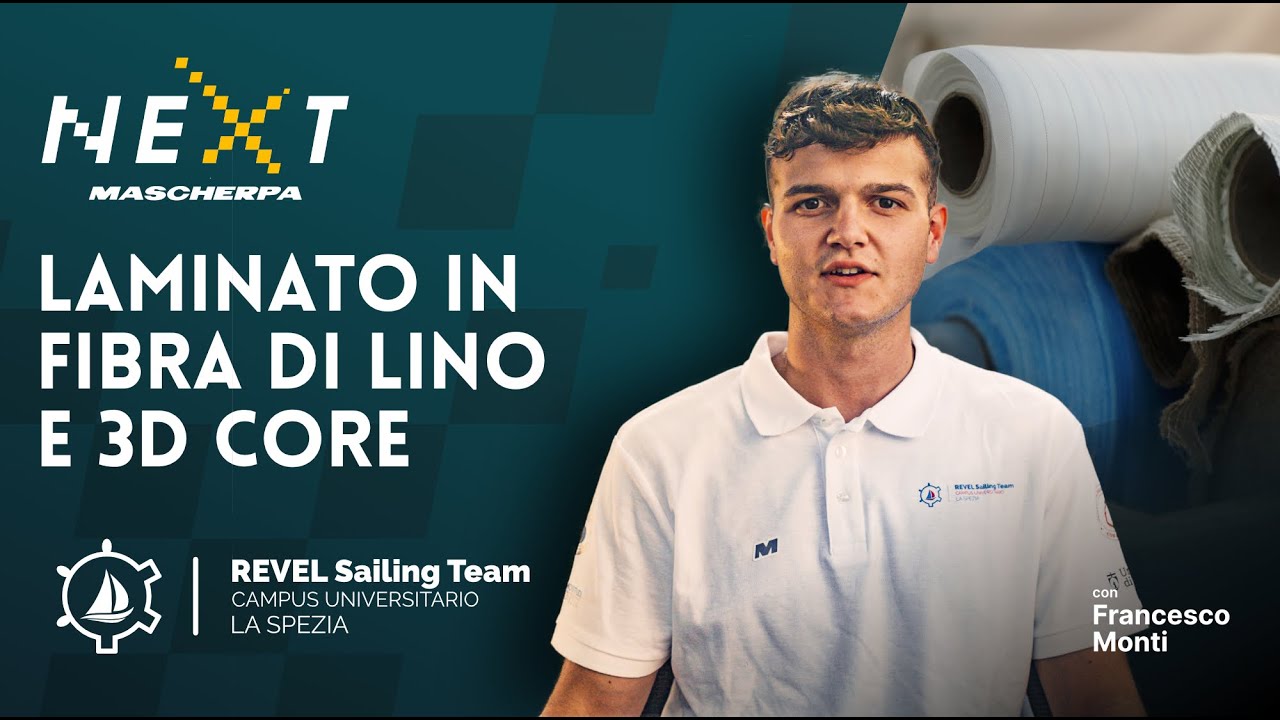
For the construction of Medusa, the Revel Sailing Team used Saertex® flax fiber and glass fiber, continuing the use of composite reinforcements already tested in the design of the Alba and Kraken boats.
The use of these materials reflects the desire to reconcile the skiff‘s structural requirements with a choice also oriented toward the use of natural fibers.
In the production of composite components, the arrangement of the reinforcements and their pairing with the matrix are fundamental aspects for achieving the mechanical properties required by the project.

Recycled PET core and sandwich structures
Another central element of Medusa‘s construction is the 3D-Core™ 3 mm recycled PET core, the core material used in the creation of the boat’s sandwich structure.
The use of such a thin core is closely linked to the design choices regarding internal geometries, developed to concentrate the material at the most structurally effective points.
In the Medusa project, therefore, the selection of the core and the configuration of the structure are not two separate aspects, but elements of a single pursuit aimed at weight reduction and performance optimization.

Biomass-derived resin and infusion process
The construction of Medusa‘s hull involved the use of an Huntsman Araldite® 5052 epoxy resin system, certified as partly biomass-derived and compliant with the competition’s requirements for bio-based materials.
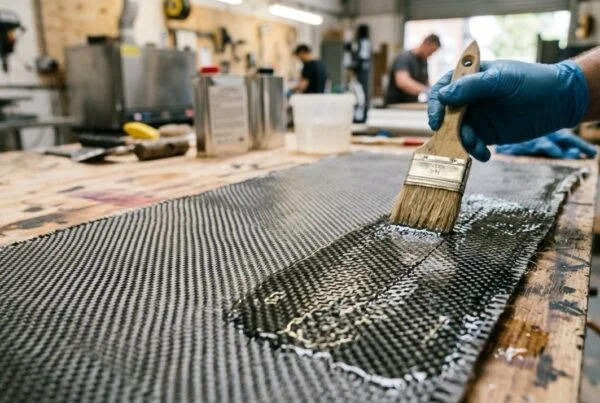
The vacuum infusion process was used for the production of the composite components, through which the resin is introduced into the layup of reinforcements and core material.
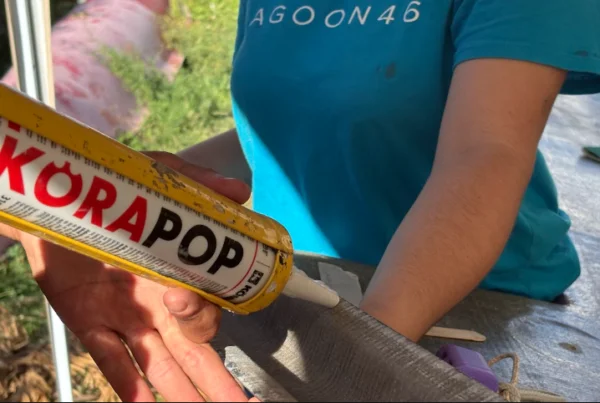
This technology requires careful material preparation and the use of DIATEX consumables, a range that includes vacuum bags, breather meshes, and other specific products for managing the vacuum and resin flow.
These solutions are part of the technologies provided by Mascherpa as part of the collaboration with the Revel Sailing Team.

Mascherpa’s technical contribution to the Medusa project
Mascherpa‘s support for the creation of Medusa is part of a collaboration that over the years has accompanied the Revel Sailing Team in the development of increasingly complex nautical projects.
For the new boat, Mascherpa provided materials and solutions for composite construction, supporting the team in the needs related to the selection of reinforcements, resins, core, and materials required for the manufacturing processes.
The project involved several technologies, including:
SAERTEX reinforcements,
3D-CORE core materials,
Huntsman Araldite® resin systems,
DIATEX consumables.
Alongside the availability of materials, an important aspect was the technical exchange between the students and Mascherpa specialists. This support allows for the evaluation of solutions in relation to application needs, taking into account the characteristics of the component, the production processes, and the design objectives.
The collaboration is therefore not limited to supply, but helps create a link between academic knowledge and industrial experience, leaving the Revel Sailing Team with full responsibility for design choices and the construction of the boat.
Medusa, a new milestone for the collaboration between Mascherpa and Revel Sailing Team
The victory at the 1001VELAcup 2026 represents an important milestone for the Revel Sailing Team and for the students who dedicated months to the design and construction of Medusa.
From the research into hull shapes and structural optimization to the choice of composite materials and the processing of components, the project demonstrates how different skills can contribute to the creation of an innovative boat, capable of achieving a major result right from its debut.
For Mascherpa, Medusa represents a new chapter in a collaboration that continues to enhance the dialogue between the university world and industry, making materials, application experience, and technical skills available to young designers.
A journey that continues through new design challenges, with the common goal of transforming ideas and skills into concrete solutions.
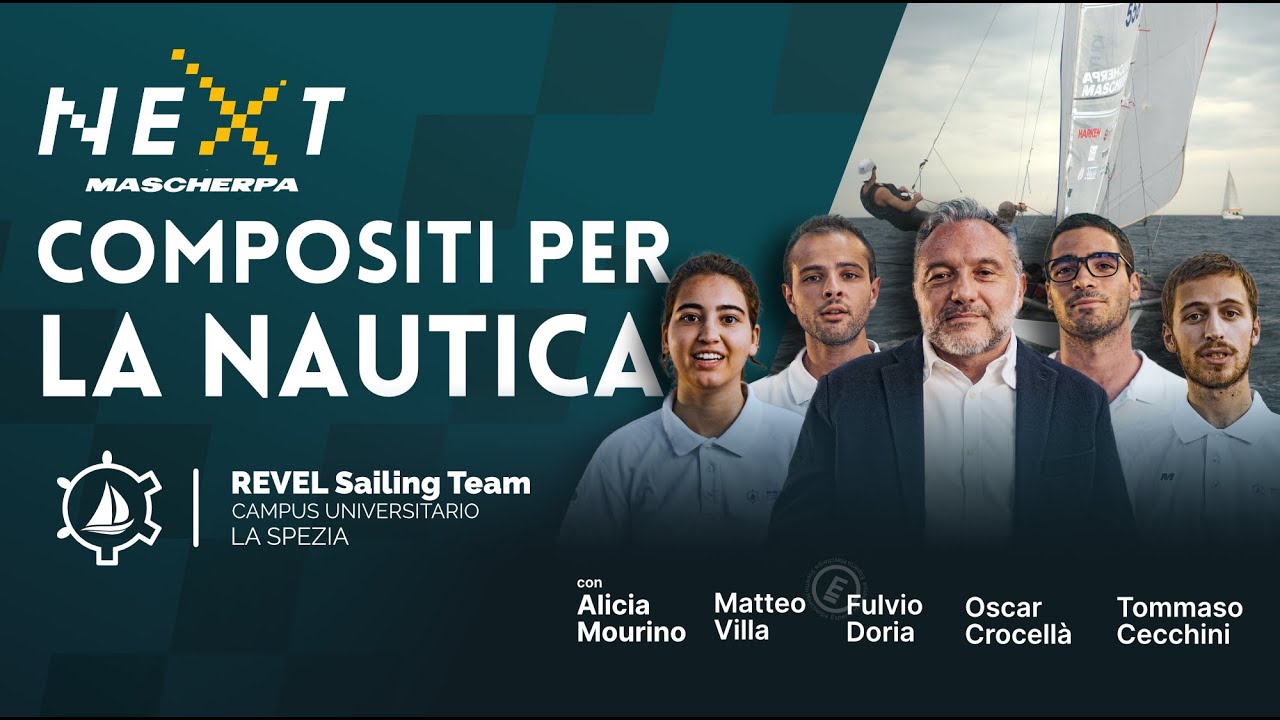
For more information on the collaboration between Mascherpa and Revel Sailing Team, contact us or watch our videos dedicated to the design of the other skiffs.