

Mascherpa and Revel Sailing Team: Innovation for the Boating of the Future
A partnership that pushes innovation in boating by combining advanced and sustainable materials with engineering expertise.
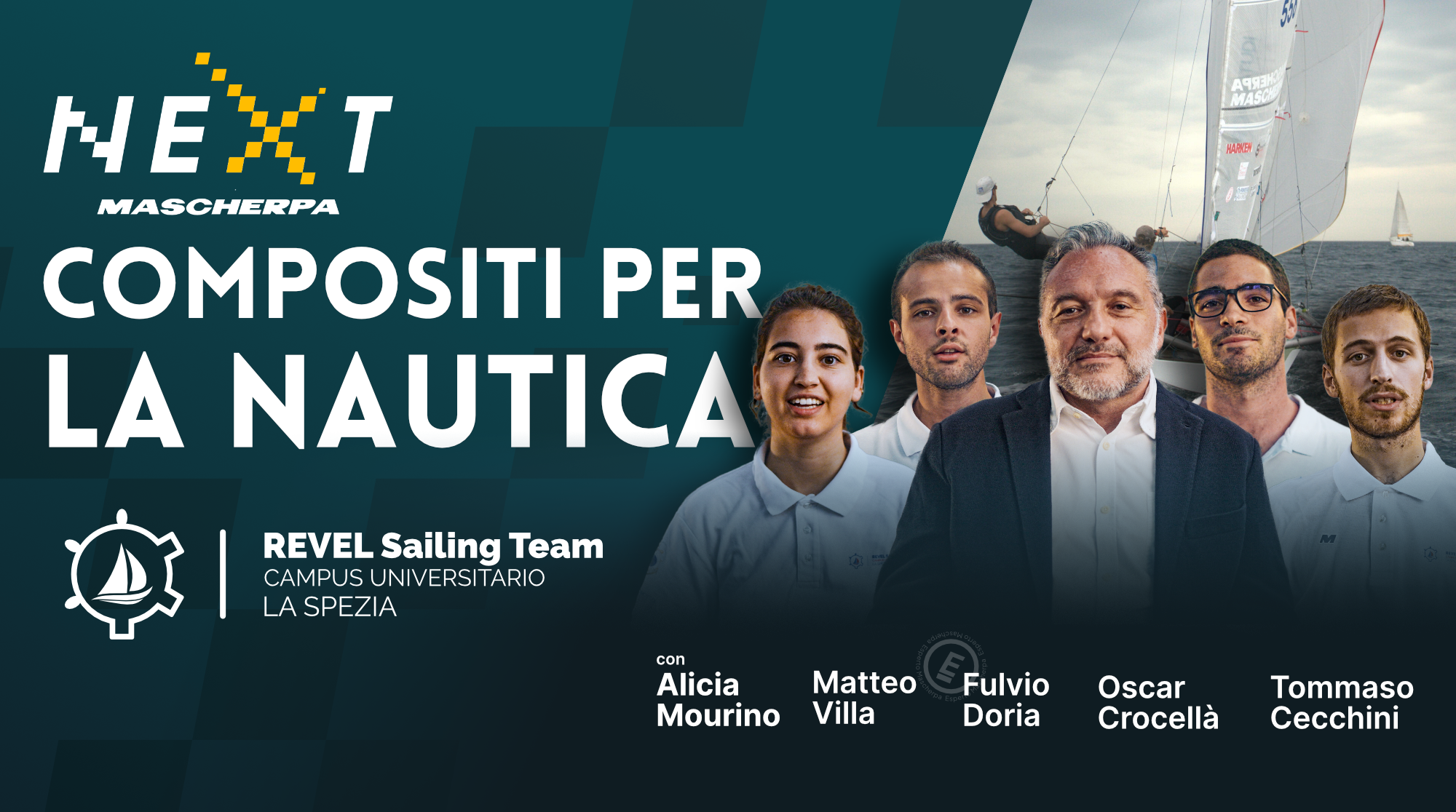
Mascherpa and Revel Sailing Team: Innovation for the Boating of the Future
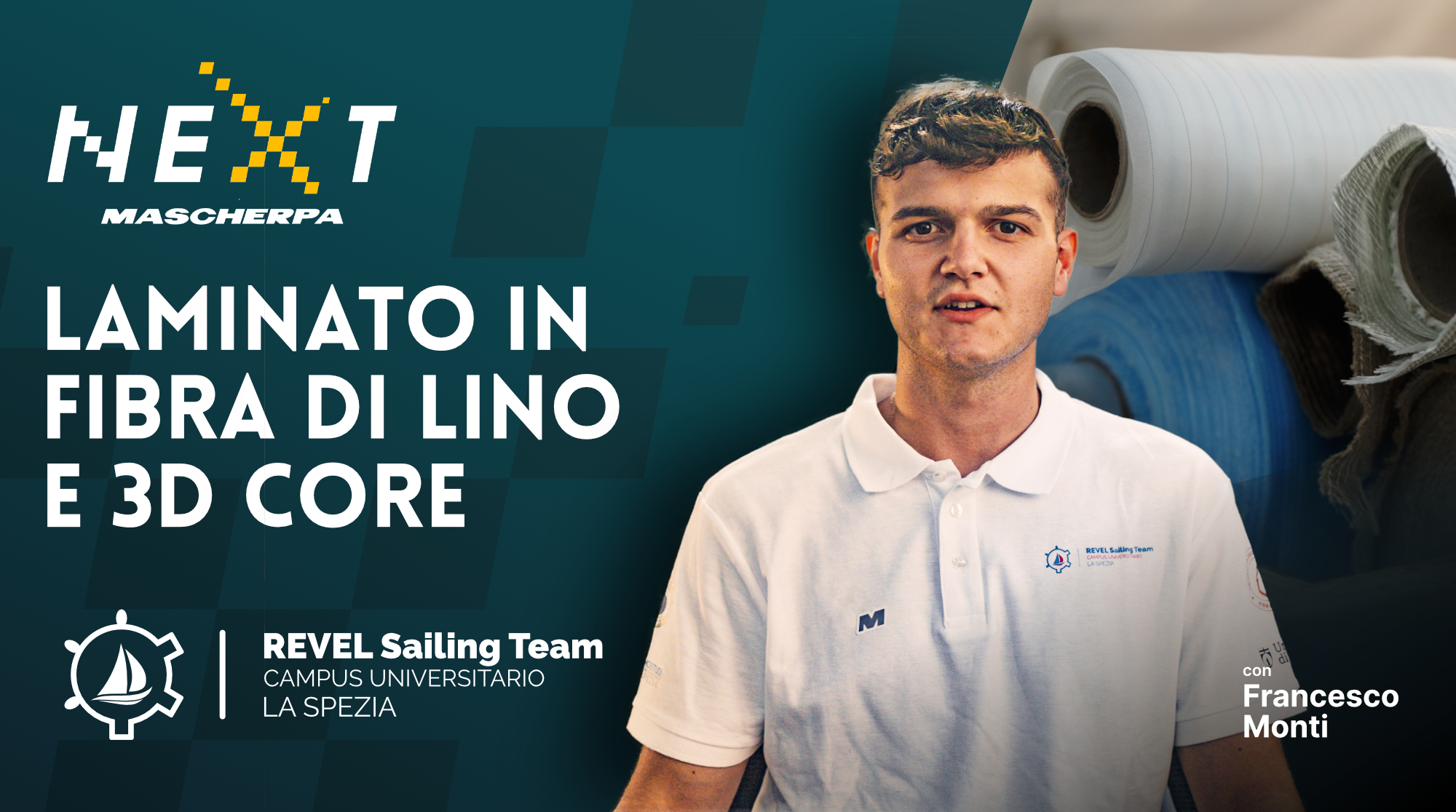
Mascherpa and Revel Sailing Team: Fiberglass laminate and 3D core

NEXT: Building Connections, Inspiring Generations
The Future Starts Here
The Revel Sailing Team, composed of students from the Polo Nautico of the University of Genoa – La Spezia campus, develops racing boats born from the intersection of nautical design, materials research, and technological innovation.
The collaboration with Mascherpa began with Alba, a racing skiff of approximately 4 meters built for the 1001VELAcup, and continues today with Kraken, the new single-seater boat designed for the SuMoth Challenge 2026.
In both projects, Mascherpa supported the team as a technical partner, providing composite materials, structural adhesives, consumables, and application know-how to support the various construction phases.
The result is a collaboration that grows over time, accompanying students in the development of increasingly complex, sustainable, and high-performance vessels.
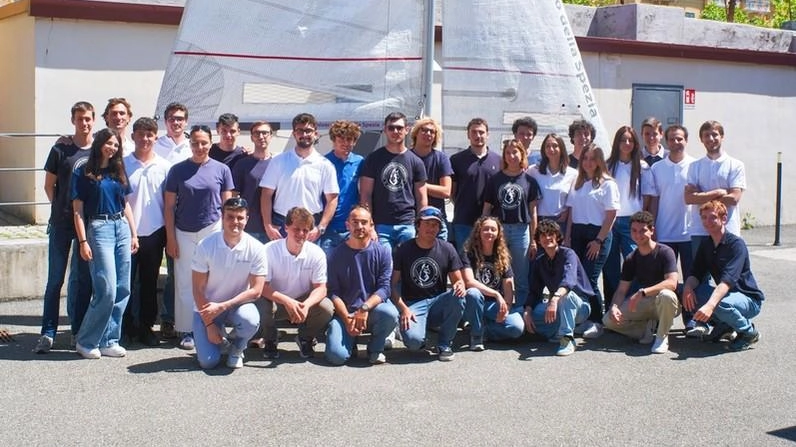
Alba, the first chapter of the partnership
From the first skiff to the new single-seater: the milestones of the collaboration between Mascherpa and Revel Sailing Team.

Alba: the construction phases
The materials and processes that shaped the skiff.
01
Saertex Structural Reinforcements
Several Saertex reinforcements were combined for the construction of the Alba skiff:
X-F-420 g/m² flax fiber was chosen for its drapeability and wettability.
X-E-444 g/m² glass fiber offered a balance between stiffness and lightness.
X-C-406 g/m² carbon fiber was used to further improve structural performance and optimize the weight-to-strength ratio.
02
3DCore™ Recycled PET Core
3D-Core™ GR HX 75 in recycled and recyclable PET was used as the continuous core of the hull’s sandwich structure.
The ability to adapt to curvatures and the favorable behavior during resin flow contributed to the cohesion between the inner and outer skins. The hexagonal pattern also helped reduce the risk of delamination.
03
Huntsman Araldite® composite resins and structural adhesives
Huntsman LY 5052 MBC epoxy resin, characterized by the presence of biomass-derived components, was used for the infusion process. Its application completed the sustainable path that allowed Alba to be awarded the REDcert² certification.
Araldite® 2015-1 and Araldite® 2051 structural adhesives were used in the assembly operations of the skiff.
04
Diatex consumables and environmentally friendly tools
The infusion process was supported by Diatex consumables, including vacuum films, peel plies, and specific adhesives.
Attention to environmental respect was also extended to the operational phases through injectors derived from wood recycling and materials obtained from grape waste—elements that do not remain in the hull but contribute to the construction process.
Kraken, a new construction challenge
In 2026, the collaboration continues with Kraken, a single-seater boat designed for the SuMoth Challenge and to lift above the water through a foil system.
Officially presented on May 25, Kraken introduces a different construction philosophy: a single-skin hull in flax and glass, localized 3D Core reinforcements, and a central role for structural bonding.
The project was developed for the SuMoth Challenge, held from June 8 to 14, 2026.
Project milestones: official presentation on May 25, 2026 → SuMoth Challenge, June 8-14, 2026
01
Flax and glass fibers for the single-skin structure
Unlike Alba, Kraken was built as a single-skin boat, using a layup composed of flax and glass fibers, without a continuous core in the hull.
The boat’s very vertical geometry made the positioning of the fabrics particularly important, as they had to remain adherent to the surface without moving or folding during assembly.
02
3D-Core™ for localized reinforcements
In Kraken, 3D-Core™ changes function: it no longer constitutes the continuous core of the hull but is inserted only in points requiring greater stiffness. A laser was used to align the material in the designated areas. The mast step, for example, was made as a sandwich bulkhead composed of 3D-Core™ PET and two layers of flax.
03
Huntsman Araldite® structural adhesives
Araldite® 2022, a 5-minute glue, was used for bonding the hull and deck, for the initial fixing of the transom, and for tacking elements like the mast step.
Araldite® 2015 was instead chosen for longer processes, to complete the fixing of the transom, and to bond internal structures before subsequent tabbing.
04
Infutac™ and Fogtac™ for pre-lamination
Diatex Infutac™ and Fogtac™ spray fixatives allowed materials to be kept in the correct position before lamination.
Infutac™ was mainly used on the fibers.
Fogtac™ was applied more specifically on the core strips.
The two products are nonetheless fairly interchangeable and were selected based on the substrate and the specific task.
05
Diatex peel ply, mesh, and vacuum bag
During infusion, the blue mesh facilitated resin flow and complete impregnation of the fibers. The peel ply protected the laminate, improved compaction, and left a textured surface ready for subsequent processing. The Diatex vacuum bag allowed components to be vacuum-sealed during the lamination and compaction phases.
06
Materials and tools for processing
In addition to composite materials, adhesives, and process consumables, Mascherpa also provided operational tools used during construction, including the scissors used in the processes. The support thus accompanied the team through the various steps where materials were positioned, cut, laminated, bonded, and compacted.
See how we tell the story of our collaboration
Building Connections, Inspiring Generations

