Skip to main content
Premi Invio per effettuare la ricerca o ESC per chiuderla
Search
Close Search
search
Menu
Who we are
Fondazione Alberto Mascherpa
Associations
DGE Partners
Quality
Product Guide
Brands
Special lubricants
Condat
Electrolube
Emax
Krytox
Molykote
Petro Canada
Tecnite
Ambersil
Industrial adhesives
Araldite
H.B. Fuller | Beardow Adams
Dupont
Betaforce
Betamate
Betaclean
Betafill
Betalink
Betaprime
Betaseal
Betawipe
Dowsil
Huntsman
Merbenit
Silastic
Superbond
Tecnite
Tecbond
Electronic Protection
Dowsil
Araldite
Electrolube
Sylgard
Arathane
Composites
3D-Core
Nidaplast
Araldite
Diatex
Saertex
Ecotechnilin
Ren®
Mechanics
Adcole
Airpot
Airpel
Ambersil
Camloc
Cytec
Devcon
Fitlock
Hahn
Koba
Kyntronics
Naxos Diskus
Soon Black
Brands
Industries
Aerospace and defense
Food and Beverage
Automotive
Interior and bodywork
Engine chassis and brakes
Chemistry
Composite
Home appliances
Electronics
E-mobility
Advanced Driver Assistance Systems
Battery system
Electric Drive systems
Power conversion system
Energy
Wind energy
Solar energy
General industry
Heavy industry and steel mills
Lighting
Marine
Transportation
Commercial transportation
Trains and railways
Industrial Lubricants
Lubricants
Industrial Lubricants
Product catalog
Brands
Molykote
Krytox
Petro Canada
Electrolube
Condat
Product type
Greases
Pastes
Antifriction coating
Compound
Oils
Applications
High temperatures
Anti-noise
Electrical contacts
Bearings
Gaskets and O-rings
Plastic gears
Biodegradable lubricants
Food machinery
Valves and fittings
Screws and threaded connections
Applications
Technology
Silicone
Fluorosilicone
Perfluoropolyether (PFPE)
Polyalphaolefin (PAO)
Polyalkylene glycol (PAG)
Hydrotreated mineral
Ester
Thickeners
Calcium sulfonate
Aluminum complex
Lithium
Industrial Adhesives
Adhesives
Industrial Adhesives
Product catalog
Brands
Dowsil
Araldite
Betamate
Merbenit
Born2Bond
Product Type
Elastomeric adhesives
Silicone sealant adhesives
Polyurethane sealant adhesives
MS Sealing Adhesives
Structural adhesives
Epoxy adhesives
Methacrylic adhesives
Polyurethane adhesives
Acrylic adhesive
Tipi di prodotto
Hotmelt
Hot-Melt Packaging BAMFutura™
Hot-Melt pressure sensitive Pressen™
Hot-Melt product assembly Prodas™
Anaerobic adhesives
Instant cyanoacrylate adhesives
Surfaces
Plastic
Composites
Metals
Electronics
Electronics
Electronics
Catalogo prodotti
Brands
Dowsil
Araldite
Electrolube
Sylgard
Arathane
Product type
Electronics stickers
Resins and encapsulants
Gel
Conformal coating
Thermally conductive materials
Thermally conductive pastes
Heat-conductive adhesives
Gap filler
Composites
Composites
Composites
Brands
3D-Core
Araldite
Diatex
Nidaplast
Saertex
Ren®
Product types
Core materials
Modeling resins
Molding consumables
Resin systems for composites
Reinforcement Fabrics and Pre-Pregs
Mechanics
Mechanics
Mechanics
Brands
Adcole
Airpel
Airpot
Cytec
Fitlock
Link 2
Hahn
Koba
Kyntronics
Naxos Diskus
Mechanical components
Actuators and Cylinders
Shock Absorbers and Dampers
Gas Springs
Locking Systems
Panel fastening systems
Machine tool equipment and accessories
Measuring Machines
Abrasive tools
Abrasive Grinding Wheels
Blog
🍃 Sustainability
linkedin
Contact
search
🧭 Where you are:
mascherpa.it
»
Steel
Steel
Home
Product Substrati
Steel
Mostra
Nascondi
Filtri
Showing 1–20 of 54 results
Default sorting
Sort by popularity
Sort by latest
Sort by price: low to high
Sort by price: high to low
Filtri
Close Filters
Read more
Quick View
BETAFILL™ 10210
They are excellent sealants for automotive repair.
They allow gluing, grouting and sealing.
Compatible with almost all paint systems.
DOW AUTOMOTIVE products are developed in collaboration with the houses
automotive.
Read more
Quick View
BETAFILL™ 10211
They are excellent sealants for automotive repair.
They allow gluing, grouting and sealing.
Compatible with almost all paint systems.
DOW AUTOMOTIVE products are developed in cooperation with automakers.
Read more
Quick View
BETAFILL™ 10215
They are excellent sealants for automotive repair.
They allow gluing, grouting and sealing.
Compatible with almost all paint systems.
DOW AUTOMOTIVE products are developed in cooperation with automakers.
Read more
Quick View
Born2Bond™ Flex
Hardens in 5-10 minutes
Elongation > 200 %
Absorbs shock and vibration
High resistance to peeling
Bonding a wide range of materials including glass
Translucent, low efflorescence
Gel consistency for precise application
Non-drip for vertical applications
Read more
Quick View
Born2Bond™ Gasketing GA-18
Medium strength
High viscosity / Paste
Flexible gasket
Instantaneous low-pressure sealing
Exceptional resistance to fatigue
Resistant to vibration
Corrosion prevention
Prevents subsidence and micromovements
Superior power transmission
Single component
Suitable for active and passive metals
Read more
Quick View
Born2Bond™ Gasketing GA-74
Medium strength
High viscosity
Fluorescent
Instantaneous low-pressure sealing
Exceptional resistance to fatigue
Resistant to vibration
Corrosion prevention
Prevents subsidence and micromovements
Superior power transmission
Single component
Suitable for active and passive metals
High pressure seal - 350 bar
Read more
Quick View
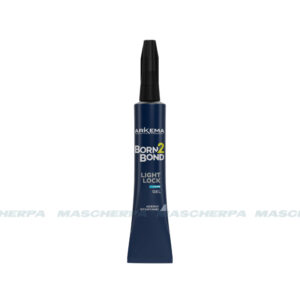
Born2Bond™ Light Lock Gel
Polymerization: instant and light curing (dual cure)
Polymerized with visible and UV-LED light
Long open time without activation
Curing surfaces dry to the touch and free of stickiness
On-demand polymerization of excess material released from splice lines
Bonding, filling, reconstruction and coating
Low odor and low bloom
Highly flexible and elastic (Light Lock 30X)
Adhesion to multiple substrates
Available in a range of viscosities
Read more
Quick View
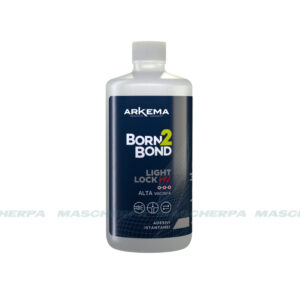
Born2Bond™ Light Lock HV
Instant and light-curing polymerization (dual cure)
Fixing time in 60 s (without exposure to light)
Polymerizable with visible light and UV-LED <5 sec
Long opening time without activation
Dry to the touch, surface curing without adhesiveness
On-demand polymerization of excess material released from weld seams
Bonding, filling, reconstruction and coating
Low odor and low effervescence
Read more
Quick View
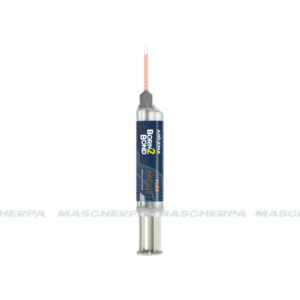
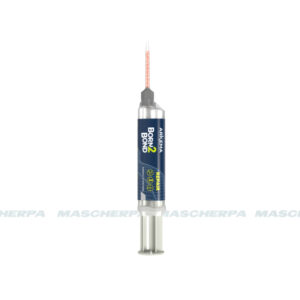
Born2Bond™ Repair
Fixing time in 60 seconds
Hardens in 5-10 minutes
Instant adhesion with high bond strength
Low volumetric contraction: 4.3 percent
Fills empty spaces of large volumes
Bonding a wide range of materials
Workable, sandable and paintable once cured
Impact resistant
The gel allows for precise application
Non-drip for vertical applications
Read more
Quick View
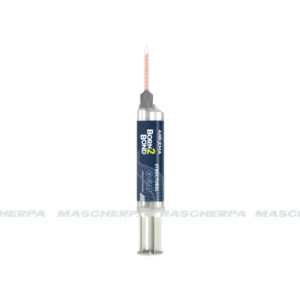
Born2Bond™ Structural
Grip time 30 seconds
High adhesion strength: > 6 MPa after 5 min
Open time 25 minutes
Filling gaps between substrates up to 5 mm
Excellent adhesion to a wide variety of substrates
Translucent when cross-linked
Resistant to temperature and humidity
Gel consistency for precise dosing
Read more
Quick View
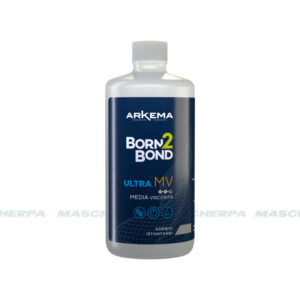
Born2Bond™ Ultra MV
High adhesion strength
Long time open
Low blooming
Less brittle than conventional instant adhesives
They glue a wide range of materials, including polystyrene
Read more
Quick View
DOWSIL™ 3810 EG
One-part dielectric gel
Transparent
Hot polymerization
Low viscosity
Very soft gel
Suitable for PCB potting and electronic component protection
Electrical insulation and environmental protection
Extended temperature range (-60°C / +200°C)
No mixing required
Read more
Quick View
DOWSIL™ 4535
No exotherm during curing
Room temperature or heat-accelerated polymerization
High stability during thermal cycles up to 150°C (peak 175°C)
Maintains vertical position
Controlled low silicone volatility
Soft and elastomeric material after polymerization
Read more
Quick View
DOWSIL™ 5351
Non-curing
High thermal conductivity
Stable on vertical surfaces
Gap filling capacity up to 1.0 mm
Thermally conductive silicone material
Low thermal resistance and good high-temperature stability
Read more
Quick View
DOWSIL™ 5515
Low density
Room temperature or heat-accelerated polymerization
Non-sagging, stable even on vertical surfaces
Soft and deformable material with stress relief function
Slightly tacky surface after curing
No exotherm during curing
Read more
Quick View
DOWSIL™ 5888
Non-curing
High thermal conductivity
Low thermal resistance
Solvent-free formulation
Thixotropic - low flowability
Applicable via screen printing, stencil or dispensing
Ability to achieve thin thicknesses
Read more
Quick View
DOWSIL™ 732 Multi-Purpose Sealant
One-component adhesive sealant
Cures at room temperature when exposed to air humidity
Acetoxy polymerization system
Pasty and non-sagging consistency
Easy to apply
Cures into a durable and flexible rubber
Good adhesion to many substrates
Stable and flexible from -60°C to +180°C (-76°F to +356°F), with short peaks up to +205°C (401°F)
Black version: stable and flexible from -60°C to +205°C (-76°F to +401°F), with short peaks up to +230°C (446°F)
Excellent dielectric properties
Read more
Quick View
DOWSIL™ 736 Heat Resistant Sealant
It does not sag and drip
Can be applied overhead or on side walls
Can be used in applications with continuous exposure at 260°C (500°F) and intermittent exposure at 315°C (600°F)
Read more
Quick View
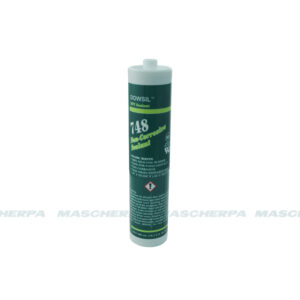
DOWSIL™ 748 Non-Corrosive Sealant
Can be used in corrosion-sensitive electrical equipment and PCB systems without adverse effects
Easy to handle
UL Classified
Non-corrosive
Low odor
Cures at room temperature
Read more
Quick View
DOWSIL™ CC 2588
Medium viscosity
Abrasion-resistant elastoplastic surface
Solvent-based coating
High solid content
UV indicator for inspection
Room temperature vulcanization (RTV)
Good adhesion on rigid and flexible PCBs
1
2
3
Avanti
Close Menu
Product Guide
Industrial Lubricants
Industrial Adhesives
Electronics
Composites
Mechanics
Brands
Brands for special lubricants
Brands for industrial adhesives
Electronic Protection Brands
Brands for Composites
Brands for mechanics
Brands
Who we are
Fondazione
DGE Partners
Quality
Associations
Sustainability
Contact
linkedin
youtube
phone