Key Points
- Since 2007, Mascherpa has supported Cober with ongoing technical dialogue, focused on finding tailored solutions for each application.
- Bonding EVA foam to polypropylene was achieved without harmful primers or plasma, using Permabond TA4611 for complex plastic substrates.
- Testing revealed cohesive failure of the joint, with EVA breaking before the bond line: the highest level of adhesion achievable.
- For inserting the aluminum cylinder into the carbon racket, Araldite® 2011 was selected, an epoxy adhesive with high elasticity and weather resistance.
- The collaboration continues at JEC World 2026, confirming a well-established technical relationship based on testing, dialogue, and long-term performance.
Cober holds a competitive position among manufacturers of trekking poles and ski poles, distinguished by Made in Italy quality, commitment to sustainability, and advanced technical design.
From 1950 to today, the company has supported enthusiasts and athletes in their passion for the outdoors, combining artisan expertise, high-performance materials, and modern technologies.
In their work, material quality makes the difference. Every detail, even the smallest, must ensure reliability and long-term durability. It is in this context that the collaboration with Mascherpa in selecting the best industrial adhesives takes place.
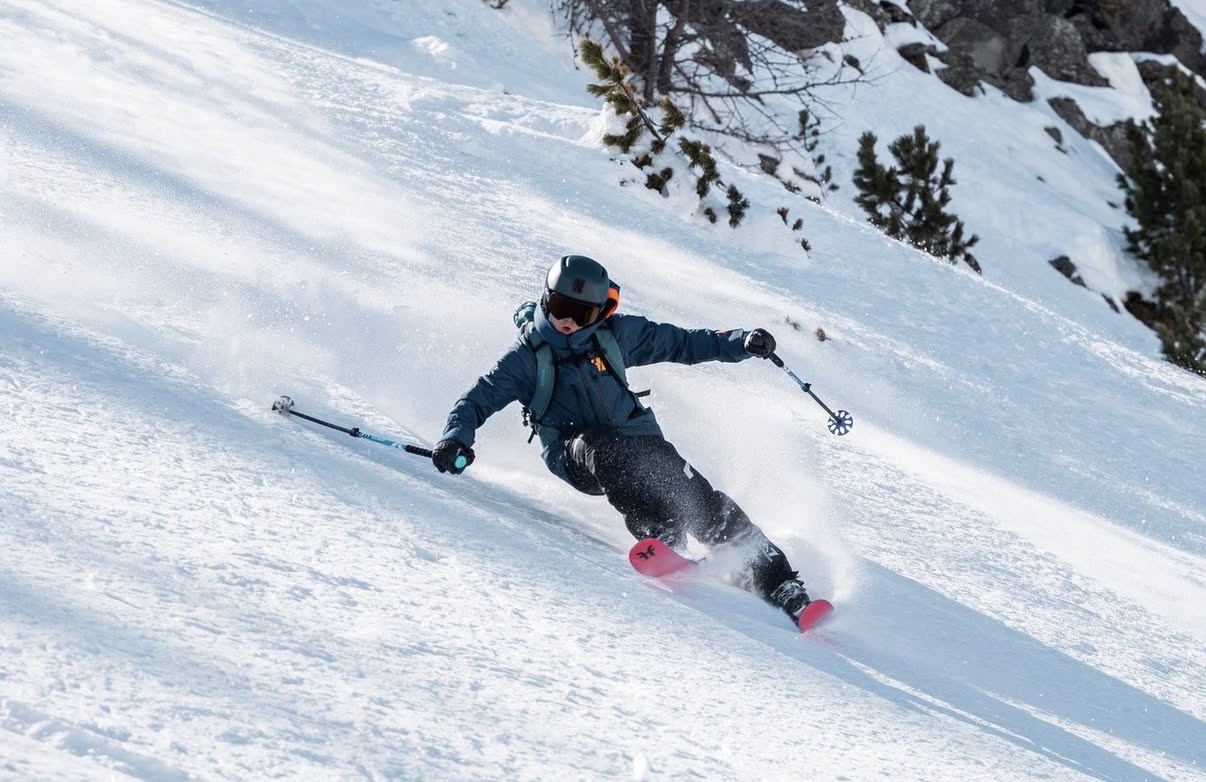
A Collaboration That Began in 2007
The collaboration with Cober began in 2007 and has grown over the years through ongoing technical dialogue and the pursuit of tailored solutions.
The approach has always been oriented toward direct technical consultation and finding an effective solution for each application, with attention to performance and long-term durability.
Bonding an EVA Foam Grip to a Polypropylene Handle
One of the most recent challenges involved bonding a grip made of foam (cellular) EVA to a polypropylene handle.
The polypropylene substrate used, due to its low surface energy, is notoriously difficult to bond without specific pretreatment. Traditionally, this requires primers that are often harmful or costly technologies such as plasma.
To overcome these challenges, the use of Permabond TA4611 was proposed, an acrylic adhesive designed specifically for complex plastic substrates such as polyolefins.
With Permabond TA4611, Adhesion Exceeds Polypropylene Limitations
In the application case analyzed, Permabond TA4611 proved extremely high-performing: it ensured impact resistance and vibration resistance even at low temperatures, conditions in which the polymer tends to become brittle.
Furthermore, the system offers excellent resistance to weathering and to temperatures up to 100°C, a crucial aspect considering that, with rising global temperatures, a dark component exposed to sunlight can reach elevated values.
From an aesthetic, the transparency of theacrylic adhesive met full satisfaction, while on an operational level it proved to meet expectations: the part is handleable after approximately 40 minutes extreme conditions room temperature.
Testing of the finished product revealed cohesive failure of the joint, with fracture of the EVA substrate before the bond line: a result representing the highest level of adhesion achievable.
Inserting an Aluminum Cylinder into a Carbon Racket
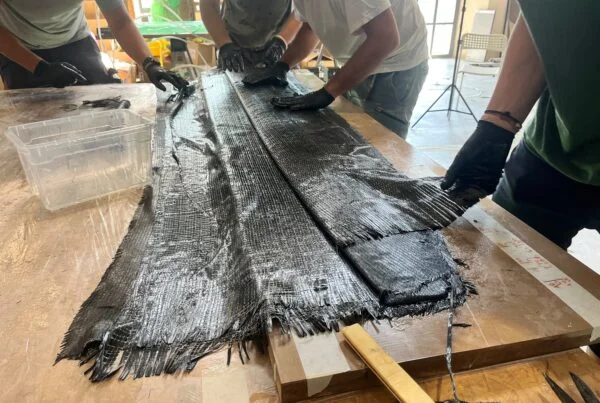
For certain carbon rackets, a second application was developed: inserting a cylinder made of aluminum approximately 40 cm long inside a carbon racket.
After extensive testing, the solution identified was Araldite® 2011 for bonding the two materials.
Araldite® 2011: Elasticity and Reliability for Structural Composites
Araldite® 2011 is a highly distinctive two-component epoxy adhesive: compared to standard epoxy resins, it possesses a good degree of elasticity, with an elongation at break of approximately 20%. This allows theepoxy adhesive to accommodate differential expansion between the substrates involved, without compromising bond strength.
Araldite® 2011 has been on the market for approximately 70 years and is valued for its excellent adhesive performance on carbon and many other substrates, especially in the composites sector.
In terms of chemical resistance, the product ensures excellent resistance to moisture, weathering, and aging.
The adhesive curing can occur at room temperature, allowing part handling in approximately 12 hours. However, if necessary, the timeline can be reduced by applying mild heating; oven curing at 40°C allows part handling in approximately 2-3 hours.
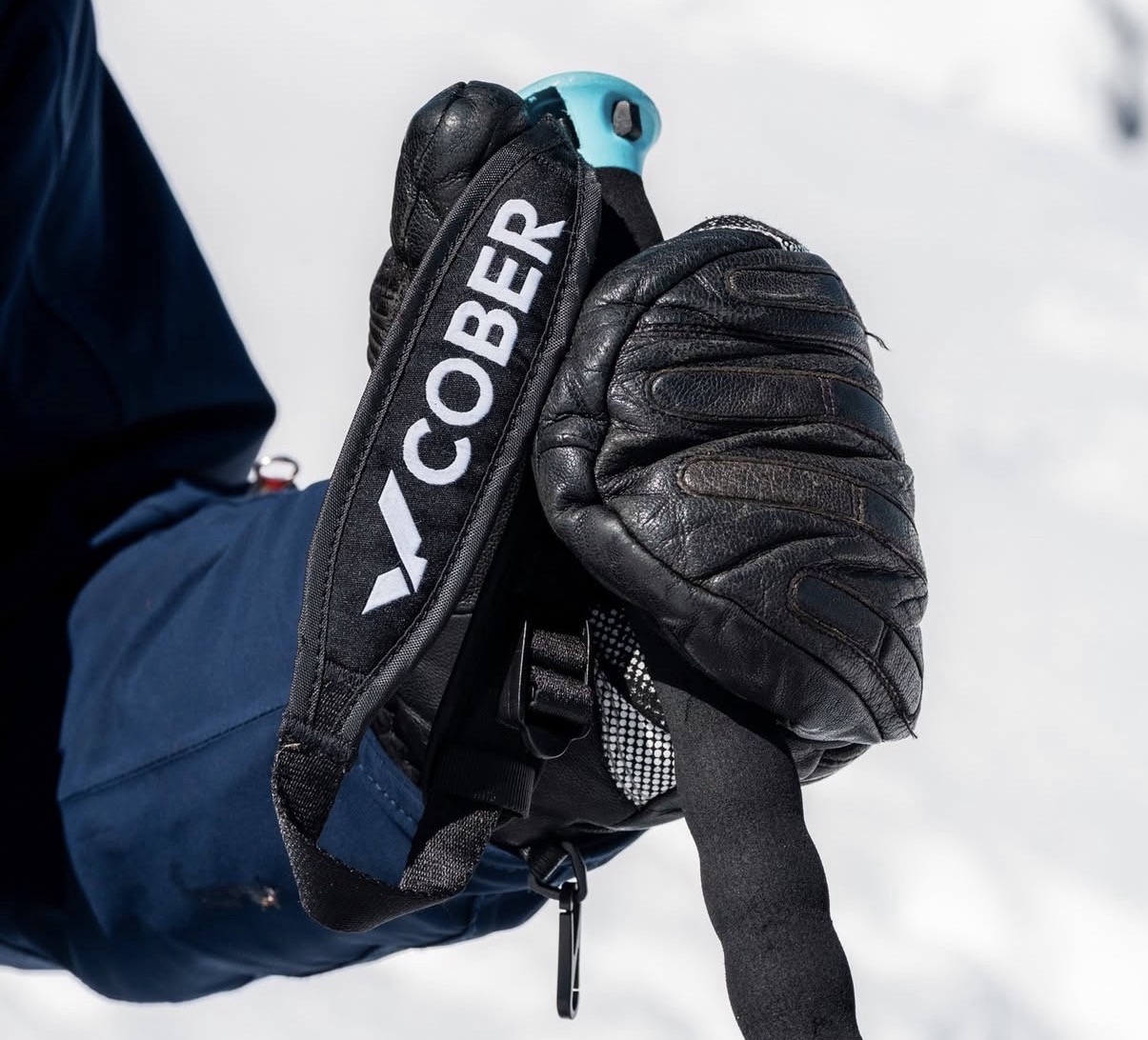
“With Mascherpa we have a well-established relationship: they assist us both in product selection and testing. We work with knowledgeable people who are always available. It’s a true collaboration that has lasted for years.” – Cober technician.
A Collaboration Continuing at JEC World
The collaboration with Cober is based on a well-established relationship that includes both product selection and testing.
This technical dialogue continues at JEC World 2026, where Cober will be present alongside Mascherpa at stand DGE, to showcase applications of Araldite® products in various production processes involving composite materials.
Every application has its challenge. Every pole has a story. Mascherpa supports Italian companies with adhesive solutions for performance, durability, and long-term reliability.
To explore other application cases and consult directly with our experts, visit the Mascherpa Expert section or contact us for more information.