Key points on industrial drone functions and maintenance
- Industrial applications expose drones to conditions that influence the selection of materials and maintenance requirements.
- Adhesives and sealants contribute to the strength of assemblies and the protection of housings.
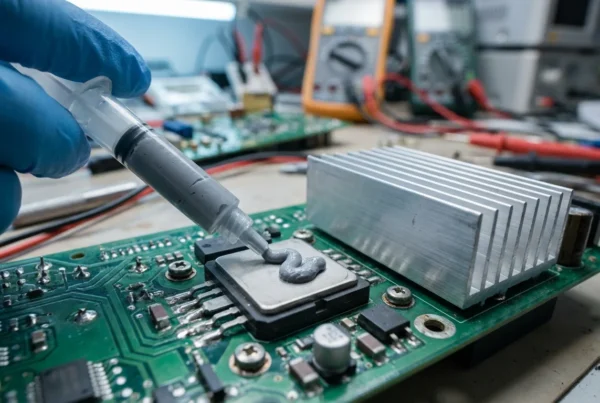
- Conformal coatings, gels and encapsulants protect electronics and meet insulation and thermal management requirements.
- Lubrication applies to bearings, gears, pivoting mounts and actuators.
- Selection depends on substrates, the process, the operating environment and qualification requirements.
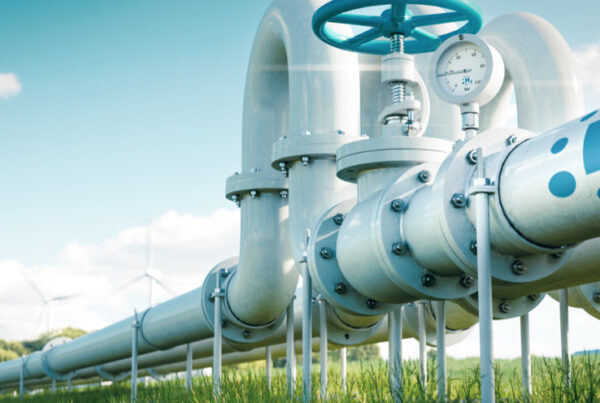
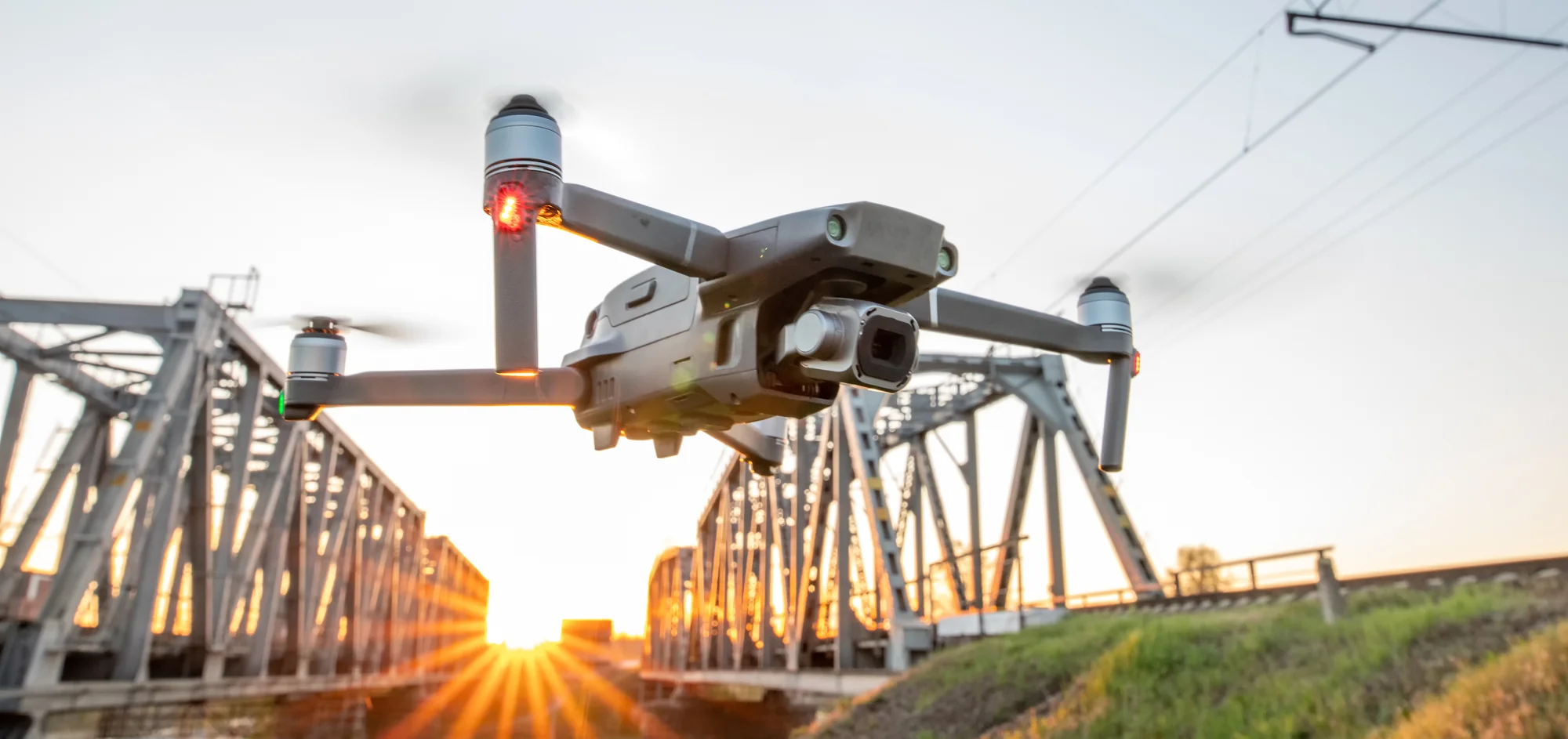
From inspecting wind turbines to transporting clinical samples and moving heavy loads, industrial drones must operate in a wide range of environments and conditions. Salt spray, vibration, moisture and chemicals make material selection an important factor in their reliability.
Drone maintenance also depends on the solutions adopted during design and assembly. A sealant that protects housings, an encapsulant that promotes heat dissipation, or a lubricant suited to operating temperatures helps keep the aircraft available and limit operational interruptions.
Adhesives, sealants, protective coatings and lubricants therefore perform different and complementary functions. Understanding these functions helps match application requirements to the appropriate function in drone design and maintenance.
Index
- From hobby to industry: a market taking off
- Industrial inspections: protecting drones in exposed environments
- Agriculture and clinical sample transport: reliability for every mission
- Advanced Air Mobility: materials for larger platforms
- Anatomy of a drone: where materials make a difference
- Adhesives, sealants and lubricants: where they are used in a drone
- How to choose materials for industrial drone maintenance
- Drone maintenance: the role of Mascherpa solutions
From hobby to industry: a market taking off
Drones, or Unmanned Aerial Systems (UAS), have evolved from simple aerial imaging platforms into industrial tools capable of performing a range of tasks.
Applications include the inspection of:
- rail networks,
- offshore wind turbines,
- power lines,
- construction sites.
Other applications include transporting clinical samples and emergency equipment, connecting remote areas and precision agriculture.
As applications expand, maintenance, repair and overhaul, known as MRO, become increasingly important. A drone’s operational value also depends on its ability to undertake repeated missions in the intended conditions.
Material selection supports this evolution: each component must maintain its function in the environment in which it is used.
Industrial inspections: protecting drones in exposed environments
Inspecting an offshore wind turbine blade, an overhead railway line or a transmission tower may require scaffolding, rope access or helicopters. Drones can reduce the need for work at height and can reduce the time and cost of inspection activities.
However, these missions involve specific requirements. A drone may operate near the sea, in the vicinity of strong electromagnetic fields or on extended flights along extensive infrastructure.
Housing sealing and corrosion protection
Avionics housings, payload compartments and access panels require sealing suited to exposure to moisture, UV radiation and chemicals.
Motor mounts, landing gear and fastening elements exposed to salt spray also require corrosion protection. These requirements are particularly relevant when inspecting offshore wind farms.
Protection of communications and optical systems
Near high-voltage lines, radio modules and data links may require shielding against electromagnetic interference, or EMI.
For optical housings and sensor mounts, the selection of industrial adhesives must also take into account dimensional stability and minimal outgassing, or low outgassing, to prevent fogging of optical components.
Protection of the drone must therefore encompass both the structure and the systems used to acquire and transmit information.

Agriculture and clinical sample transport: reliability for every mission
When transporting clinical samples, delivery times for the link to the laboratory can affect the diagnostic process. In rural and island areas, drones can be used for resupply and transport of equipment.
In precision agriculture, applications include:
- acquiring multispectral images of crops,
- variable-rate spraying,
- monitoring livestock, including in combination with autonomous ground vehicles.
In these contexts, aircraft reliability is essential. Water ingress, motor problems or fasteners that loosen under vibration can compromise the mission.
Protection of circuit boards and navigation electronics
Conformal coatings and encapsulation materials are used to protect flight controllers and navigation electronics from moisture, vibration and chemicals.
In agricultural applications, the assessment must also consider exposure to chemicals used in crop production.
Thermal management of motors and power electronics
Motor stators and electronic speed controllers, or ESCs, may require encapsulation materials that combine thermal conductivity and electrical insulation.
These solutions meet the need to dissipate heat while maintaining the insulation required by the components.
Battery assembly and vibration resistance
In the battery pack, bonding may involve cells, modules and electrical connection bars, or busbars, with requirements including electrolyte resistance.
Motors, servos and threaded fasteners, on the other hand, require solutions capable of preventing loosening caused by vibration. Selection therefore involves both protective materials and those used to keep assemblies stable.

Advanced Air Mobility: materials for larger platforms
The transport of heavy loads without roads or runways requires larger aircraft, dedicated takeoff and landing infrastructure, and certification requirements closer to those of conventional aviation.
Advanced Air Mobility (AAM) encompasses the air transport system developed around new types of aircraft and their associated physical and digital infrastructure. It also includes larger cargo drones, electric vertical takeoff and landing aircraft, or eVTOLs, and autonomous systems for heavy loads.
As dimensions increase, weight reduction becomes more important. Structural bonds must meet resistance requirements for fatigue and vibration in structures made of composites, metals and thermoplastic materials.
Lubrication applies to bearings, gears and actuators in control surfaces and retraction systems, which must operate within the specified temperature range.
For platforms subject to more stringent certification requirements, the following are also essential:
- material traceability,
- qualification documentation,
- process repeatability.

Anatomy of a drone: where materials make a difference
A typical inspection drone packs into less than a meter what occupies many meters in an aircraft:
- structure,
- motors,
- battery,
- electronics,
- optics,
- communications.
Each of these systems depends on a material that is rarely visible.

Drone, top view: nine critical points for adhesives, sealants, conformal coatings and lubricants.
Adhesives, sealants and lubricants: where they are used in a drone
There is no single “drone product.” Each point on the drone requires a specific formulation, and the choice depends on the substrate, the manufacturing process and the flight environment.
This is a reference map of Mascherpa solutions for drone design and maintenance:
| Application | Primary requirement | Solution categories | Brands |
| Frame, arms and composite structures | Mechanical strength, fatigue and vibration resistance while limiting weight | Epoxy and methacrylate structural adhesives | Huntsman Araldite® Permabond |
| Optical housings and sensor mounts | Dimensional stability without fogging of optical components | Low-outgassing adhesives | Huntsman Araldite® Permabond |
| Motors, servos and threaded fasteners | Preventing loosening caused by vibration | Anaerobic threadlockers and fast-curing adhesives | Permabond |
| Motors, ESCs and power electronics | Heat dissipation and electrical insulation | Thermally conductive encapsulants | DOWSIL™ MG Chemicals |
| Flight controller and navigation electronics | Protection against moisture, condensation and chemicals | Silicone conformal coatings and gels | DOWSIL™ MG Chemicals |
| Radio modules, data links and radio frequency (RF) housings | Shielding against electromagnetic interference | Conductive coatings for EMI shielding | MG Chemicals |
| Avionics compartments and access panels | Protection against water, UV radiation and dust throughout the service life | Silicone sealants | DOWSIL™ |
| Bearings and actuators | Smooth operation over a wide temperature range | High-performance lubricants | Krytox™ |
How to choose materials for industrial drone maintenance
Selection starts with three factors:
- substrates to be bonded or protected,
- application process,
- flight environment.
An adhesive for a composite structure meets different requirements from a sealant for an access panel. Similarly, protecting a circuit board requires different considerations from lubricating an actuator.
Two further variables guide selection:
- Production volume: this influences processing requirements. For small platforms produced in series, ease of application and cure times may be more important than achieving extreme performance.
- Certification level: this determines the importance of documentation. For cargo drones and platforms in the certified category, batch traceability and qualification documentation become as important as the material’s properties.
The performance of each formulation must be verified against its technical data sheet and, where required by the application, through dedicated testing.
Drone maintenance: the role of Mascherpa solutions
Fleet availability also depends on choices made before the first flight.
A seal resistant to salt spray, an encapsulant that promotes heat transfer or a lubricant suited to low temperatures can help reduce the conditions that lead to a drone being taken in for repairs.
For this reason, industrial drone maintenance is linked to the selection of materials used to assemble, protect and lubricate the various components.
The Mascherpa solution ranges for adhesives, sealants, electronics protection and lubrication address these requirements by starting with the component and its operating conditions.
To evaluate materials for your application, contact the Mascherpa experts. To discover all Mascherpa solutions for the aerospace and defense sector, visit our dedicated page.