Key points of the article
- Debulking is an intermediate compaction phase used in prepreg processing.
- This process serves to reduce trapped air between layers and improve the consolidation of the laminate.
- The choice of membrane directly affects the quality of compaction.
- High-elongation elastomeric membranes are suitable for complex geometries.
- Le silicone membranes Reusable are used in vacuum processes, oven, and autoclave.
In the composite materials sector, the final quality of a component does not depend solely on the prepreg used or the curing cycle. Very often, the most important differences arise during lamination, in the phases where the material is compacted and consolidated.
This is where debulking comes into play: a process used to reduce their trapped air between layers of prepreg and improving compactness of the laminate during the construction of the lay-up.
In the aerospace, motorsport, marine e composite processing high-performance sectors, debulking represents a fundamental phase for obtaining components more uniform, controlled , and reliable.
In this context, the choice of compaction membranes also plays a central role. Elastomeric membranes with high elongation and reusable silicone membranes allow for greater process control when dealing with:
- complex geometries;
- vacuum processing;
- oven processes;
- autoclave debulking.
Index
- What Is the Debulking Process in Composite Materials Processing
- Why Compaction Is Critical in Prepreg Processing
- Where the Debulking Process Is Used
- The Role of Membranes in Laminate Compaction
- DIATEX Solutions for Debulking and Composite Molding
- How to Choose the Most Suitable Membrane for the Debulking Process
- Learn More About Solutions for Debulking and Composite Materials
What Is the Debulking Process in Composite Materials Processing
When working with prepregs, especially on laminates with many layers or complex geometries, it is normal for small amounts of trapped air to remain between plies. If this air is not managed during lamination, it can remain inside the component, affecting consolidation, uniformity, and final quality of the laminate.
Debulking or compaction serves precisely to address this phase. The process consists of applying vacuum on the lay-up through compaction membranes for prepreg, promoting contact between layers e reducing the presence of voids inside the laminate.
In practice, debulking helps to progressively stabilize the thickness of the component before final curing.
This aspect becomes particularly important in the processing of unidirectional prepregs, where the low permeability of the material can make it more difficult for air to escape between plies.
Why Compaction Is Critical in Prepreg Processing
In composite processing, many defects arise during lamination.
When the number of layers increases, air tends to remain trapped between the prepregs. If the laminate is cured without proper intermediate compaction, porosity, wrinkles, or poorly consolidated areas may appear.
For this reason, debulking is performed during lay-up construction, especially in the most critical components. The The frequency of compaction varies depending on the material, component geometry, and production process used.
Debulking must be adapted to the actual processing requirements, taking into account the material used, component shape, and required quality level.
Where the Debulking Process Is Used
The debulking process finds application in all sectors where composite materials must guarantee lightness, precision, and structural reliability.
In the aerospace sector, laminate quality is a fundamental requirement because even small internal discontinuities can affect component performance and production repeatability. In In motorsport and high-performance marine applications, debulking helps achieve more laminates uniform on complex, lightweight components subject to high mechanical loads.
The same applies to the sports sector and high-performance composites, where work often involves irregular geometries, variable thicknesses, and technical prepregs. In all these cases, debulking does not represent a simple intermediate phase, but an integral part of the composite molding process.
The Role of Membranes in Laminate Compaction
A debulking membrane does not only serve to create vacuum. Its function is to distribute pressure on the laminate uniformly, following the mold geometry during compaction.
This aspect becomes particularly important when the component has undercuts, tight radii, or deep surfaces. In more complex geometries, a poorly conformable membrane tends not to adhere properly to the mold. In these situations, phenomena such as bridging or less compacted areas may appear, especially in the most critical points of the laminate.
For this reason, when choosing high-elongation compaction membranes, one must consider not only vacuum seal, but also elements such as elasticity, conformability, mechanical resistance, operating temperature, and reusability.
Elastomeric membranes and silicone membranes for debulking are used precisely to improve these aspects during prepreg compaction.
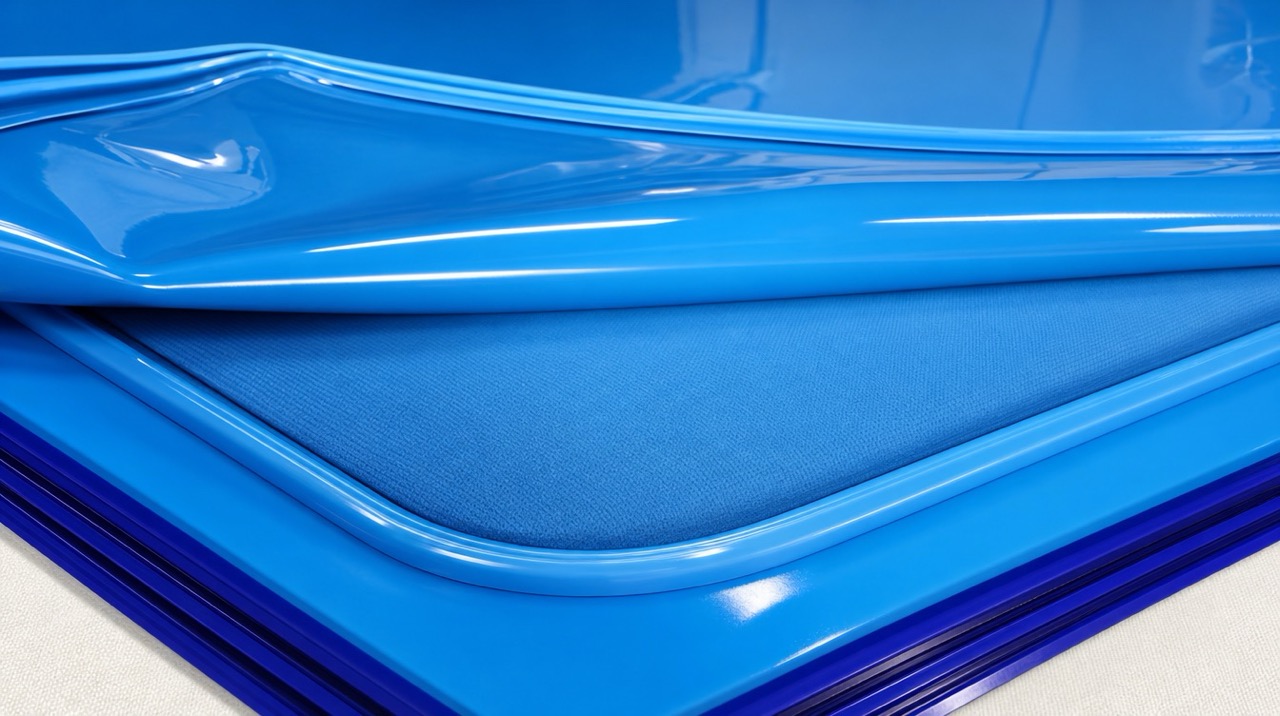
Elastomeric Membranes for Debulking and Volume Reduction
Elastomeric membranes are used especially when the process requires high conformability and ability to adapt to component geometry. In processing with complex prepregs, deep undercuts, or irregular surfaces, a membrane that is too rigid can create areas that are not properly compacted.
High-elongation elastomeric membranes were developed precisely to avoid this problem. Their elasticity allows the membrane to better follow the profile of the mold during vacuum, improving pressure distribution on the laminate.
This type of solution is often used in volume reduction operations, i.e., in progressive compaction phases of the lay-up before final curing.
Silicone Membranes for Debulking, Oven, and Autoclave
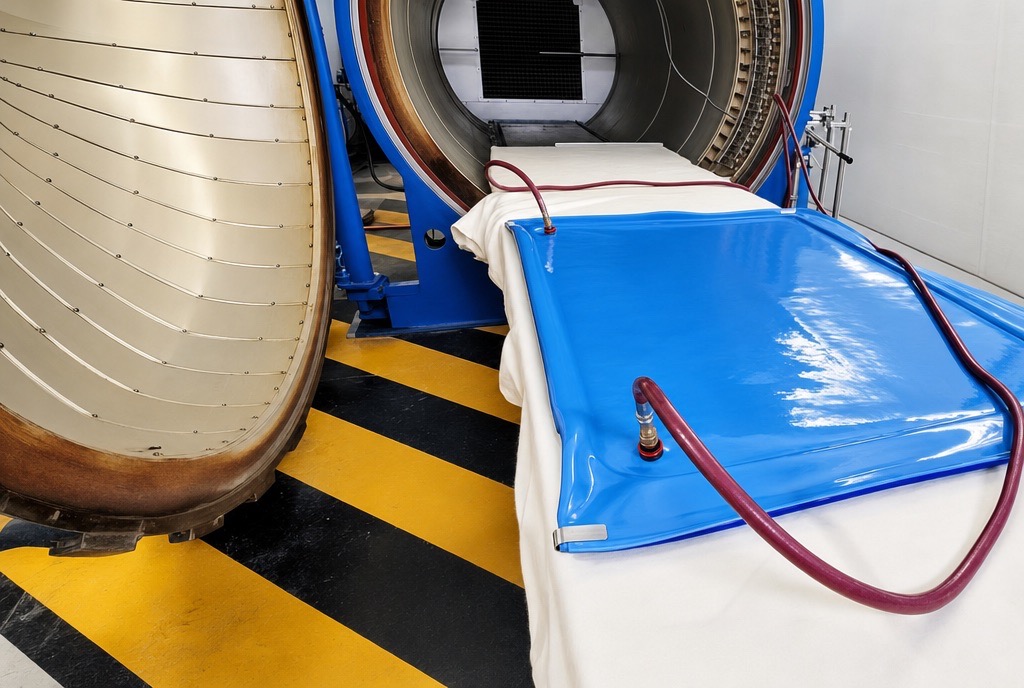
Alongside elastomeric membranes, there are also reusable silicone membranes developed for vacuum processes, oven processing, and autoclave debulking.
In these cases, the focus shifts primarily to process stability and the ability to use dedicated membranes in repetitive or high-performance production. The Silicone membranes for debulking are used when good compression resistance, high-temperature stability, and consistent behavior over multiple production cycles are required.
These solutions find application especially in composite molding and processes where compaction control must remain consistent even after multiple uses of the same membrane.
DIATEX Solutions for Debulking and Composite Molding
For debulking, compaction e composite molding, DIATEX applications, we offer reusable membranes developed for vacuum processing, prepreg and processes with complex geometries.
The objective of these solutions is to improve conformability during laminate compaction, especially in areas where a traditional film may have difficulty adapting properly to the mold.
PARABLOND and ELASTIBAG
PARABLOND and ELASTIBAG are high-elongation elastomeric membranes designed for debulking and volume reduction of prepregs. These solutions are used especially on components with irregular shapes, deep recesses, undercuts, or complex geometries.
Compared to traditional bagging films, they offer greater elasticity and better conformability during vacuum. Among the most interesting features are:
- high elasticity;
- high mechanical resistance;
- adaptability to complex geometries;
- reusability;
- better distribution of the pressure on the laminate.
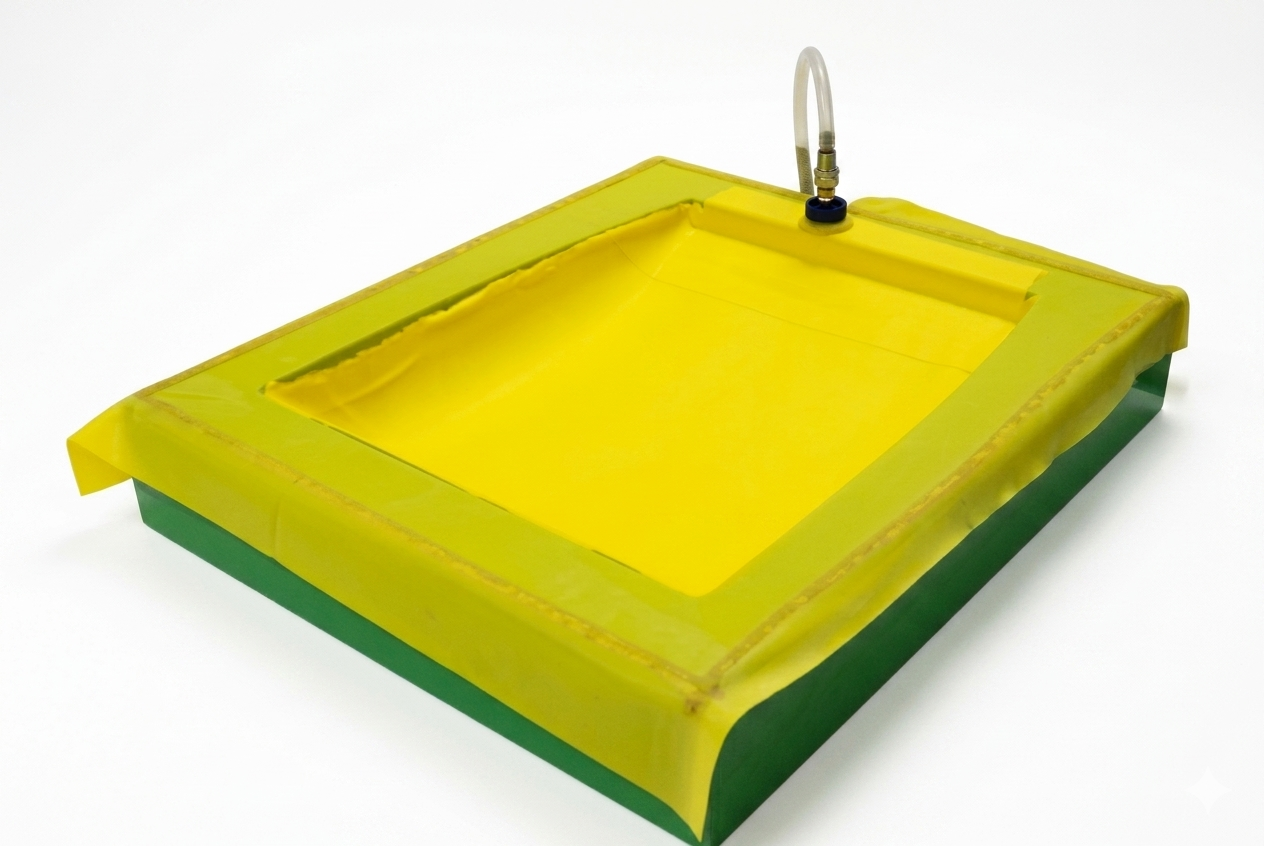
DIASIL 45
DIASIL 45 is a high-performance HTV silicone membrane developed for producing reusable membranes in debulking and vacuum molding processes.
It is used in autoclave, out-of-autoclave processing, and applications requiring high elasticity and thermal resistance during compaction phases.
DIASIL 45 was designed to ensure operational continuity and reliability in repetitive production cycles. Among the most relevant characteristics are:
- high elongation properties;
- reusable membranes;
- use in autoclave and oven;
- resistance up to 225 °C;
- calibrated thickness for compaction applications.
This is a particularly suitable solution for compaction tables where process stability, membrane durability, and reduction of consumables become fundamental aspects.
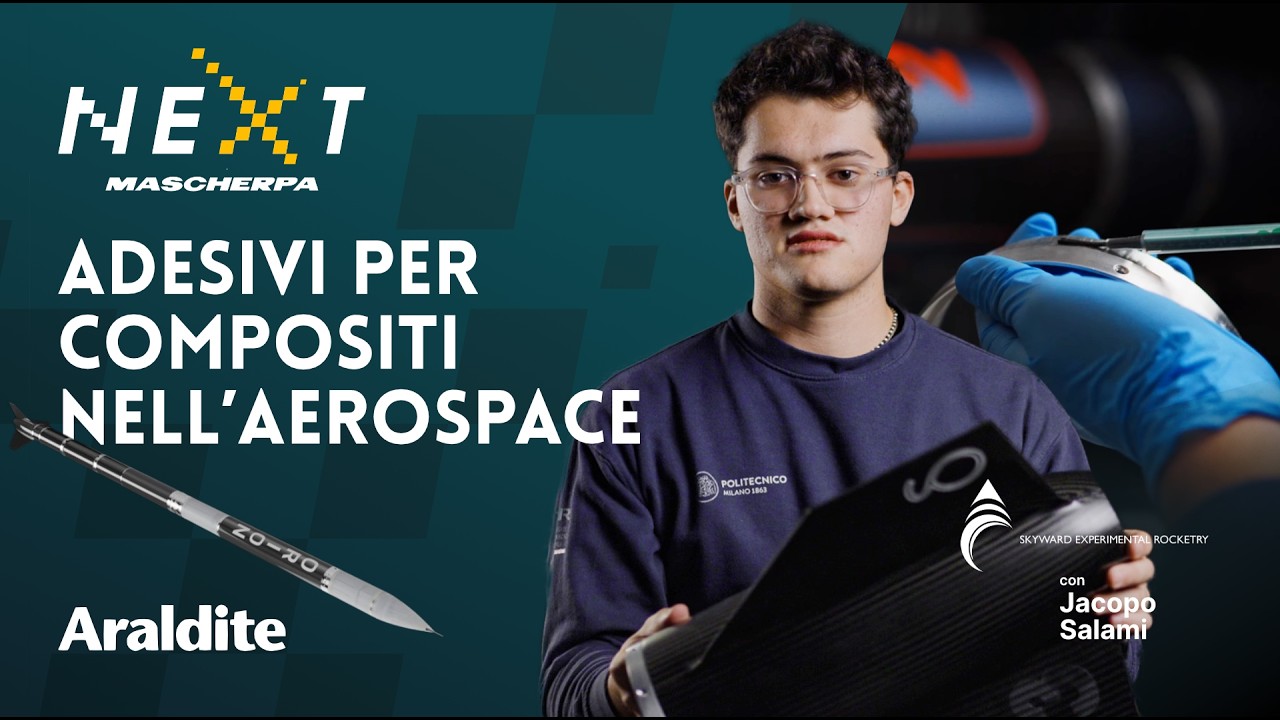
In the Skyward Experimental Rocketry project, DIASIL 45 was used as a reusable vacuum bag for vacuum lamination and subsequent curing of the composite. This The bag, equipped with a zipper, allowed numerous cycles of use, significantly reducing material waste, especially during testing phases.
Together with the PTFE release film and the Diatex 1500 peel ply, it supported the production of carbon fiber such as fins, feed bay e fincan components, helping to improve process control of the process.
How to Choose the Most Suitable Membrane for the Debulking Process
The choice of debulking membrane should start from the component, not the product.
The first element to consider is geometry. If the component has undercuts, tight radii, or deep surfaces, membrane conformability becomes fundamental. Process temperature is also an important aspect. In In oven debulking or autoclave debulking, the membrane must maintain stability and consistent behavior throughout the cycle.
Another element to evaluate is production repeatability. In serial processing, reusable silicone membranes can help reduce consumables and time preparation.
Finally, the type of process used must be considered: compaction tables, vacuum bagging, autoclave, and vacuum molding do not always require the same solution. The correct choice therefore stems from the balance between component geometry, temperature, production process, and the required level of compaction.
Learn More About Solutions for Debulking and Composite Materials
In the composite materials sector, debulking represents a fundamental phase for improving the consolidation of the laminate during prepreg processing.
However, the quality of compaction depends not only on the applied vacuum, but also on the membrane’s ability to adapt correctly to the geometry of the component.
High-elongation elastomeric membranes with high elongation are used primarily when conformability and adaptation to complex shapes are required. The reusable silicone membranes are instead used in more structured vacuum processes, oven processing, and autoclave debulking.
Solutions such as those provided by Diatex, a Mascherpa partner, allow for addressing different needs, from prepreg compaction to the creation of dedicated membranes for advanced production processes.
For this reason, when choosing compaction membranes for prepregs, the point is not to identify a universal solution, but to find the material most consistent with the geometry, production process, and quality required for the component.
For more information on the most suitable debulking membranes for your process, contact our Mascherpa experts. For more information on Mascherpa solutions for composite materials, download our technical guides.