Key points of the article
- Thermal management is essential for reliability and durability in the electronics sector.
- Thermally conductive silicones help dissipate heat by eliminating air from thermal interfaces.
- Silicone pastes, gap fillers, resins, and adhesives meet different application needs.
- Automotive, PCBs, inverters, and power electronics require specific materials for thermal management.
- Choosing the correct silicone for thermal management depends on gaps, vibrations, environmental protection, and the production process.
Increasing operating temperatures and the miniaturization of electronic devices are making thermal management one of the main critical issues in modern design within the electronics sector and beyond.
PCBs, inverters, power supplies, automotive modules, and power electronics systems now operate under increasingly severe conditions, where heat can directly compromise system reliability, performance, and lifespan. When thermal transfer is not optimized, the risk is not just immediate overheating of the component. Over time, the following may occur:
- premature degradation;
- operational instability;
- loss of efficiency;
- failures caused by continuous thermal stress.
The Role of Silicones in Thermal Management
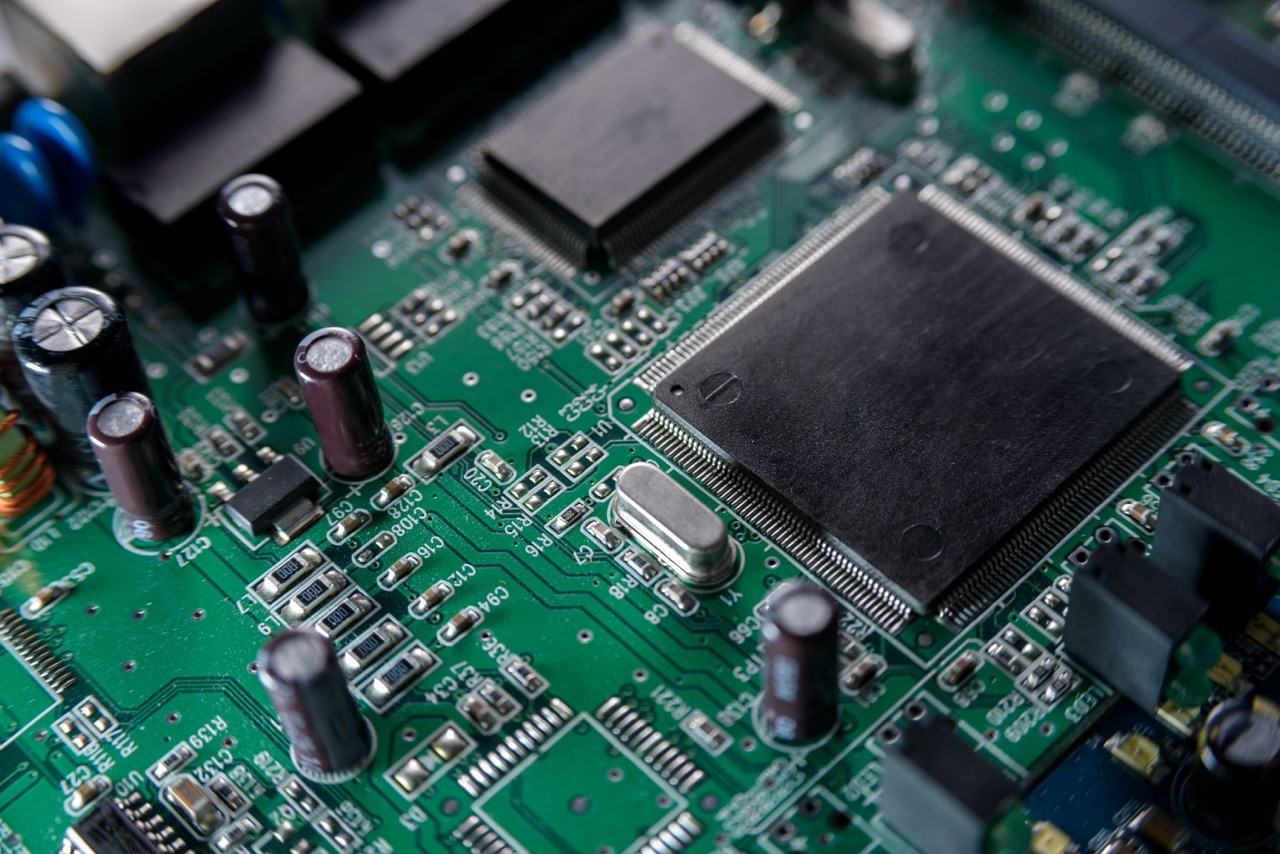
Silicones for thermal management are used specifically to improve heat dissipation between electronic components and dissipating surfaces such as heat sinks or metal housings. L’Air, in fact, is a poor thermal conductor and represents one of the main obstacles to heat transfer. The use of thermally conductive silicone materials allows for the elimination of these air gaps, creating a more efficient thermal path.
Which silicone formulations are used in electronics thermal management?
In the electronics sector, silicones are developed in different formulations depending on the required application:
- Thermally conductive silicone pastes;
- Gap filler
- RTV silicone adhesives
- Printable pads;
- silicone resins.
All these formulations meet different needs in terms of dissipation, vibrations, environmental protection, and assembly.
Among the most widely used technologies in the thermal management we find solutions Dowsil™ products, developed for applications ranging from electronics of consumer to automotive, telecommunications, LED lighting, photovoltaics and electronics industrial.

Thermally Conductive Silicone Pastes
Thermally conductive silicone pastes represent one of the most common technologies in the thermal management of electronic components.
These materials are generally formulated as non-crosslinking one-component systems designed to be applied between the component and the heat sink. Their primary function is to eliminate the air present between surfaces, improving thermal transfer.
Silicone pastes are mainly used in thin gaps, where they can easily adapt to surface irregularities, ensuring efficient thermal contact . In the electronics sector, they are applied in:
- MPU cooling;
- power modules;
- PCB assembly;
- servers;
- notebooks;
- power supplies;
- automotive systems.
| Product | Description | Operating temperature (°C) | Viscosity (mPa.s) at 23°C | Color | Thermal conductivity (W/m.K) | Thermal resistance at 40 psi (°C.cm²/W) | Dielectric strength (kV/mm) |
| Dowsil™ TC-5622 | Designed to ensure efficient thermal transfer in the cooling of modules, including computer MPUs and power modules. | -50°C to 177°C | 95,000 | Gray | 4.3 | 0.06 | N/A |
| Dowsil™ TC-5351 | Suitable for use as a thermally conductive material in power electronics. | -50°C to 177°C | 300,000 | Gray | 3.3 | 0.25 | 6.3 |
| Dowsil™ TC-5629 | High thermal conductivity solution for LED lighting and other electronic applications. | N/A | 295,000 | Gray | 3.2 | N/A | 6.3 |
| Dowsil™ SC-4476 | Efficient thermal transfer for cooling PCB assemblies. | N/A | 310,000 | Gray | 3.1 | N/A | 25 |
| Dowsil™ TC-5026 | Designed to ensure efficient thermal transfer in the cooling of MPUs in servers, desktops, notebooks, and gaming consoles. | N/A | 100,000 | Gray | 2.9 | 0.03 | 8.9 |
| Dowsil™ TC-5121 CLV | Designed to ensure efficient thermal transfer in the cooling of MPUs in servers, desktops, and notebooks. | -50°C to 177°C | 79,000 | Gray | 2.8 | 0.09 | 1.9 |
| Dowsil™ SE 4490 CV | Designed to ensure efficient thermal transfer in the cooling of automotive control modules, power supplies, and display IC drivers. | -50°C to 177°C | 520,000 | White | 1.9 | 0.77 | 4 |
| Dowsil™ TC-5080 | Suitable as a thermal interface material for power supplies and power components in the transportation sector. | -50°C to 177°C | 836,000 | White | 1 | 0.2 | 8.7 |
| Dowsil™ SC102 | Designed for the cooling of modules assembled on PCBs. | -50°C to 177°C | 29,000 | White | 0.9 | 0.62 | 2 |
| Dowsil™ 340 Heat Sink Compound
|
Designed for the thermal coupling of electrical devices and PCB assemblies. | -50°C to 177°C | 542,000 |
White |
0.67 |
0.16 |
8 |
Silicone Gap Fillers
I silicone gap fillers are used when the distance between the component e heat sink exceeds 1 mm or when the electronic system is subject to strong vibrations e continuous thermal cycles.
Unlike traditional thermal pastes, these materials are generally two-component and crosslink after mixing. While not being structural adhesives, they maintain a tacky surface that improves the stability of the material over time, reducing the risk of pump-out (degradation)
This technology is mainly used in the automotive sector, battery packs, inverters, power modules, and control units, where dimensional tolerances and operating conditions require more stable and conformable materials.
| Product | Description | Standards / Approvals | Operating temperature (°C) | Viscosity (mPa.s) at 23°C | Color | Thermal conductivity (W/m.K) | Shore hardness | Curing time | Dielectric strength (kV/mm)
|
|---|---|---|---|---|---|---|---|---|---|
| Dowsil™ TC-4525 CV | Silicone designed to dissipate heat from components mounted on printed circuit boards to the heat sink, offering a reliable cooling solution for cooling for modules such as engine control units or transmission. | UL94 V-0 | -45°C to 150°C | 217,000 | White/Blue | 2.5 | 40 OO | 120 min at 25°C, 20 min at 50°C, 10 min at 80°C | 12 |
| Dowsil™ TC-4015 | Thermal pads for microchips and power supplies that facilitate heat dissipation , ensuring reliable performance and ease of assembly. | UL94 V-0 | -45°C to 150°C | 180,000 | White/Blue | 1.5 | 55 OO | 150 min at 25°C, 30 min at 80°C | 15.8 |
| Dowsil™ TC-4535 CV | Designed to dissipate heat the heat from PCB assemblies to the heat sink, providing a reliable solution for modules such as engine control units or transmission. | UL94 V-0 | -45°C to 200°C | 205,000 | White/Blue | 3.4 | 52 OO | 120 min at 25°C | 22 |
Thermally Conductive Silicone Resins for Encapsulation and Potting
In many electronic applications, dissipating heat is not enough.
PCBs, inverters, transformers, sensors, and electronic modules must often operate in environments subject to humidity, contaminants, thermal shock, and continuous vibrations . In these cases, thermally conductive silicone resins are used for encapsulation and bonding.
These materials allow for the combination of thermal management and environmental protection, creating a protective barrier around the electronics while maintaining good heat transfer capability.
Silicone resins are mainly used in automotive, electronics, and photovoltaic applications where long-term reliability and stability are fundamental elements.
| Product | Description | Standards / Approvals | Operating temperature (°C) | Viscosity (mPa.s) at 23°C | Color | Thermal conductivity (W/m.K) | Shore hardness | Curing time | Dielectric strength (kV/mm)
|
|---|---|---|---|---|---|---|---|---|---|
| Dowsil™ TC-6020 | Suitable for industrial power modules and thermal management of automotive control units. | UL94 V-0 & UL RTI 150°C | -45°C to 200°C | 10,640 | Gray | 2.72 | 63A | 24 hours at 25°C, 13 min at 80°C | 24.1 |
| Dowsil™ TC-4605 | Encapsulant/resin for electronics that ensures protection in different environmental conditions and thermal management. | – | -45°C to 200°C | 2,900 | Gray | 1 | 30A | 1 hour at 120°C | 21 |
| Dowsil™ SE 4430 | Used for cooling electronic modules in power applications. | – | -45°C to 200°C | 6,700 | Gray | 0.96 | 70 OO | 7 hours at 25°C, 2 min at 150°C | 18 |
| Dowsil™ Sylgard™ 164 | Suitable as a general potting material for power supplies, connectors, sensors, industrial controls, transformers, amplifiers, | UL94 V-0 & UL RTI 150°C | -45°C to 200°C | 9,100 | Gray | 0.64 | 61A | 40 min at 25°C | 19 |
| Dowsil™ CN-8760 | Designed for photovoltaics, inverters, power units, and sensors | UL94 V-0 | -45°C to 200°C | 2,850 | Gray | 0.66 | 52A | 24 hours at 25°C, 40 min at 50°C | 26 |
| Dowsil™ Sylgard™ 160 | Suitable as a general potting material for power supplies, connectors, sensors, industrial controls, and transformers. | UL94 V-0 & UL RTI 150°C | -45°C to 200°C | 4,865 | Gray | 0.62 | 56A | 24 hours at 25°C, 4 min at 100°C | 19 |
| Dowsil™ EE-3200 | Successfully tested in solar inverters, where it offers high protection to sensitive components against repeated mechanical and thermal stress, as well as humidity and other aggressive environmental factors. | UL94 V-0 & UL RTI 150°C; EN45545: R22 to R26 HL3 | -45°C to 200°C | 1,700 | Gray | 0.5 | 20 OO | 3 hours at 25°C, 20 min at 50°C | 14 |
| Dowsil™ Sylgard™ 170 | Suitable for use as an encapsulant or potting material. | UL94 V-0; MIL Spec | -45°C to 200°C | 2,135 | Gray | 0.48 | 47A | 24 hours at 25°C, 10 min at 100°C | 18 |
Thermally Conductive Silicone Adhesives
Thermally conductive silicone adhesives allow for the combination of thermal dissipation and mechanical fastening in a single solution. These materials are used for the assembly of heat sinks, electronic substrates, PCBs, and power components, helping to improve both heat transfer and the structural reliability of the system.
In the automotive and electronics sectors, they are particularly used in control modules, power supplies, telecom systems, and high-density electronic applications.
Some systems use RTV silicone technologies, while others are developed for heat cure processes that allow for faster and more controlled crosslinking.
| Product | Description | Standards / Approvals | Operating temperature (°C) | Viscosity (mPa.s) at 23°C | Color | Thermal conductivity (W/m.K) | Shore hardness | Tensile Strength (MPa) | Elongation (%) | Dielectric strength (kV/mm)
|
|---|---|---|---|---|---|---|---|---|---|---|
| Dowsil™ SE 4485 | Designed for the cooling of modules. | UL94 V-0 | -45°C to 200°C | N/A | White | 2.8 | 90A | 3.4 | 20 | 19 |
| Dowsil™ SE 4486 CV | Designed for the cooling of electronic modules, including home appliances. | – | -45°C to 200°C | 196,00 | White | 1.6 | 81A | 3.9 | 43 | 20 |
| Dowsil™ SE 4420 | Designed for the cooling of electronic modules, including telecommunications and power supplies. RTV silicone and thermally conductive adhesive. | – | -45°C to 200°C | 108,000 | White | 0.92 | 76A | 4.1 | 77 | 14.6 |
| Dowsil™ EA 9189H | Alkoxy-cure RTV adhesive used for module assembly. | UL94 V-0 | -45°C to 200°C | N/A | White | 0.88 | 80A | 3.9 | 32 | 28 |
| Dowsil™ SE 9184 | Designed to provide adhesion and thermal transfer in the cooling of various electrical components. | UL94 V-0 | -45°C to 200°C | N/A | White | 0.84 | 74A | 3.2 | 60 | 20 |
Electrolube Silicone Solutions for Thermal Management
In addition to Dowsil™ solutions, the Electrolube range also includes various silicone materials developed for thermal management applications in electronics. These products are used to improve heat dissipation between electronic components and heat sinks, while helping to increase reliability, operational stability, and system protection over time.
Electrolube formulations are applied in PCBs, heat sinks, electronic modules, power supplies, and power components, with solutions designed both for traditional thermal interfaces and for applications requiring adhesion and sealing.
These include:
- Electrolube HTS Silicone Heat Transfer Compound: general-purpose thermally conductive silicone paste designed as a thermal interface material. It offers good thermal conductivity, high operational stability, and a wide operating temperature range.
- Electrolube HTSP Silicone Heat Transfer Compound Plus: thermally conductive silicone paste developed for high heat dissipation applications. It ensures low oil separation, excellent anti-creep properties, and reduced evaporation over time.
- Electrolube RTV Thermally Conductive Oxime: one-component thermally conductive silicone adhesive/sealant that combines thermal dissipation and adhesion in a single solution. It is used in electronic applications that require both heat transfer and component fastening, maintaining high viscosity and good operational stability under different environmental conditions.
Silicones for Thermal Management in Modern Electronics
In the electronics sector, silicone solutions for thermal management are developed in different formulations depending on the required application. Thermally conductive silicone pastes, gap fillers, RTV silicone adhesives, and silicone resins meet different needs in terms of heat dissipation, vibrations, environmental protection, and assembly.
Each technology is designed for specific operating conditions and for different types of electronic components, from PCBs to power modules, inverters, power supplies, and automotive systems.
All silicone technologies for electronic protection will be explored in depth by Mascherpa during Focus on PCB 2026, where it will be possible to discuss silicone materials, selection criteria e real-world applications related to thermal management and electronic protection of PCB. Contact our experts for more information or download the technical guides.