Key Points
- The production of high-performance skis and snowboards stems from the correct lamination of cores, edges, and bases, not just from the final sharpening phase.
- Blossom’s tailored vision in ski production meets the technical-consultancy approach of Mascherpa to ensure process control and structural quality.
- The ARALDITE® AW 1136 / ARALDITE® AW 1137 / ARADUR® 5049-1 system is well-established in ski and snowboard lamination for bonding critical components to various substrates.
- Controlled viscosity, curing at 100°C, and retention of elongation at break at low temperatures ensure production stability and on-track performance.
- The collaboration between Mascherpa and Blossom, also highlighted at JEC World 2026, demonstrates how composite materials are the foundation of the quality and durability of high-performance skis.
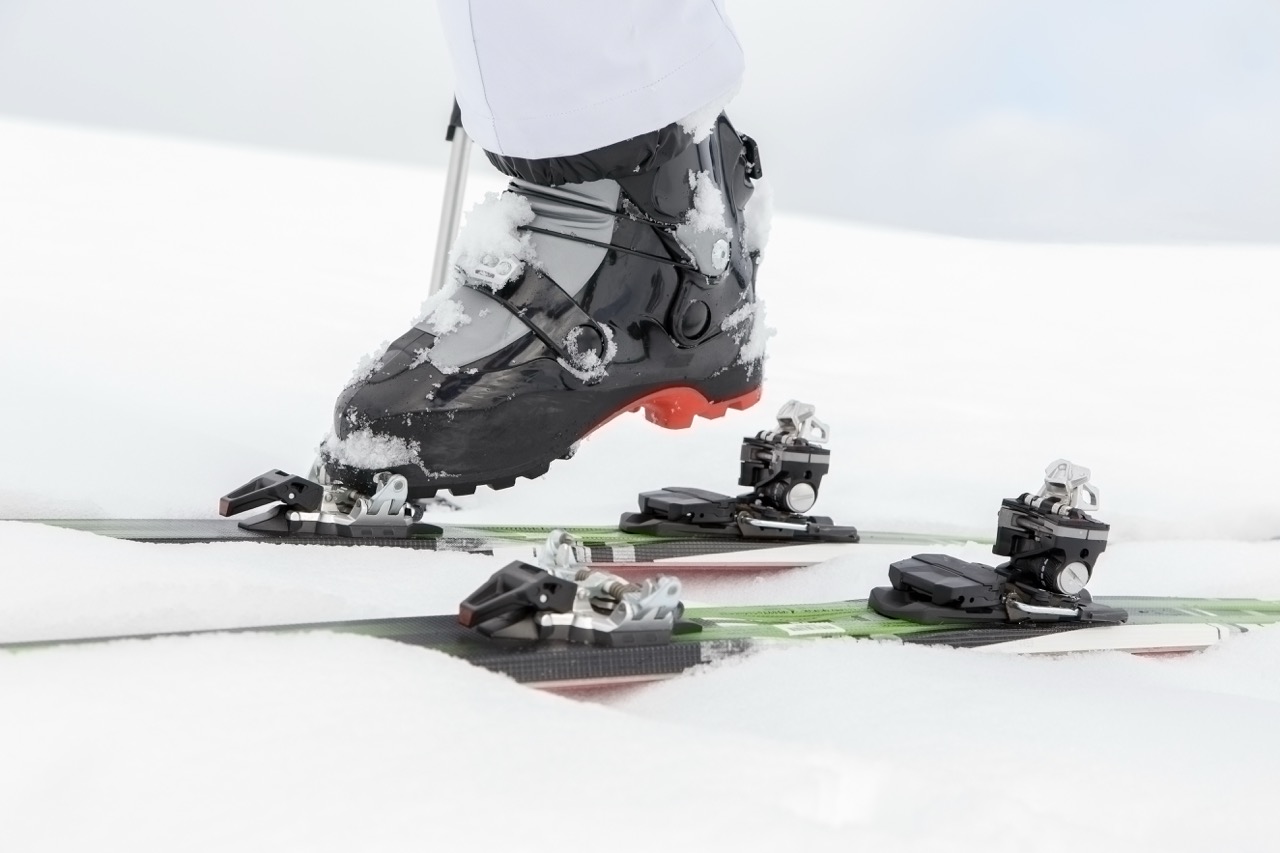
The production of high-performance skis and snowboards is a complex structural process involving wood cores, edges, bases, and fiber laminates. Every processing stage affects the stability, flexibility, and durability of the finished product.
When discussing ski production, there is a tendency to look at the final visible stage of processing. In reality, the edge quality and its stability over time depend on the previous stages: lamination and the bonding of structural components.
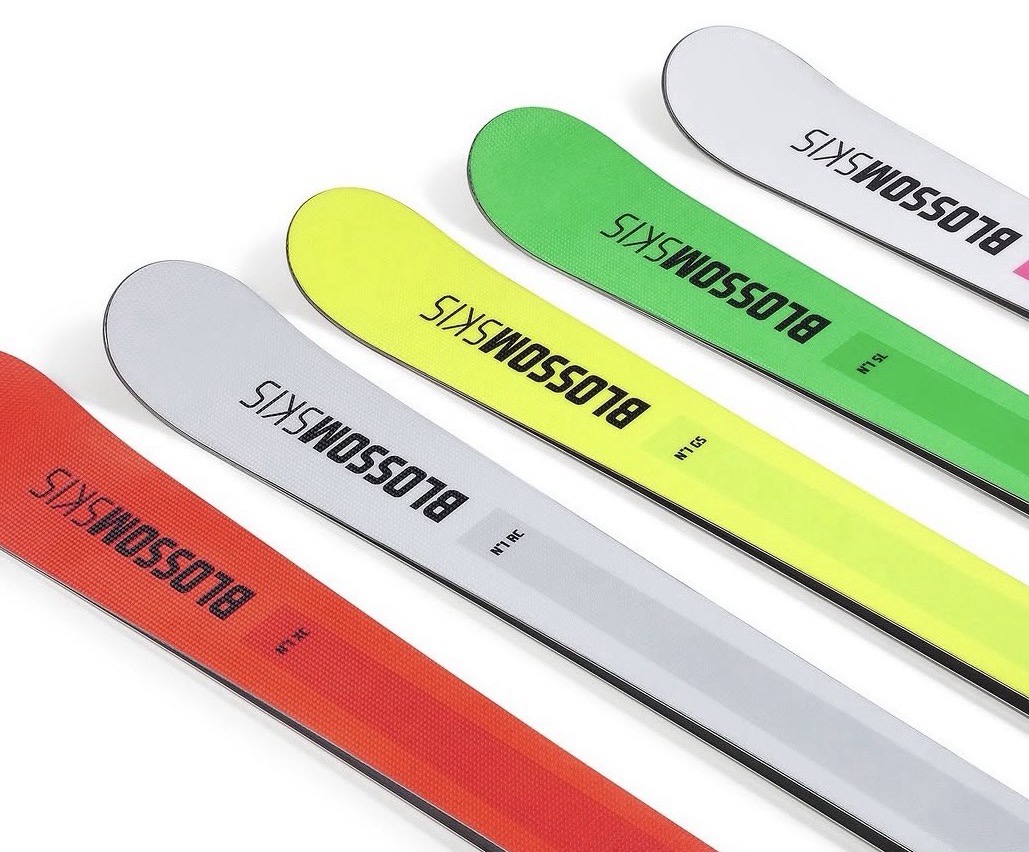
Blossom Skis’ vision meets Mascherpa solutions
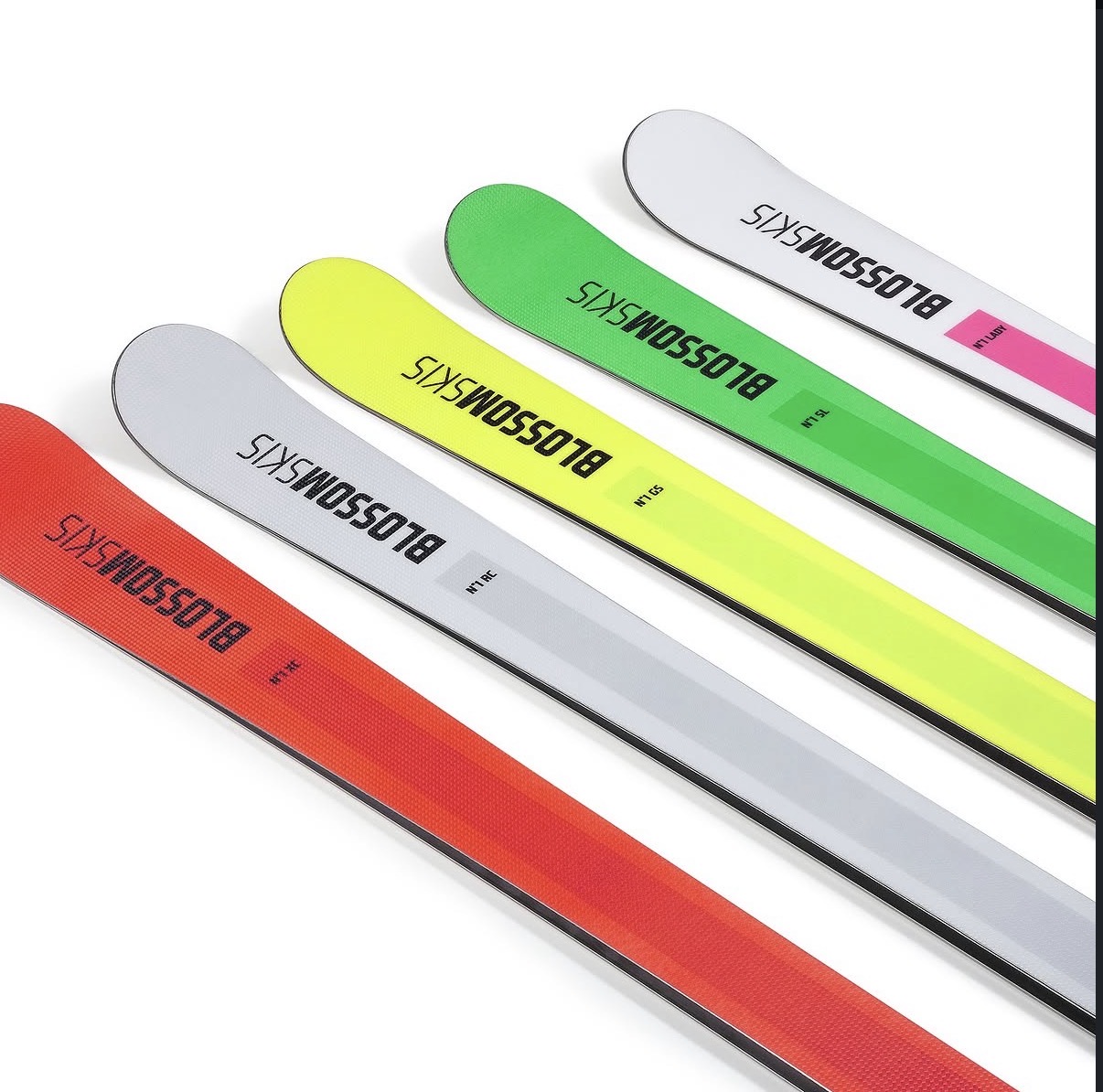
Blossom Skis is a company that, in an era of standardized production, has chosen tailored craftsmanship.
Direct control of all processing stages, material quality, and 100% Made in Italy production are central elements of its manufacturing model.
Following the tradition of Valchiavenna, the Blossom team constantly works on researching the best design lines, the highest-performing materials , and the most effective production technologies, with a precise goal: to give every customer “their” pair of skis, designed according to their technical skills , and the conditions of use.
Every ski is designed with passion, crafted with care, and directly tested.
In this manufacturing context, the ski lamination phase represents a decisive step. This is where the experience of Mascherpa comes in: not as a simple material supplier, but as a technical partner capable of supporting the manufacturer in application choices and in managing critical issues related to ski production using composite materials.
From technical consulting to collaboration
The collaboration with Blossom stems from the analysis of the typical needs of every ski manufacturer:
- structural reliability;
- stability during molding;
- behavior at low temperatures;
- repeatability of the production process.
The Mascherpa approach was oriented from the beginning toward technical consultancy, going beyond the simple supply of products for composite materials. The analysis of the The substrates involved, the discussion on molding conditions, and the evaluation of required performance have led to the definition of a consolidated solution in the ski lamination sector.
This method reflects the Mascherpa vision: transferring application expertise gained in industrial composites to high-performance fields such as sports.
Composite solutions for ski and snowboard lamination
The system consisting of ARALDITE® AW 1136 / ARALDITE® AW 1137 / ARADUR® 5049-1 is widely established in the ski and snowboard lamination sector, as it is designed for bonding critical components such as:
- cores;
- sharpening of ski and snowboard edges;
- bases;
- fiber laminates (thus high adhesion on various substrates).
In this specific case, for Blossom brand applications, the epoxy resin for composites Aradur 5049-1 and the AW 1136/37 system have enabled:
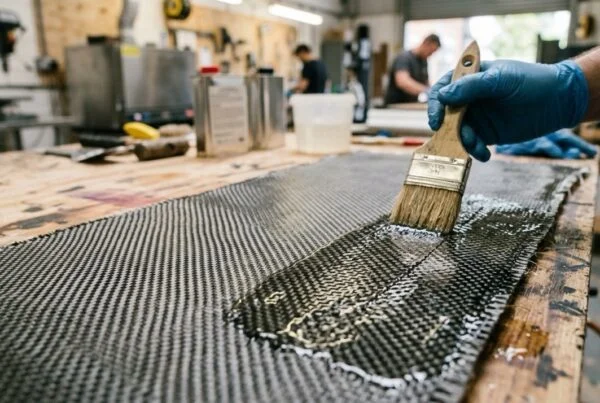
- Uniform application, without excessive running, thanks to the viscosity (5000/7000 mPas), facilitating the wetting operation of various components (fiberglass laminates and cores).
- Curing even at high temperatures (press molding, approximately 100°C), thus offering excellent thermal resistance during the molding phase, for rapid production.
- Excellent adhesion on different substrates.
- Retention of elongation at break during use at low temperatures (in contact with ice, water), ensuring ski flexibility when subjected to heavy dynamic and static loads.
Therefore, the reason for success is that this system fully meets the needs regarding ski production and use. The materials involved are wood cores and fiberglass laminates: these are not dry fabrics, but already cured elements that require reliable and stable structural adhesion over time.
Structural performance and quality over time
One of the central aspects of the collaboration concerns the balance between mechanical performance and control of the production process.
The adhesive system used ensures:
- robust and durable bonding;
- adhesion on different substrates;
- stability during molding;
- flexibility at low temperatures.
Ease of application contributes to optimizing production processes, ensuring repeatability and consistent quality.
This directly affects the overall stability of the structure, the durability of the bases, and the edge retention, creating ideal conditions for maintenance and ski tuning.
Mascherpa and Blossom at JEC World 2026
The collaboration between Mascherpa and Blossom will also be highlighted at JEC World 2026, the leading international event dedicated to composite materials.
Both companies will be present at the DGE stand, reinforcing the message of partnership and international collaboration.
JEC World 2026 represents the ideal setting to show how composite technologies find concrete application not only in advanced industrial sectors but also in high-performance ski production.

A partnership oriented toward quality
The tailored production of Blossom Skis and the technical-consultancy approach of Mascherpa share a common vision: structural quality, process control, and attention to detail.
In ski processing and production, every component must work in an integrated way. Even what is not visible, the bonding between the wood core, fiberglass laminates, and bases, contributes decisively to perceived quality and on-track performance.
It is in this integration between composite materials and application expertise that the partnership finds its value: building high-performance skis where structural quality supports the precision of ski lamination over time.
For more information on all industrial applications of composite materials, visit our Mascherpa Expert page or contact our experts for a consultation.