Key points of the article
- Kraken marks an evolution from Alba, with a new construction philosophy designed to tackle the SuMoth Challenge.
- The single skin structure changes the role of composite materials, making localized reinforcements, bonding, and precision fabrication strategic.
- Flax fibers, glass fibers, and 3D-Core™ were used strategically to optimize the vessel’s stiffness, weight, and performance.
- Huntsman Araldite® structural adhesives and Diatex fixatives supported the various construction phases, from component positioning to hull closure.
- Behind Kraken are not just materials, but a process of technical collaboration demonstrating how industrial expertise and university training can work together.
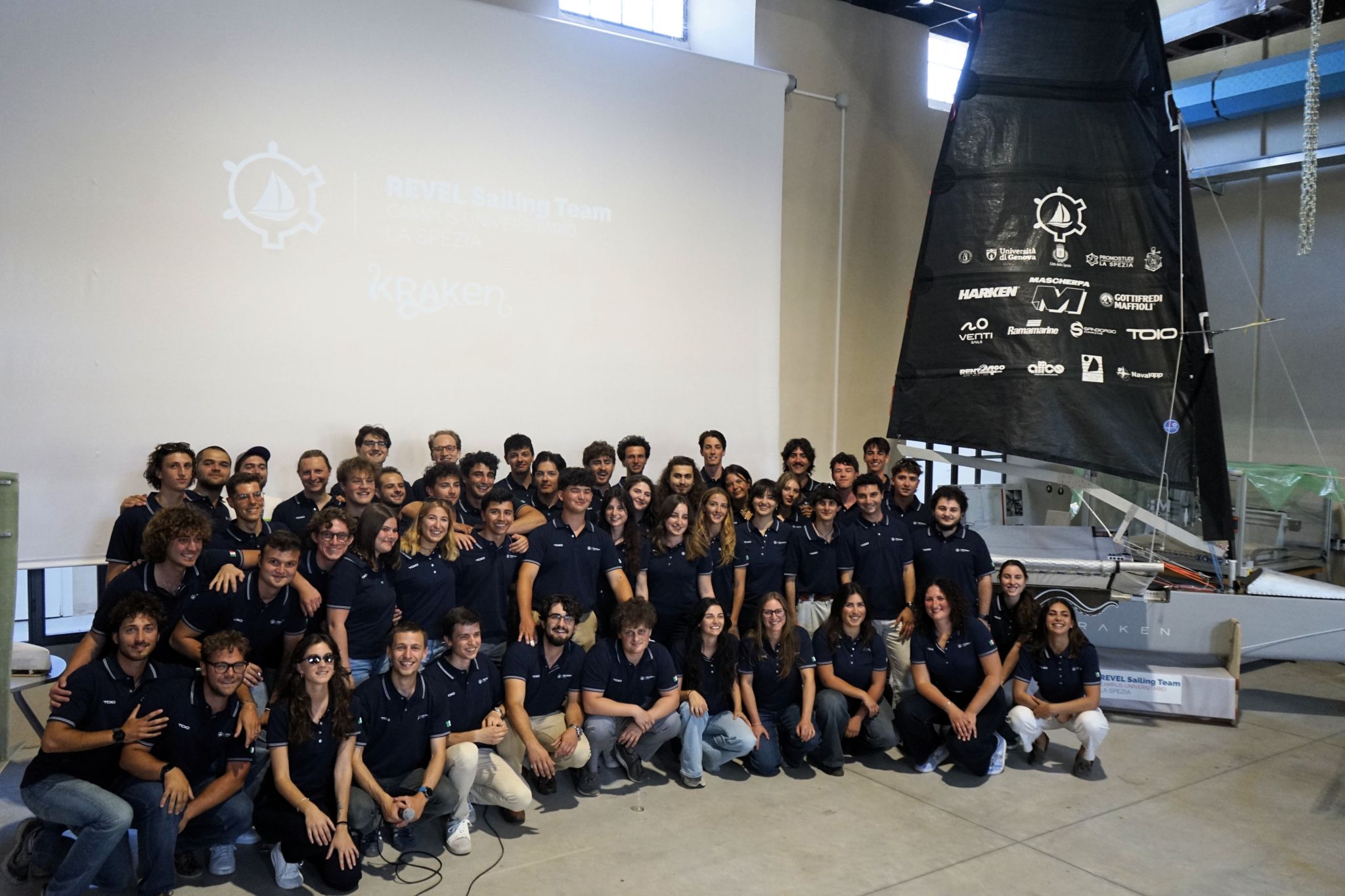
Following the Alba project, Mascherpa renews its collaboration with the Revel Sailing Team, supporting students in developing Kraken, the new boat designed for the 2026 season.
In this case as well, Mascherpa’s support was not limited to supplying technical materials. The collaboration involved construction choices , fabrication processes, use of composite materials, structural bonding, and consumables used during operational construction phases.
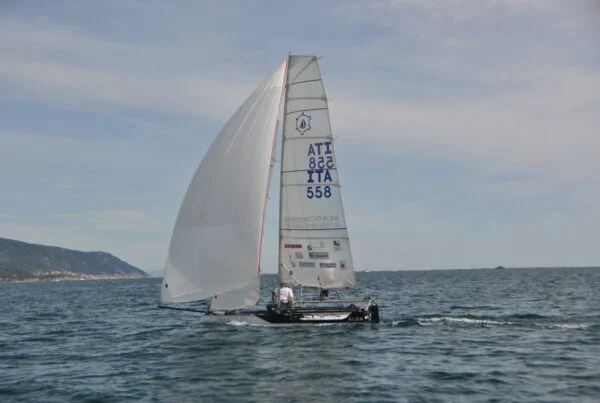
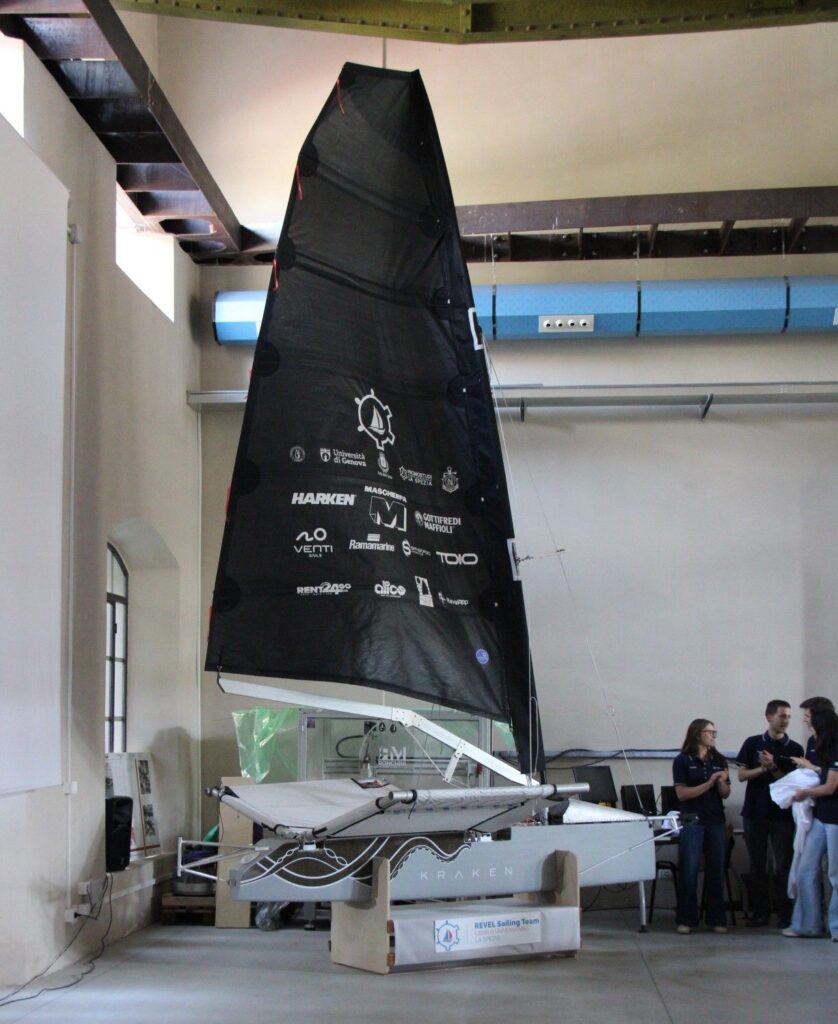
Kraken was officially presented on May 25 and will compete from June 8 to 14 in the SuMoth Challenge. The project builds on the path already established with Alba, but introduces a substantial difference: the type of boat changes, and so does the way materials are used.
Index
- Differences Between Alba and Kraken
- Kraken and the SuMoth Challenge
- A Single Skin Boat Built with Flax and Glass Fibers
- The Role of 3D-Core™ in Structural Reinforcements
- Huntsman Araldite® Structural Adhesives for Hull, Deck, and Internal Components
- Diatex Fogtac™ and Infutac™ in the Pre-Lamination Phase
- Peel Ply, Mesh, and Vacuum Bag in the Infusion Process
- From Mascherpa Know-How to Kraken’s Construction
Differences Between Alba and Kraken
Alba was built with a sandwich structure composed of flax – glass – 3D-Core – glass – flax. After resin infusion, this layup produces the final laminate of the hull.
Kraken, on the other hand, was designed as a single skin boat. The structure consists of layers of flax and glass, without a continuous core in the hull. The 3D-Core™ was used only in specific areas where greater stiffness was needed in the structure.
This is the main technical difference between the two projects: Alba uses the core as part of the sandwich structure of the hull, while Kraken employs it strategically, as localized reinforcement.
Kraken is also a single-handed boat designed to “fly” over the water using foils. This required a different construction approach, with particular attention to bonding, reinforcements, and positioning of internal components.
Kraken and the SuMoth Challenge
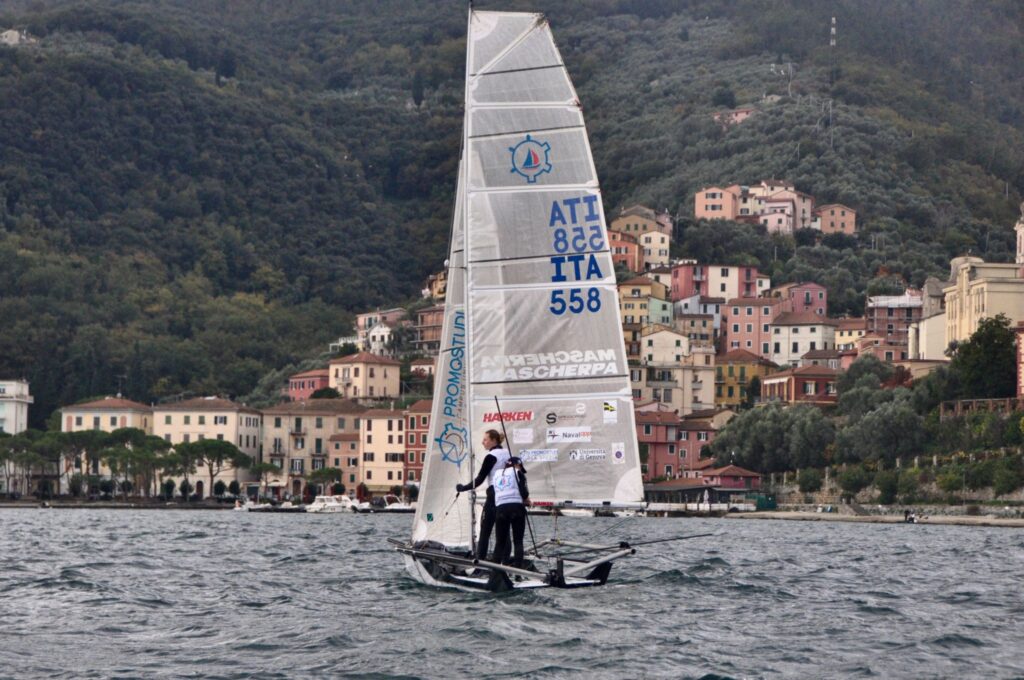
Kraken was designed to compete in the SuMoth Challenge, a different competition from the 1001VELAcup, which is associated with the Alba skiff.
The vessel is designed to lift above the water level thanks to the foil system. For this reason, it integrates specific technical elements, including a wand to adjust the vessel’s height, the rudder, and the foil, i.e., the wings positioned beneath the boat.
This configuration also influenced the construction process. The single skin structure, reinforced areas, bonding, and internal fabrication required different materials, applied at precise locations and with very specific functions.
This is where Mascherpa’s contribution becomes central: not only for the materials supplied, but for the way these materials were integrated into the actual construction steps.
A Single Skin Boat Built with Flax and Glass Fibers
The construction of Kraken began with the use of flax fibers and glass fibers.
Unlike Alba, where 3D-Core™ was part of the sandwich structure of the hull, in Kraken the layup was configured as single skin. The boat was therefore built with layers of flax and glass, without inserting the core as a continuous core between the laminate skins.
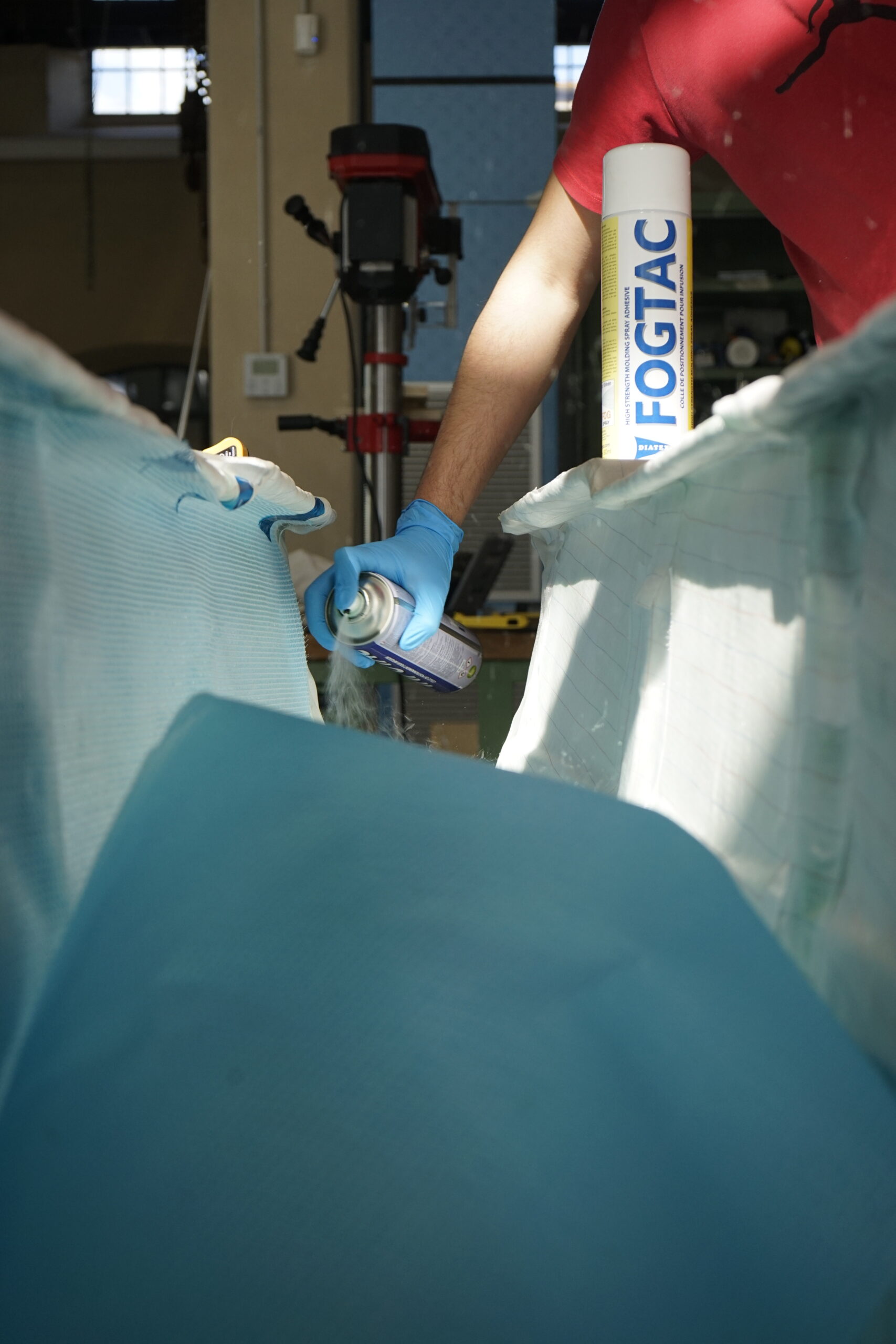
This choice made controlling the fiber positioning and lamination phases even more important. The hull’s shape, very vertical, required the use of spray fixatives to keep the fabrics in the correct position before lamination.
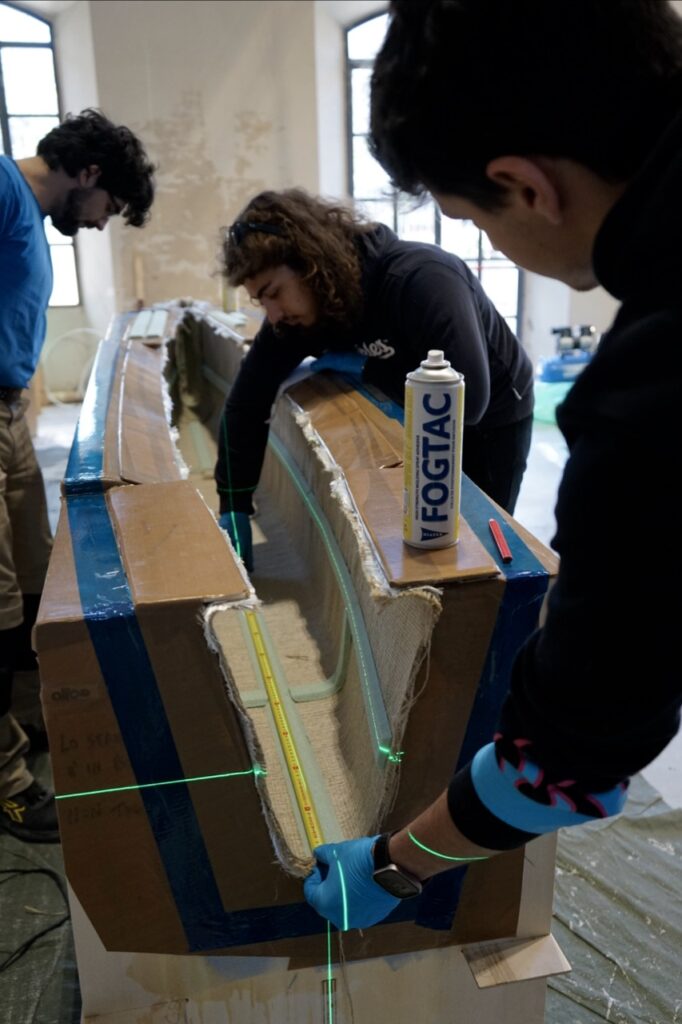
The fibers had to remain in place, adhere to the hull geometry, and not fold back on themselves during assembly. For this reason, Diatex products specific for the pre-lamination phase were used, particularly Infutac™ and Fogtac™.
In this case, the material is not just a hull component, but part of a process: positioning, fixing, lamination, infusion, and compaction.
The Role of 3D-Core™ in Structural Reinforcements
In the Kraken project, 3D-Core™ was not used as in the Alba project.
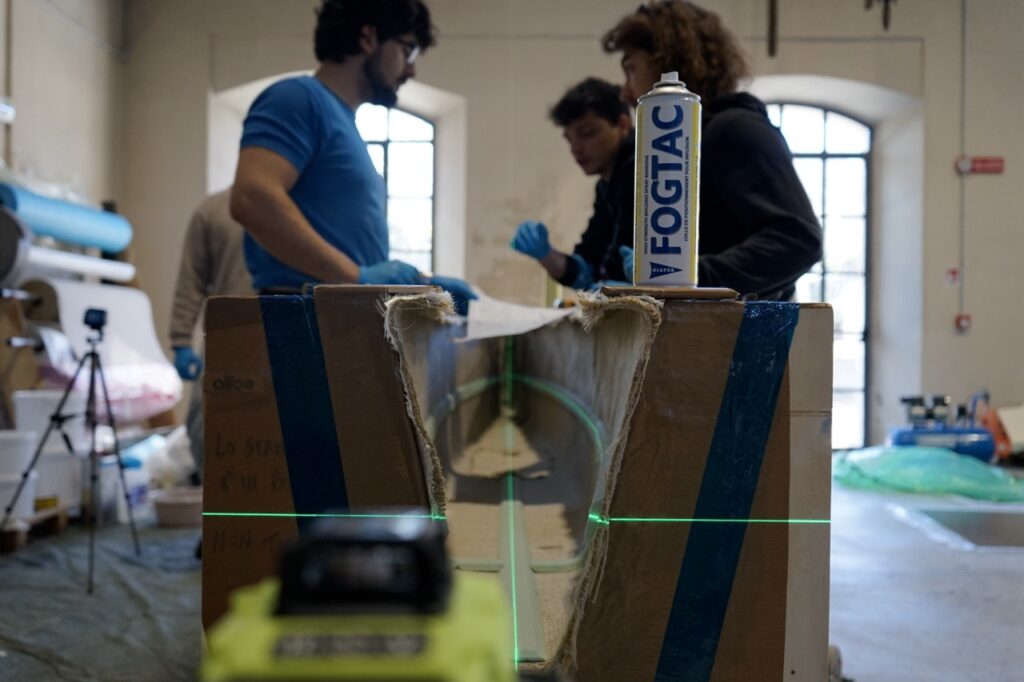
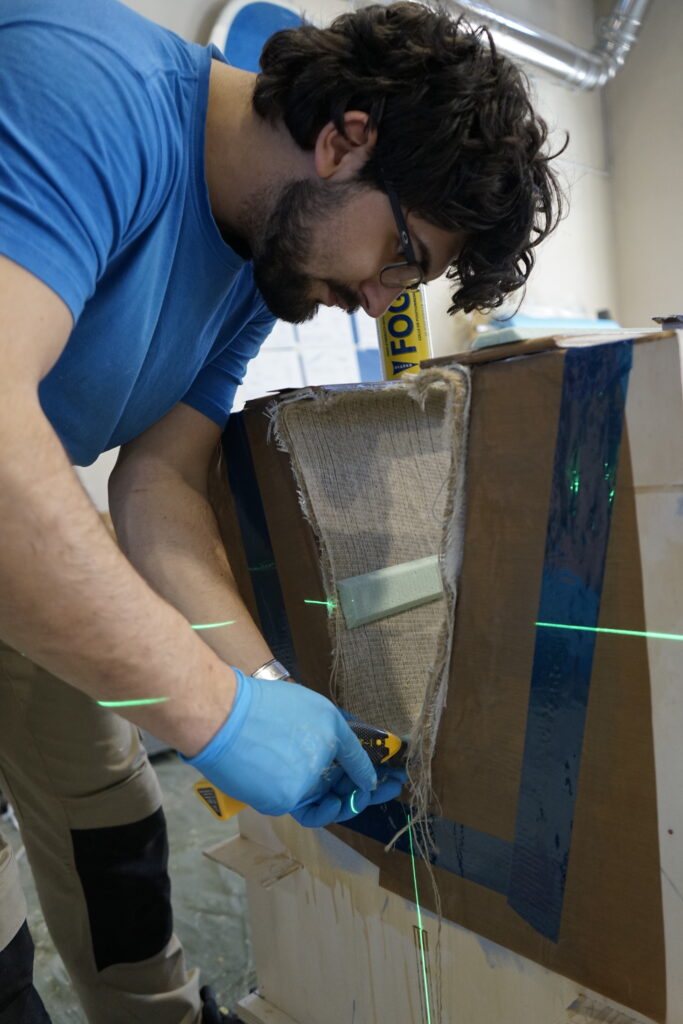
It is not present as a continuous core in the hull, but was inserted in specific areas to increase structural stiffness of the boat. Despite being a single skin construction, some areas required targeted reinforcement, and this is where 3D-Core™ played a precise role.
During fabrication, the team also used a laser to align the core at the designated locations. This step demonstrates how precisely the construction was managed through precise control of material positioning of materials.
Building Kraken’s Mast Step
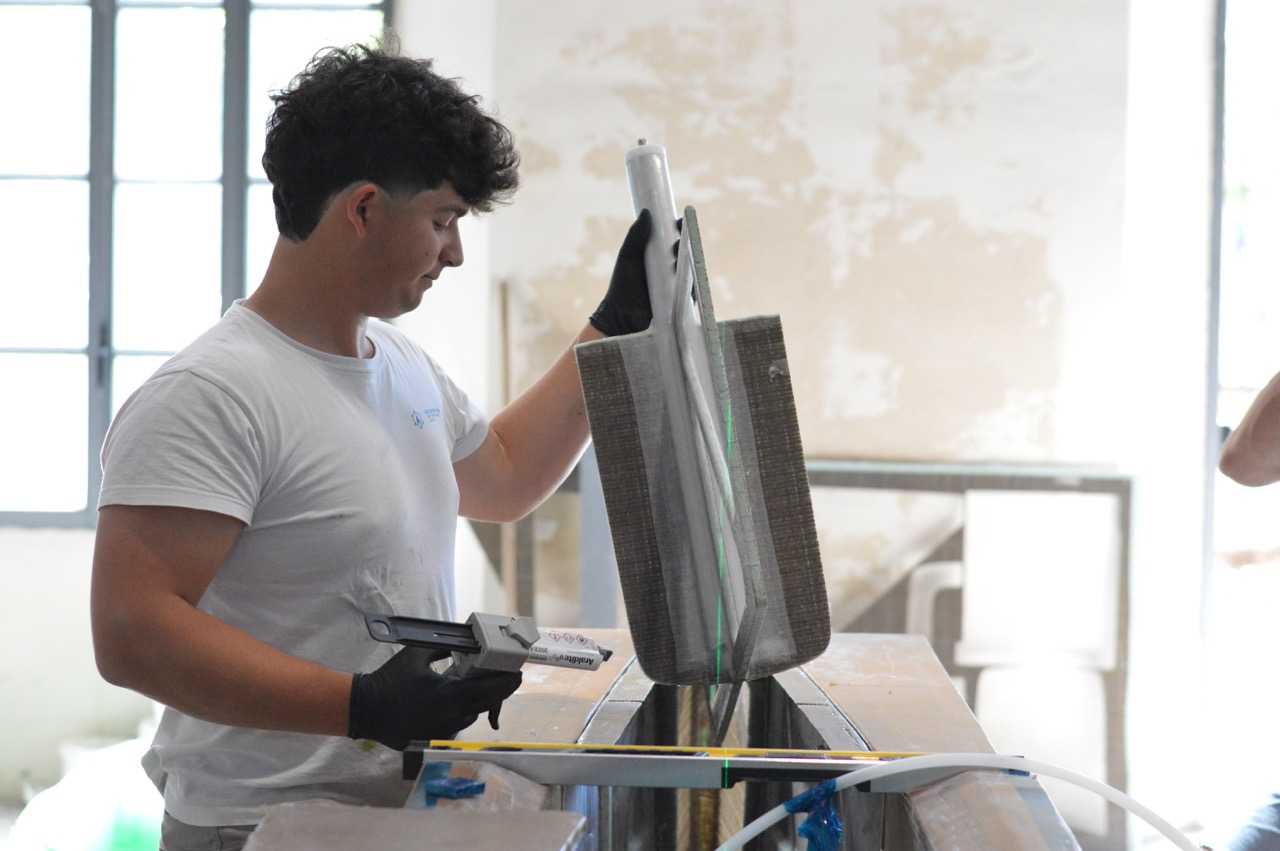
One of the particularly successful elements is the mast step. This is the structure that supports the vessel’s mast and, in Kraken, was bonded to the boat with Araldite® 2022.
The mast step is a bulkhead made of flax built in sandwich with PET 3D-Core™ and two layers of flax. This component demonstrates how the core was not used as the hull’s core, but as technical reinforcement in a specific and functional area.
Huntsman Araldite® Structural Adhesives for Hull, Deck, and Internal Components
The structural adhesives Huntsman Araldite® played a central role in Kraken’s construction.
In a single skin boat, structural bonding becomes essential for:
- positioning the internal structures;
- reinforcing the hull;
- properly connecting the various components.
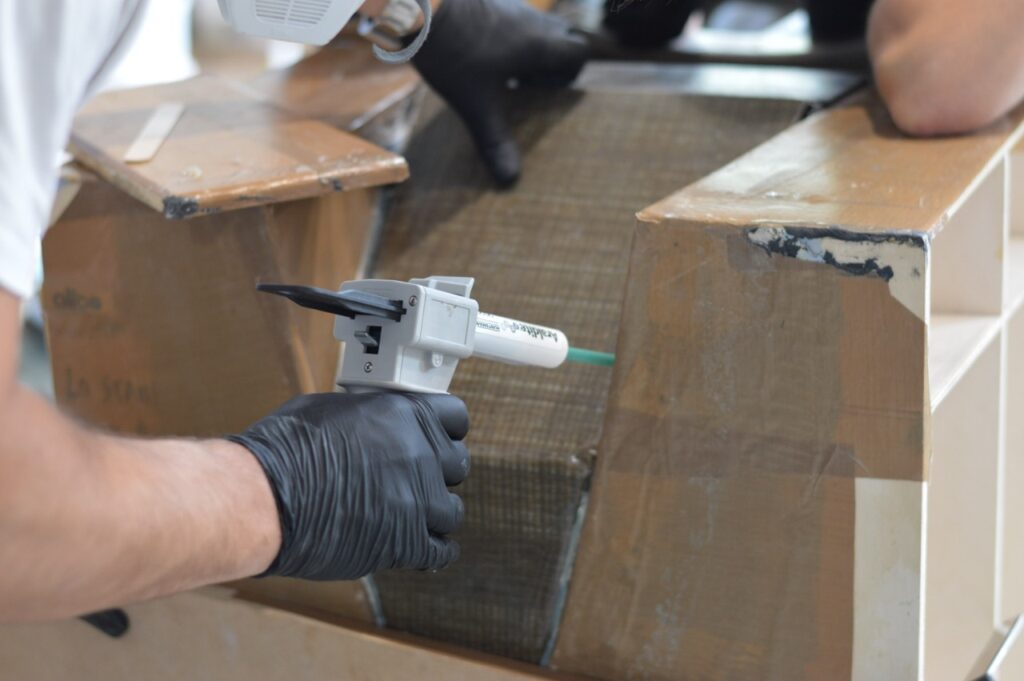
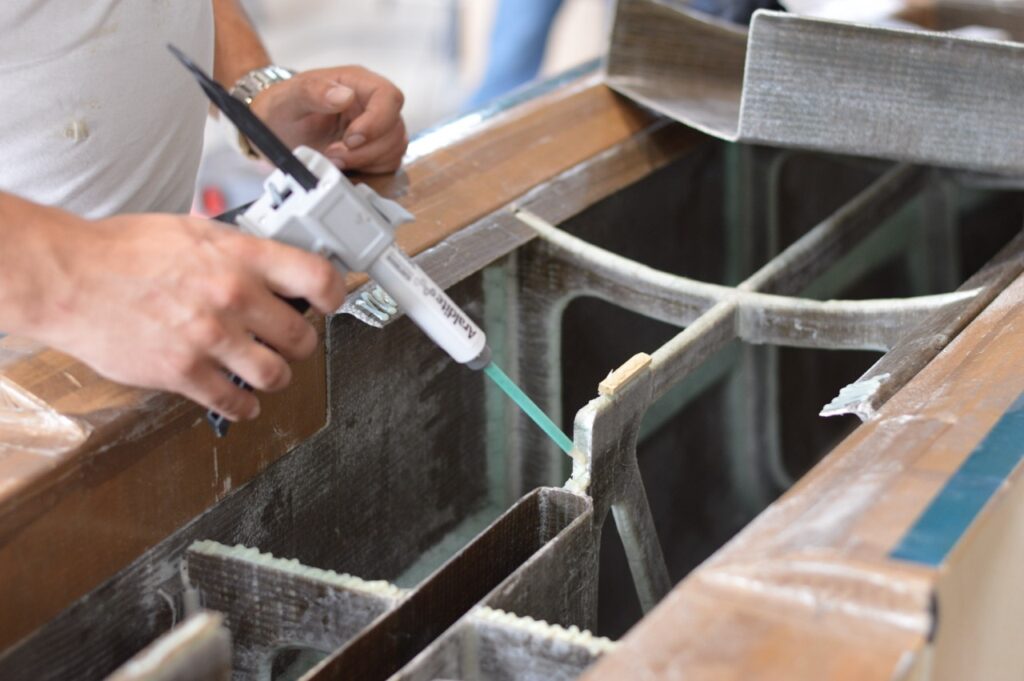
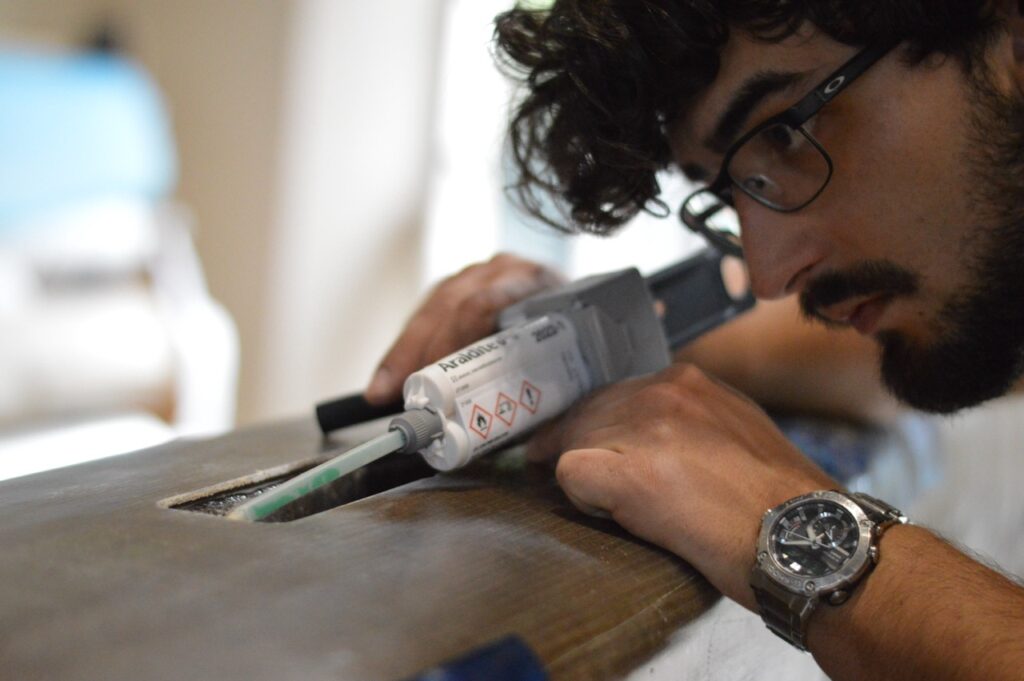
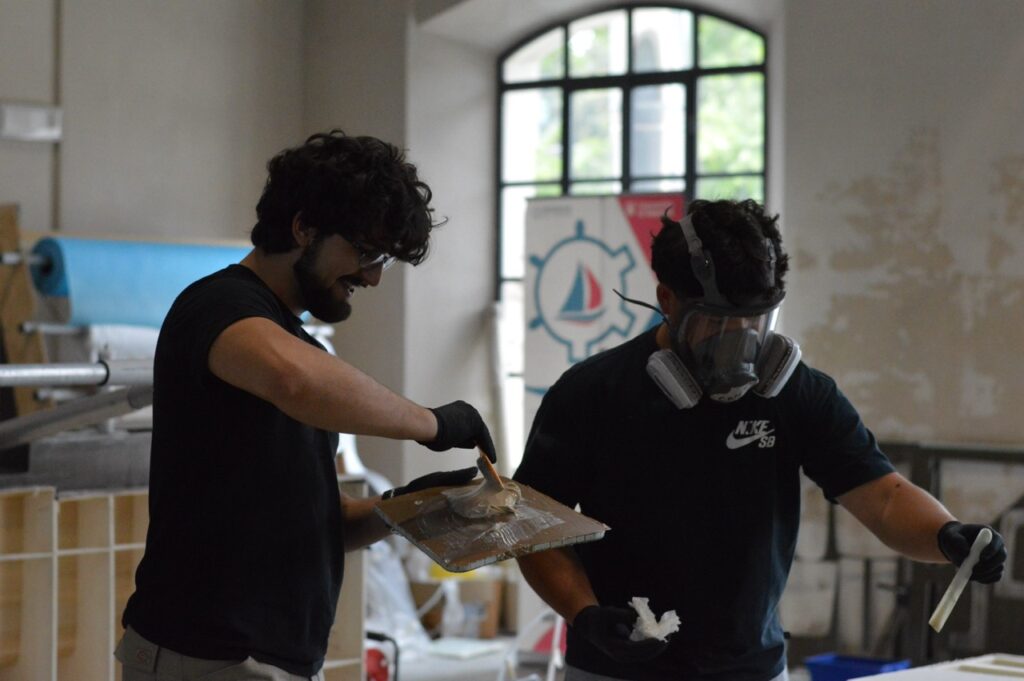
Huntsman Araldite® structural adhesives were used for the hull and deck, for bonding structures, and for various operations related to closing the boat.
Two main adhesives were used in the project:
- Araldite® 2022, also referred to as 5-minute adhesive;
- Araldite® 2015, an epoxy adhesive used for longer operations.
Technical Applications of Huntsman Araldite® Structural Adhesives
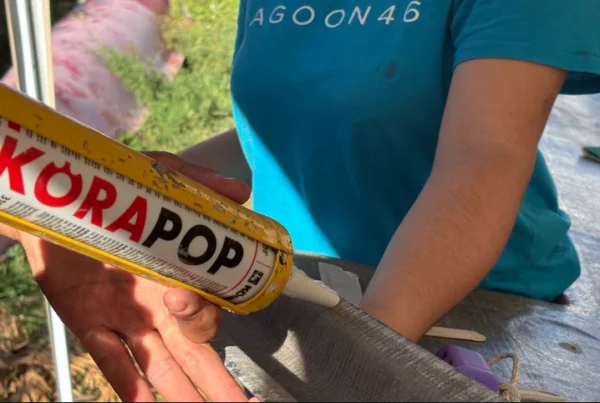
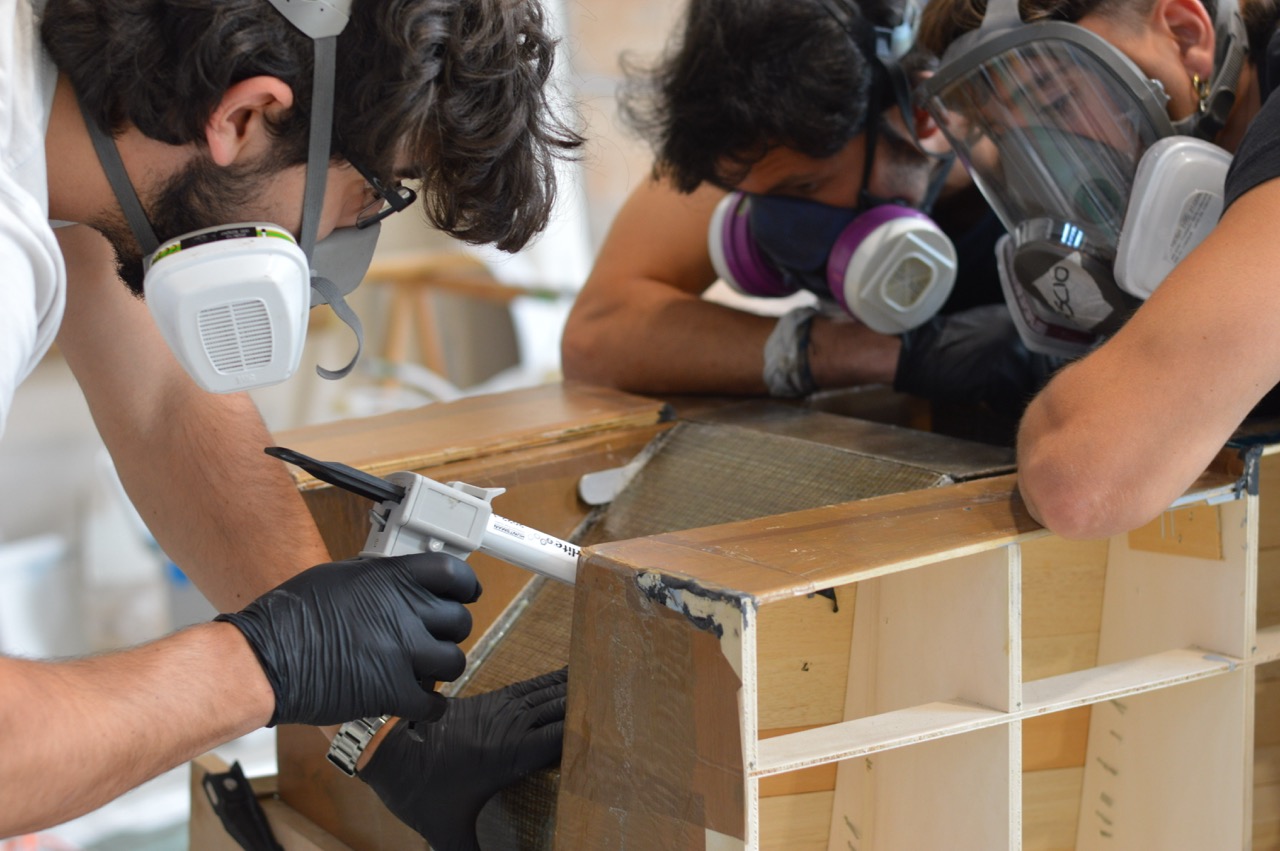
Araldite® 2022 was used for hull-to-deck bonding and for tacking elements such as the mast step. Its function was to quickly fix components in the correct position.
Araldite® 2015, on the other hand, was chosen for operations that were longer and for fabrication tasks requiring more working time. The team also requested a format with a small nozzle, useful for accessing more easily the interior of the boat and reaching areas with limited clearance.
Both adhesives were also used in boat closing operations, selecting the most suitable product each time based on available space and the type of operation.
Transom and Internal Structure Bonding
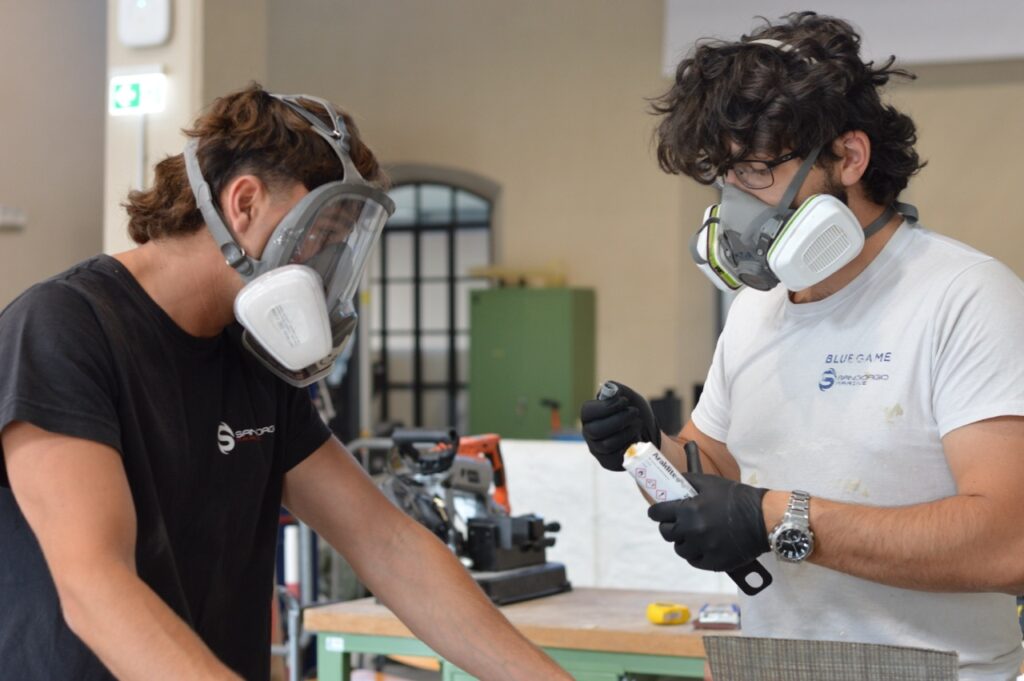
A concrete example involves bonding the transom, i.e., the stern panel. To install it, Araldite® 2022 was first used as a 5-minute adhesive, then Araldite® 2015 to complete the work.
The same principle was applied to the internal structures: before further lamination using tabbing, the structures were bonded with Huntsman Araldite® adhesives. The Tabbing then allowed further reinforcement of the boat and connection of the structures to the hull.
The mast step also required structural bonding. Being the structure that supports the vessel’s mast, it had to be fitted and bonded with an appropriate adhesive. In this step, the use of Huntsman Araldite® was an integral part of the construction.
Diatex Fogtac™ and Infutac™ in the Pre-Lamination Phase
In addition to Huntsman Araldite® structural adhesives, Mascherpa also supplied Diatex products used in the pre-lamination phases.
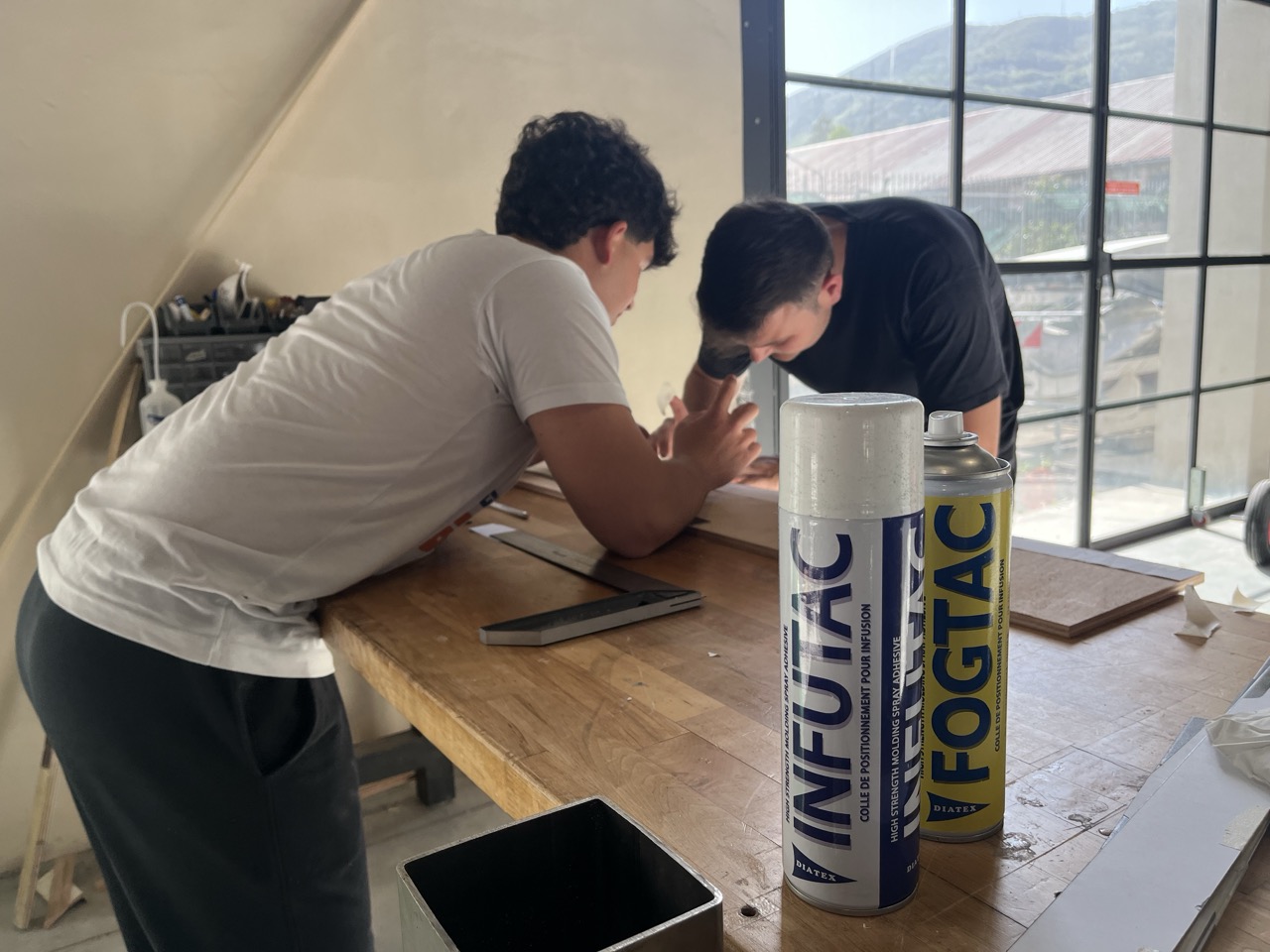
The Fogtac™ and Infutac™ spray fixatives were used to fix the fibers before lamination. Their use was particularly useful because Kraken’s hull shape is very vertical: without proper fixing, the pieces would have risked moving or folding back on themselves during assembly.
These products therefore had a practical and very precise function: keeping fibers and materials in position before infusion and lamination.
The difference between the two spray fixatives is as follows:
- Infutac™ was used primarily on fibers;
- Fogtac™ was used more specifically on core strips inserted in certain areas of the boat.
Although it should be noted that the two products are fairly interchangeable.
This distinction is an important detail because it shows how the construction was not managed simply by choosing “a spray adhesive,” but by adapting the material to the substrate and function of each individual step.
Peel Ply, Mesh, and Vacuum Bag in the Infusion Process
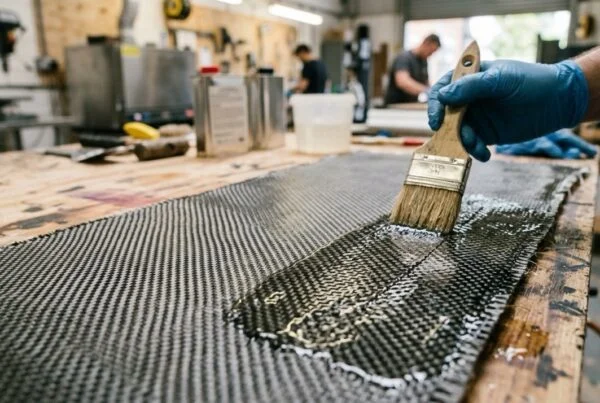
The infusion and lamination phase also required specific consumables supplied by Mascherpa, including peel ply, Diatex vacuum bag, and mesh to facilitate resin flow.
The blue mesh was used to improve resin flow during infusion and lamination, with the goal of wetting the entire fiber surface.
Between the mesh and the fibers, peel ply was applied, a material that served multiple functions in the process:
- protecting the laminate;
- allowing immediate re-lamination after removal;
- achieving a textured surface without additional processing;
- promoting better fiber compaction;
- contributing to more effective resin distribution.
The Diatex vacuum bag completed the process, allowing the vacuum sealing of the components during the compaction and lamination phases.
In this case too, the role of materials is not secondary. The final quality of the laminate depends on how the fibers are positioned, compacted, and impregnated. For Kraken, these materials helped make the process more controlled and consistent with the boat’s construction requirements.
From Mascherpa know-how to the construction of Kraken
The Kraken project clearly illustrates the meaning of the collaboration between Mascherpa and the Revel Sailing Team within the NEXT program.
Mascherpa provided:
- flax fibers;
- glass fibers;
- 3D-Core™;
- Huntsman Araldite® structural adhesives;
- Diatex products for pre-lamination;
- peel ply;
- vacuum bag;
- operational tools such as the scissors used during processing.
But the value of the collaboration lies not only in the list of materials. It lies in the way these materials were selected, applied, and integrated into the actual construction steps.
The journey confirms the role of Mascherpa NEXT: supporting university teams and emerging entities with materials, experience, and technical consultation, while leaving full design and construction responsibility to the students.
With Kraken, the Revel Sailing Team continues a new chapter of its applied research in the nautical sector. Mascherpa supports this journey with concrete solutions, used at the points where the boat takes shape: from composite materials to structural adhesives, through to the consumables that make the construction process possible.
For more information regarding the Mascherpa solutions used in the construction of Kraken and the partnership, contact our experts or visit the dedicated collaboration page.