Key points on food-grade spray lubricants for plant maintenance
- The CRC range includes lubricants, penetrating oils, and cleaners for various food-grade maintenance needs.
- The choice depends on the component, the residue to be removed, and the operating conditions.
- Sprays allow for targeted applications even on hard-to-reach mechanisms.
- Bottling and packaging case studies demonstrate how to reduce intervention times.
- Product, NSF registration, and dosage must be verified for each application.
A guide that traps sugar dust, a chain to be lubricated, a seized bolt, or a deposit to be removed: in food plant maintenance, different problems can converge on the same line.
Interventions must often be performed during short downtime periods, on hard-to-reach components, and near processing or packaging zones. Restoring the operation of food machinery therefore requires attention to cleanliness, the quantity of product applied, and the risk of contamination.
The food-grade spray lubricants allow for localized intervention on mechanisms. Alongside lubrication, however, different operations are required:
- degreasing a surface,
- dissolving sugar residues,
- facilitating the disassembly of a component.
The CRC range includes lubricants, penetrating oils, and cleaners dedicated to these needs. The choice starts from the task to be performed and the conditions of the point of intervention.
Index
- Critical maintenance issues in food plants
- Spray degreasers, cleaners, and lubricants: what function they perform
- CRC products for the cleaning and maintenance of food plants
- How to choose a spray for food-grade maintenance
- CRC applications on food lines
- Food maintenance solutions at Cibus Tec 2026
- Frequently asked questions about food-grade spray lubricants for plant maintenance
- Organizing interventions beyond the choice of spray
Critical maintenance issues in food plants
In food lines, processing residues can interfere with the operation of components.
Sugar and cocoa powder, for example, can adhere to oil films present on guides, promoting accumulations that increase friction and require frequent cleaning.
In other areas, the critical issue concerns the presence of oils and greases to be removed, the oxidation of mechanical connections, or the difficulty of reaching the component during normal maintenance activities.
The problem also changes according to accessibility. An intervention on a guide reachable during a shift change is different from an operation that requires disassembly. The spray format can facilitate localized application, provided the product and method of use are suitable for the machine.
Added to these needs is the control of contamination risk. Using a product intended for the food environment still requires verifying where to apply it, how much to use, and what conditions to respect before restarting.
Spray degreasers, cleaners, and lubricants: what function they perform
A spray degreaser removes contaminants such as oils, greases, and lubricant residues. Its function is to clean the surface; it does not replace the product needed to subsequently lubricate a mechanical part.
Specific cleaners instead respond to particular residues. A self-adhesive label and a sugar deposit have different characteristics and require formulations suitable for their removal.
A spray lubricant reduces friction between moving surfaces. The behavior of the film left on the component is decisive: in some applications, adhesion to metal is required, while where dust is present, a dry and non-sticky film may be preferable.
Finally, penetrating oils facilitate interventions on nuts, bolts, and seized mechanisms. The ability to penetrate into couplings helps with disassembly, performing a function distinct from the periodic lubrication of the machine.
In food-grade maintenance, these operations complement each other, but each product must be chosen for its specific task.
CRC products for the cleaning and maintenance of food plants
CRC products, a Mascherpa partner, allow for addressing different needs, from the removal of dirt to the restoration of movement. Identifying the residue, the component, and the required result helps in selecting the relevant formulation.
Dry lubrication of guides with CRC Dry Lube
CRC Dry Lube is a dry lubricant based on PTFE. This product leaves a dry, clean, and non-sticky film, which reduces friction without trapping dust and dirt.
These characteristics make it useful for guides and mechanisms where an oily residue would be undesirable. It is suitable for low speeds and light loads and adheres to various materials, including metals, plastic, and rubber.
Dry lubrication must be chosen based on the conditions of the component and the intended use. CRC Dry Lube and CRC Dry Lube-F must be identified separately: for points with possible accidental contact with food, the registration of the formulation actually used must be verified.
Releasing components with CRC PEN Oil
CRC PEN Oil is a penetrating oil, NSF H1 registered, for maintenance interventions on food machinery.
The high penetrating power allows it to act on nuts, bolts, and rusted components, dispersing rust, oxides, and residues and facilitating disassembly operations.
It is a solution for connections that offer resistance during maintenance. The formulation is silicone-free; on plastics and rubbers, compatibility must be verified with a preliminary test.
Removal of oils and greases with CRC Industrial Eco Degreaser
CRC Industrial Eco Degreaser is a solvent-based degreaser for removing oils, greases, lubricants, and adhesive residues.
The rapid action and evaporation without residue make it relevant for technical cleaning interventions on components. The formulation is free of acetone and chlorinated solvents.
In the maintenance of food plants, its task is to remove dirt from the treated point. The application must comply with the conditions of use intended for the product and for the area of the machine involved.
Label removal with CRC Label Off Super
CRC Label Off Super is a spray cleaner for the removal of self-adhesive paper labels.
It acts in 2-3 minutes, facilitating the detachment of the label and limiting the need to scrape the surface. After evaporation, it leaves no residue.
The precision straw allows the product to be directed onto the area to be treated. It is a solution for label removal, with a function distinct from both general degreasing and mechanism lubrication.
Removal of sugar deposits with CRC Sugar Dissolving Fluid
CRC Sugar Dissolving Fluid dissolves sugars, fondants, and sugary residues on processing and packaging lines.
The fluid penetrates the deposits and leaves a light lubricating film that hinders re-adhesion. It also helps prevent sugar buildup on fasteners.
NSF H1 registered, it combines residue removal with a complementary lubricating action. This function does not make it a universal substitute for the oils used on other parts of the machine.
How to choose a spray for food-grade maintenance
The choice of a food-grade spray lubricant or a cleaner must start from the operation to be performed. The delivery format alone does not describe the function or suitability of the product.
For each intervention, it is necessary to verify:
- Component and materials, including any plastics, rubbers, and seals.
- Operating conditions, such as load, speed, temperature, and presence of dust.
- Residue to be removed or characteristics of the required lubricating film.
- Application zone and possibility of accidental contact with food.
- Method of use, quantity, and conditions for restarting.
The NSF H1 registration concerns lubricants that can be used where accidental contact with food may occur. It does not authorize indiscriminate application and must not be automatically extended to all products in the range.
Cleaners must also be selected for the intended use, verifying the product documentation. The term “food-grade” does not make an oil, a degreaser, and a label remover equivalent.
CRC applications on food lines
The needs of food-grade maintenance change between bottling, packaging, and confectionery processing. The following applications show how adhesion, film behavior, and delivery precision can respond to different problems.
Lubrication of chains in bottling lines
A bottling line needed to lubricate the conveyor chains while limiting dripping onto the containers below.
CRC Chain Lube NSF H1 was introduced, with high adhesion to metal and rapid application. The chains maintained lubrication without dripping under the conditions of the intervention and without requiring disassembly for application.
The adhesion of the lubricant made it possible to meet the need to keep the product on the component, controlling dispersion toward the containers.
Maintenance of mechanisms in fruit and vegetable packaging
In a fruit and vegetable packaging plant, guides, chains, and mechanisms were hard to reach and interventions had to be concentrated in short shift-change windows.
Solutions from the CRC Food Processing Safe range, NSF H1 registered for the relevant uses, were adopted with targeted application and without disassembly.
Intervention times were reduced, improving line continuity and lubrication management near the production area.

Dry lubrication of guides in wrapping machines
On some wrapping machines of a confectionery manufacturer, the oily lubricants applied to guides and cams trapped fine dust from sugar and cocoa. The accumulations formed incrustations, increased friction, and required frequent cleaning.
CRC Dry Lube-F was adopted, a dry lubricant with PTFE NSF H1 registered, capable of leaving a dry and non-sticky film.
The lower adhesion of dust allowed for keeping the mechanisms cleaner and reducing in-line cleaning interventions.
In this application, the behavior of the dry film was decisive in addressing the problem of accumulations on lubricated surfaces.

Rapid interventions on capping and labeling machines
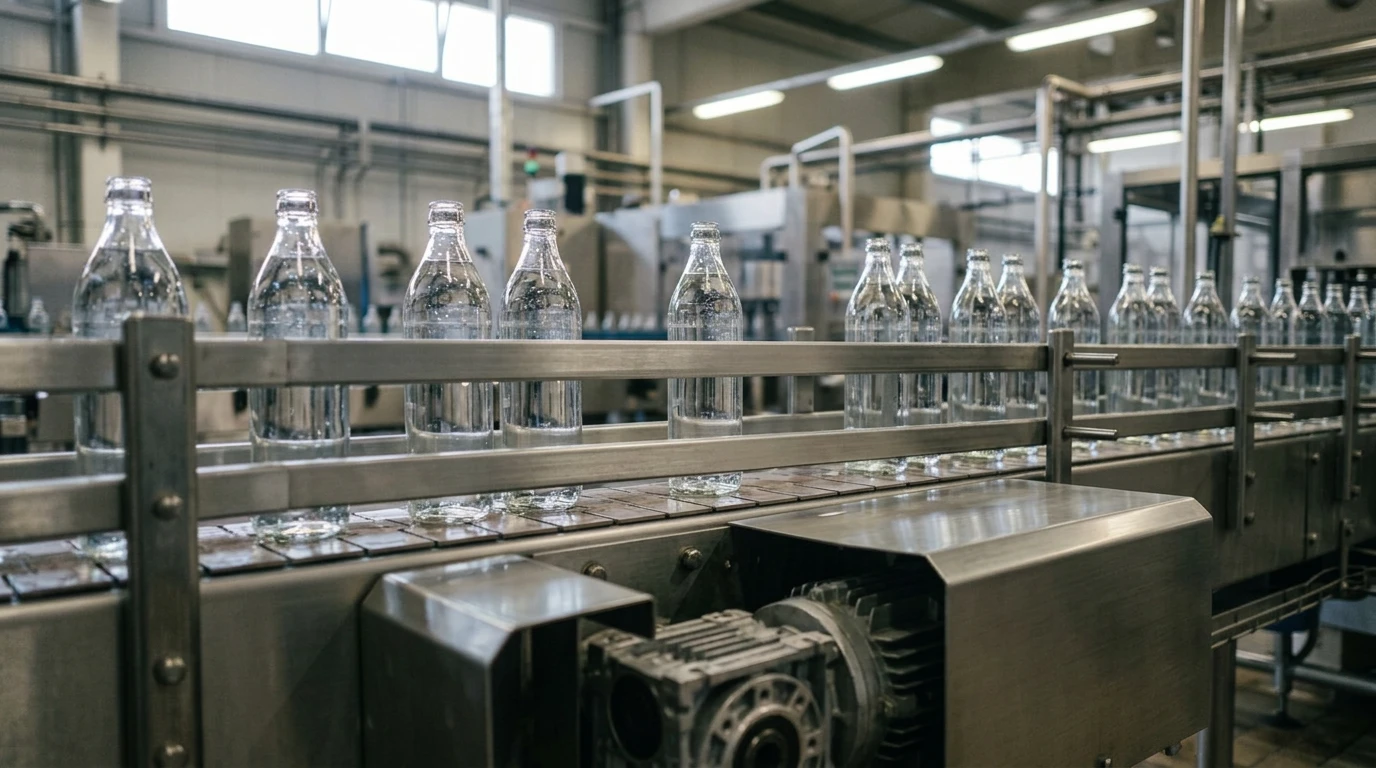
In a mineral water bottling line, maintenance of capping and labeling machines had to be performed during very short downtime periods, on hard-to-reach mechanisms near the product.
The use of CRC Food Processing Safe solutions NSF H1 registered allowed for targeted applications without disassembly, reducing intervention times and making restarting faster.
The selection of products for the area of use accompanied the need for speed with the control of the NSF registration of the formulations used.
Food maintenance solutions at Cibus Tec 2026
From October 27 to 30, 2026, Mascherpa will be at Cibus Tec, at Hall 02, Stand F061, to discuss the lubrication and maintenance needs of food plants.
It will also be possible to consult with our experts on the use of CRC solutions: choice of spray lubricants, removal of process residues, and interventions on guides, chains, and mechanisms of food lines.
Frequently asked questions about food-grade spray lubricants for plant maintenance
What is the difference between a degreaser and a spray lubricant?
A degreaser removes oils, greases, and dirt from the surface. A lubricant reduces friction between moving parts. If a component requires both operations, products and methods compatible with the intervention must be chosen.
When is a dry lubricant useful on food machinery?
When it is necessary to reduce friction while limiting the presence of an oily film that could trap dust and dirt. The choice must still take into account load, speed, materials, and the registration required for the point of use.
Can an NSF H1 spray come into direct contact with food?
NSF H1 registration concerns possible accidental contact. It is not equivalent to suitability for intentional contact. Release agents for specific direct contact applications fall under the NSF 3H category, to be verified on the individual product.
Does the spray format always allow for avoiding disassembly?
It can facilitate interventions on reachable points and reduce the need for disassembly in some applications. However, it does not eliminate the access limits of the machine: the method of intervention must be defined based on the component and operating conditions.
How to determine how much spray lubricant to apply?
The quantity depends on the point to be lubricated, the working conditions, and the product. It must be defined together with the frequency of intervention, ensuring that lubrication is sufficient without generating excess, dispersion, or unwanted accumulations.
Organizing interventions beyond the choice of spray
Effective maintenance in the food industry links each product to a precise operation. Degreasing a surface, dissolving a sugar deposit, and lubricating a chain require different formulations and methods of use.
To make interventions more controllable, it is necessary to define application point, product, quantity, and frequency, keeping technical information available and recording the activities performed.
CRC sprays can be integrated into this program to address localized needs of cleaning and lubrication. The goal is to intervene on the problem with the suitable product, avoiding generic applications and uncontrolled quantities.
To learn more about Mascherpa food-grade maintenance solutions, contact us or download the technical guide.