Key points on electronic encapsulants
- Potting allows for the protection of the PCB or electronic device by completely or partially encasing it in an insulating material.
- Epoxy, polyurethane, and silicone encapsulants have different thermal, mechanical, and electrical characteristics.
- The choice of potting resin depends on temperature, humidity, chemical agents, vibrations, insulation, and thermal management.
- There are rigid, flexible, thermally conductive, one- and two-component electronic encapsulants, as well as high-transparency formulations.
- The correct solution depends not only on the chemical family but on the required behavior of the material in the actual application.
Electronic encapsulants are used to protect printed circuit boards and electronic components when the device must continue to operate in the presence of:
- humidity,
- contaminants,
- vibrations,
- mechanical shocks,
- temperature variations,
- other critical operating conditions.
However, not all resins for printed circuit boards respond to these operating conditions in the same way. Epoxy, polyurethane, and silicone encapsulants exhibit different characteristics, and the choice must be based on the application, the environment of use, and the performance required of the electronic system.
Index
- What are potting resins and electronic encapsulants
- What is potting used for
- Which resins are used for printed circuit boards
- Comparison between the 3 technologies
- Applications of resins for electronics
- How to choose the potting resin
- Frequently asked questions
- Potting resins and encapsulants: the Mascherpa range
What are potting resins and electronic encapsulants
Electronic encapsulants are materials used to insulate and protect boards, circuits, and electronic components from conditions that could compromise their performance and reliability.
Through encapsulation, the material surrounds the component or assembly and creates a more substantial protection than a simple surface coating. For this reason, electronic encapsulating resins are primarily used when the device is intended for demanding operating conditions.
What is meant by potting and encapsulation
The term potting generally refers to filling a container or an electronic assembly with a compound that, after polymerization, encases the system.
Encapsulation, on the other hand, can also involve individual components or specific areas of the device.
In practice, the two terms belong to the same technological field and share a common goal: to create a protective barrier between the electronics and the operating environment.
Resin and encapsulant do not, therefore, identify a single chemistry. There are epoxy, polyurethane, and silicone formulations, one-component and two-component, rigid or flexible, dielectric, thermally conductive, and formulated for specific application requirements.
What is potting used for
A printed circuit board does not necessarily work in a controlled environment. Temperature, humidity, contaminants, vibrations, and shock can act simultaneously on the materials and interfaces present in the assembly.
A resin for electronic protection can contribute to:
- electrically insulating components and connections;
- protecting against water, humidity, and contaminants;
- limiting the effects of vibrations and mechanical shocks;
- protecting against chemical agents;
- supporting the management of temperature variations;
- in specific formulations, promoting heat transfer.
The level of protection is one of the aspects that distinguishes potting from conformal coating. The latter creates a thin film that follows the profile of the PCB, whereas in potting, the amount of material used is significantly greater and can completely encase the assembly.
This does not mean that one technology is always preferable to the other. They are different solutions, to be chosen based on geometry, the required level of protection, the possibility of rework, and the expected operating conditions.

Which resins are used for printed circuit boards
Three main families of materials are used for potting and electronic encapsulation:
Epoxy encapsulants
Epoxy encapsulants include formulations generally characterized by good electrical properties, adhesion, and mechanical and chemical resistance.
However, very different behaviors exist within the same family. Rigid systems for high mechanical protection, more flexible formulations designed to limit stress on components, thermally conductive products, and one- or two-component systems are available.
For this reason, it is incorrect to automatically associate “epoxy” with a single behavior.
A system such as ARALDITE® CY 221 / ARADUR® HY 2966, for example, is designed for low-stress encapsulation and combines electrical properties, thermal shock resistance, and elastic behavior.
ARALDITE® XB 2252-1 / XB 2253-1 is instead a thermally conductive epoxy system with good dielectric and mechanical properties, good resistance to thermal shock, and high thermal resistance. It is used, for example, in the encapsulation of capacitors, filters, and transformers.
ARALDITE® CW 2243-1L is a semi-rigid and thermally conductive epoxy system, characterized by low viscosity, flexible casting, and good resistance to thermal shock. It is suitable for applications such as switches, voltage regulators, and transformers.
The Electrolube range, on the other hand, includes different solutions. ER2188 is a general-purpose epoxy resin with good electrical, adhesion, and chemical and water resistance properties, while ER2220 combines environmental protection with thermal dissipation capabilities.
Among the MG Chemicals encapsulants selected for this application, we find systems with even more varied characteristics.
| Product | Type | Main features |
| ARALDITE® CY 221 / ARADUR® HY 2966 | Two-component epoxy | Elastic system for low-stress encapsulation, good electrical properties, and thermal shock resistance |
| Electrolube ER2188 | Epoxy | General purpose, good chemical and water resistance, adhesion, and electrical properties |
| Electrolube ER2220 | Epoxy | PCB encapsulation, environmental protection, thermal dissipation, and flame retardant formulation |
| MG Chemicals 832HD | Two-component epoxy | Rigid PCB encapsulant, electrical insulation, and water and moisture resistance |
| MG Chemicals 832FX | Two-component epoxy | Flexible formulation designed for applications subjected to thermal cycles and rapid temperature variations |
| MG Chemicals 832TC | Thermally conductive two-component epoxy | Encapsulation with thermal management, electrical insulation, and moisture protection |
| MG Chemicals 9510 | One-component epoxy | Ready to use, requires no mixing, heat curing, electrical insulation, and chemical resistance |
One-component epoxy encapsulants can be advantageous when the mixing phase needs to be eliminated, while two-component epoxy encapsulants allow for very different combinations of rigidity, flexibility, thermal conductivity, and workability.
Polyurethane encapsulants
Polyurethane encapsulants represent another family widely used in electronic protection.
Available formulations can offer high toughness, flexibility, and resistance to water and humidity. These characteristics make them particularly interesting when the system must withstand mechanical stress or when an excessively rigid structure would risk transferring stresses directly to the components.
Even within polyurethanes, performance can change significantly depending on the formulation. Some products prioritize resistance to water and marine environments, others chemical resistance, reworkability, thermal management, or lighting applications.
| Product | Type | Main features |
| ARATHANE® CW 5620 / HY 5610 | Two-component polyurethane | High-temperature system, thermally conductive and halogen-free |
| ARATHANE® VB U 6912 P / VB U001/B | Two-component polyurethane | Good electrical properties, easy pourability, thermal shock absorption, and low-stress encapsulation |
| Electrolube UR5041 | Polyurethane | High toughness, tear resistance, and seawater resistance |
| Electrolube UR5118 | Polyurethane | Good electrical properties, low water absorption, high toughness, and seawater resistance |
| Electrolube UR5634 | Polyurethane | Low viscosity, suitable for LED encapsulation, and resistant to water and mold formation |
| Electrolube UR5635 | Polyurethane | Low viscosity and formulation suitable for LED applications in different environmental conditions |
Flexibility is therefore not the only parameter that identifies a polyurethane encapsulant. For selection, the chemical base of the formulation, the environment of use, and the expected exposure to water, humidity, solvents, and temperature must also be evaluated.
Silicone encapsulants
Silicone encapsulants are particularly interesting when reliability must be maintained in the presence of strong variations in operating conditions.
The structure of silicones allows for the combination of thermal stability and low elastic modulus. The material can therefore deform, absorbing part of the stresses generated by differences in expansion between PCB, copper, components, ceramics, plastics, and metals.
This behavior becomes especially relevant in systems subjected to repeated thermal cycles, vibrations, and shocks.
The range includes both DOWSIL™ encapsulants and SYLGARD™ products, with formulations intended for different needs: low stress, thermal conductivity, optical transparency, low outgassing, or applications in severe environmental conditions.
| Product | Type | Main features |
| DOWSIL™ 93-500 | Two-component silicone | Low outgassing according to ASTM E-595, physical and electrical stability, and wide operating range. Specific for aerospace applications |
| DOWSIL™ CN-8760 | Thermally conductive silicone | Low viscosity, 1:1 ratio, room temperature curing, and moderate heat dissipation |
| DOWSIL™ EE-3200 GEL | Low-stress silicone | Reduction of stress on components, moderate thermal dissipation, and good primerless adhesion |
| DOWSIL™ EI-2888 | Optically transparent primerless silicone | Low viscosity, good primerless adhesion, with high optical performance for lighting applications |
| DOWSIL™ TC-6020 | Thermally conductive two-component silicone | Medium viscosity, good dielectric properties, good thermal dissipation |
| SYLGARD™ 170 | Two-component silicone | Low viscosity, flexibility over a wide temperature range, and moderate thermal conductivity |
| SYLGARD™ 184 | Optically transparent two-component silicone | Good dielectric properties, high transparency, and flexibility over a wide thermal range |
| SYLGARD™ 567 | Two-component silicone | 1:1 ratio, low viscosity, heat curing, good dielectric properties |
| SYLGARD™ Q3-3600 | Thermally conductive two-component silicone | Low-viscosity encapsulant, good thermal conductivity, long open time, and heat curing |
This variety also allows for finding high optical transparency encapsulants for lighting applications, as well as formulations intended for thermal management or the protection of power electronics.
However, silicones are not a universal solution. Compared to some organic materials, they may exhibit lower initial adhesion, higher costs, and greater gas permeability. In applications highly sensitive to contamination, the volatility of the formulations must also be evaluated.
The choice must therefore consider these aspects along with the advantages offered in terms of elasticity and stability over time.
Comparison between the 3 technologies
The characteristics of the individual formulation can significantly modify the behavior of the material, but some general differences help guide the selection.
| Criterion | Epoxies | Polyurethanes | Silicones |
| Rigidity | From flexible to high, depending on formulation | Generally greater deformation capacity compared to epoxy systems | Low modulus and high elasticity |
| Adhesion | Generally high | Good adhesion | May require surface pretreatment or the use of a primer |
| Chemical resistance | Can be very high | Generally good | Depends on formulations |
| Water and humidity | Highly resistant formulations available | Numerous formulations designed for humid environments or immersion | High stability in humid environments |
| Thermal cycles | Flexible and low-stress systems available | Good capacity to absorb stress in flexible formulations | Particularly suitable for managing stress and differences in thermal expansion |
| Severe operating temperatures | Very good | Generally not exceeding 130°C | One of the main strengths of silicone technology with excellent performance at both low and high temperatures |
| Reworkability | Very complicated in rigid systems | Possible with some soft formulations | Generally possible |
| Thermal management | Thermally conductive versions available | Thermally conductive versions available | Wide availability of thermally conductive systems |
The correct criterion is therefore not to ask which is “the best resin,” but what behavior the material should have throughout the entire operating life of the device.
High initial adhesion, for example, is not sufficient if the material transfers excessively high stress to the interfaces during thermal cycles. Similarly, great flexibility is not necessarily an advantage when the application requires high structural rigidity.
Applications of resins for electronics
Resins for electronic circuits find application in very different systems. Geometries, temperatures, environmental conditions, and electrical requirements change, so the material to be selected also changes.
Mechanical and environmental protection
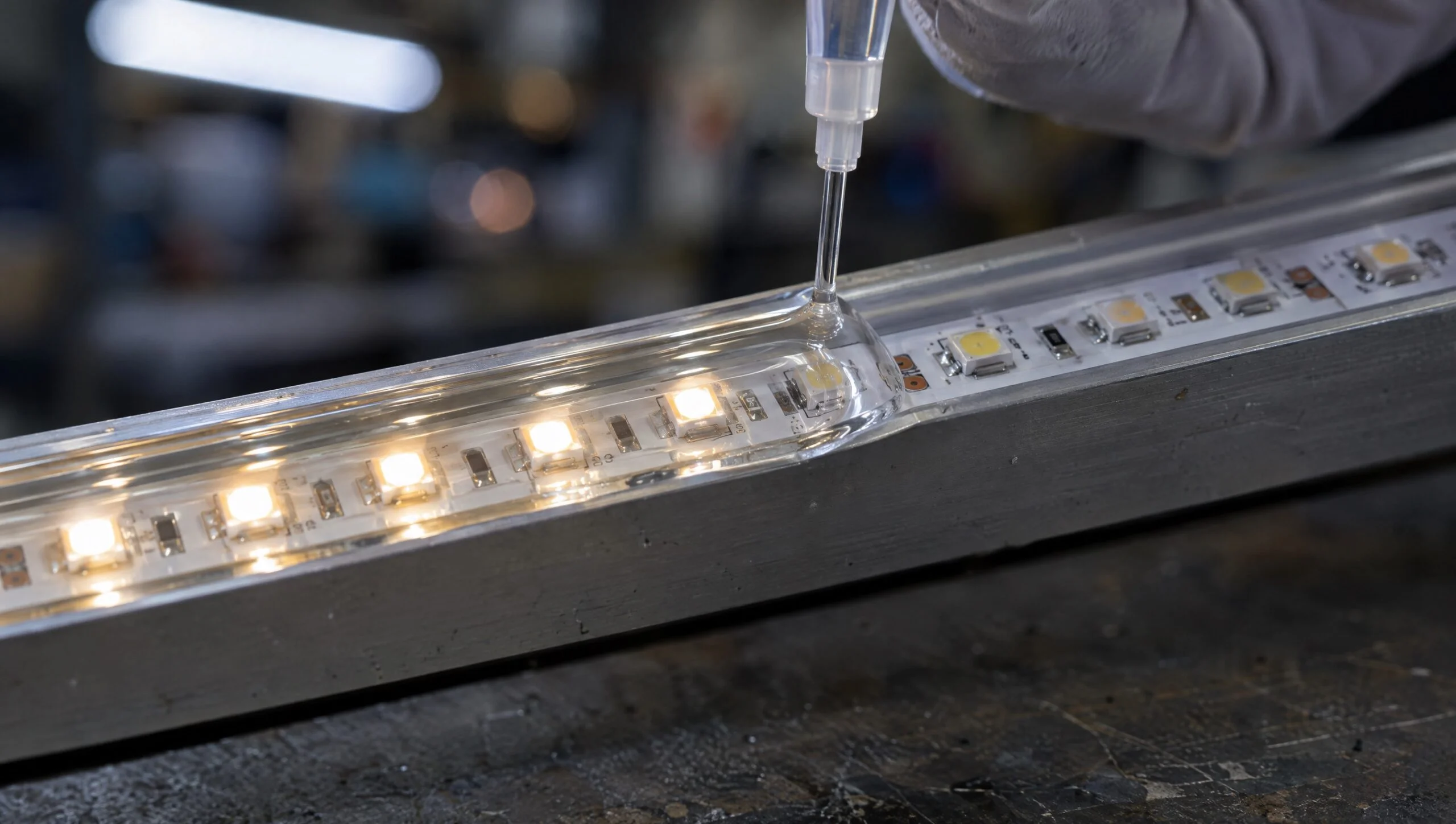
In potting, the resin can entirely or partially encase the circuit and its components.
Generally, the primary goal is to protect the electronics from the external environment and provide mechanical protection for the electronic device against impacts, vibrations, and shocks.
Electrical insulation
Many encapsulants have dielectric properties and have been designed to electrically insulate components and connections.
However, the resin for electrical insulation must be evaluated alongside the other requirements of the application. Dielectric strength and insulation resistance are fundamental, but the material must maintain its characteristics even after exposure to the conditions expected during service.
Humidity, temperature, and contaminants can indeed influence the electrical reliability of the system over time.
Electrical windings and motors
Resins are also used in the protection of electrical windings, stators, rotors, and electric motors, where they can be applied through impregnation or encapsulation processes.
In addition to insulation, these applications may require thermal resistance, protection from humidity and fluids, and, in high power density systems, a greater capacity to transfer heat.
The resin must therefore be chosen by considering both the production process and the operating conditions of the motor.
Heat dissipation
Miniaturization, the increase in component density on the electronic board, and the increased use of power modules make thermal management an increasingly important parameter.
A thermally conductive encapsulant can combine circuit protection with heat transfer toward the housing or toward a dissipating surface.
It is not sufficient to exclusively compare the nominal thermal conductivity value: geometry, thickness, filling, interfaces, and application process influence the actual behavior of the system.
Lighting and optical applications
In LED and lighting applications, the optical behavior of the material can also become decisive.
The range includes high-transparency polyurethane and silicone encapsulants and formulations developed to maintain optical performance in demanding operating conditions.
In these systems, transparency, material stability, the polymerization process, and behavior at operating temperatures must be considered together.
How to choose the potting resin
The selection of a resin for electronics should start from the conditions in which the device will actually operate.
Temperature and thermal cycles
It is not only the maximum temperature that should be considered.
A device that continuously shifts from low to high temperatures can be subjected to significant stress due to the different expansion coefficients of the materials that make up the assembly.
Elastic modulus, flexibility, and behavior over time therefore become design parameters as important as the nominal thermal range.
Humidity, water, and chemical agents
It is necessary to precisely identify which substances will come into contact with the resin.
Water, salt water, oils, fuels, solvents, and other agents do not produce the same corrosive and aging effects, nor do two products belonging to the same chemical family necessarily offer the same resistance.
Mechanical stresses
Vibrations, impacts, and movements of the device require attention in the choice of material and its ability to absorb such stresses.
An encapsulant that is too rigid can transfer stresses to the interfaces and components, while a more flexible formulation can reduce stresses in dynamic applications.
Electrical properties
For dielectric encapsulants, dielectric strength, insulation, and stability of properties during the life of the device must be considered.
It is not only the initial value that matters, but the ability to maintain it after exposure to actual operating conditions.
Thermal management
When the PCB or components generate significant amounts of heat, the resin can become an integral part of the thermal path.
In this case, it is necessary to evaluate a thermally conductive formulation and consider the system as a whole, not just the single value reported in the technical data sheet.
Production process
The resin must also be compatible with the process.
Parameters to evaluate include:
- one-component or two-component;
- mixing ratio;
- viscosity and ability to fill cavities and complex geometries;
- pot life and gel time;
- room temperature or heat curing;
- possible need for primers or surface pretreatments;
- possible need for degassing;
- possibility of automating mixing and dispensing;
- future need to rework the circuit.
A material that is technically correct but incompatible with the production process cannot be used effectively.
Frequently asked questions
What is an encapsulation or potting resin?
An encapsulation or potting resin is a material used to encase and protect electronic components or assemblies. It can provide electrical insulation and protection from environmental and mechanical conditions, with different characteristics depending on the formulation and technology used. It is used when more substantial protection is required compared to a surface coating of the PCB.
How to protect an electronic board from humidity?
The solution depends on the level of protection required. For surface protection, a conformal coating can be used; when a more substantial barrier is needed, resins and encapsulants can be employed. The chemistry must be chosen by also considering temperature, vibrations, chemicals, and the possibility of rework.
What is the most suitable insulating resin for electronics?
There is no universally best insulating resin. Epoxy, polyurethane, and silicone encapsulants can all offer good dielectric properties, but they differ in rigidity, flexibility, thermal behavior, environmental resistance, and application process.
What is the difference between epoxy and polyurethane resin for electronics?
The difference depends on the specific formulation. In general, epoxy resins can offer high adhesion, rigidity, and chemical resistance, while many polyurethane systems prioritize toughness and flexibility and are available in formulations designed for humid environments or applications subjected to vibration. The choice must always be based on the actual requirements of the application.
When to choose a silicone encapsulant?
Silicone encapsulants are particularly suitable when flexibility, stress management, stability over wide temperature ranges, and reliability during repeated thermal cycles are required. However, aspects such as adhesion, cost, and compatibility with applications sensitive to contamination must also be evaluated.
Potting resins and encapsulants: the Mascherpa range
The Mascherpa range includes electronic encapsulants based on different technologies and brands, including:
- DOWSIL™,
- SYLGARD™,
- Electrolube,
- Huntsman ARALDITE®,
- Huntsman ARATHANE®,
- MG Chemicals.
The availability of different chemical families allows for starting not from a predetermined technology, but from the project requirements.
An effective selection considers:
- actual operating conditions;
- temperature and thermal cycles;
- materials present in the PCB and in the electronic device assembly;
- exposure to water, humidity, and chemicals;
- vibrations and mechanical stress;
- electrical insulation;
- heat dissipation;
- geometry and quantity of material to be dispensed;
- production process.
Mascherpa supports companies in the choice of the most suitable technology and formulation and in the definition of the application process, evaluating material, application, and operating conditions together.
Discover the range of electronic resins and encapsulants or contact Mascherpa experts to identify the right solution for your application.