Key Points
- Core materials are the heart of sandwich structures in composite materials, as they allow for the combination of lightness and strength.
- The choice of core material affects not only performance, but also the production process and long-term reliability.
- 3D|CORE™ technologies introduce a structure that improves both mechanical behavior and resin flow.
- Every industrial sector requires specific characteristics, from impact resistance to durability in extreme environments.
- From marine to wind energy, the core material is no longer just a component, but an active part of composite material systems.
Core materials are one of the key elements in the design of composite materials. Within sandwich structures, they allow for high rigidity and strength while maintaining low weight, a fundamental characteristic today in almost all industrial sectors.
From nautical is applied to the automotive, through the rail sector and energy, the challenge is always the same: improving performance while reducing mass, consumption e costs throughout the entire product life cycle.
In this scenario, 3D|CORE™ core materials represent an evolution of the traditional core concept. This is not just astructural core, but a system designed to simultaneously improve mechanical behavior and the production process.
Below is an in-depth look at all the sectors where core materials are applied.
Index
- Applications of core materials in the marine industry
- The use of core materials in the rail sector
- Applications of core materials in road transport
- The role of core materials in automotive
- Applications in sports and leisure
- The role of core materials in design and architecture
- Applications of core materials in wind energy
- 3D|CORE™ core material technology
- Learn more about the role of core materials in different industrial sectors
Applications of core materials in the marine industry
In the marine industry, core materials are used in multiple structural components of the boat:
- hull,
- deck,
- interiors,
- keel,
- masts,
- booms,
- structural reinforcements.

Distribution is widespread because weight directly affects performance, consumption, and stability.
In this context, the designer must manage a delicate balance between lightness and strength, especially in aggressive environments subject to continuous dynamic loads.
Core materials must therefore guarantee:
- high shear and compression resistance,
- long-term durability,
- impact resistance,
- structural stability even under severe operating conditions.
The use of solutions such as 3D|CORE™ core materials allows for a significant weight reduction for the same strength, with a direct impact on both boat performance and fuel consumption. The structure of the core materials also allows for better stress distribution, contributing to increasing the service life of the components.
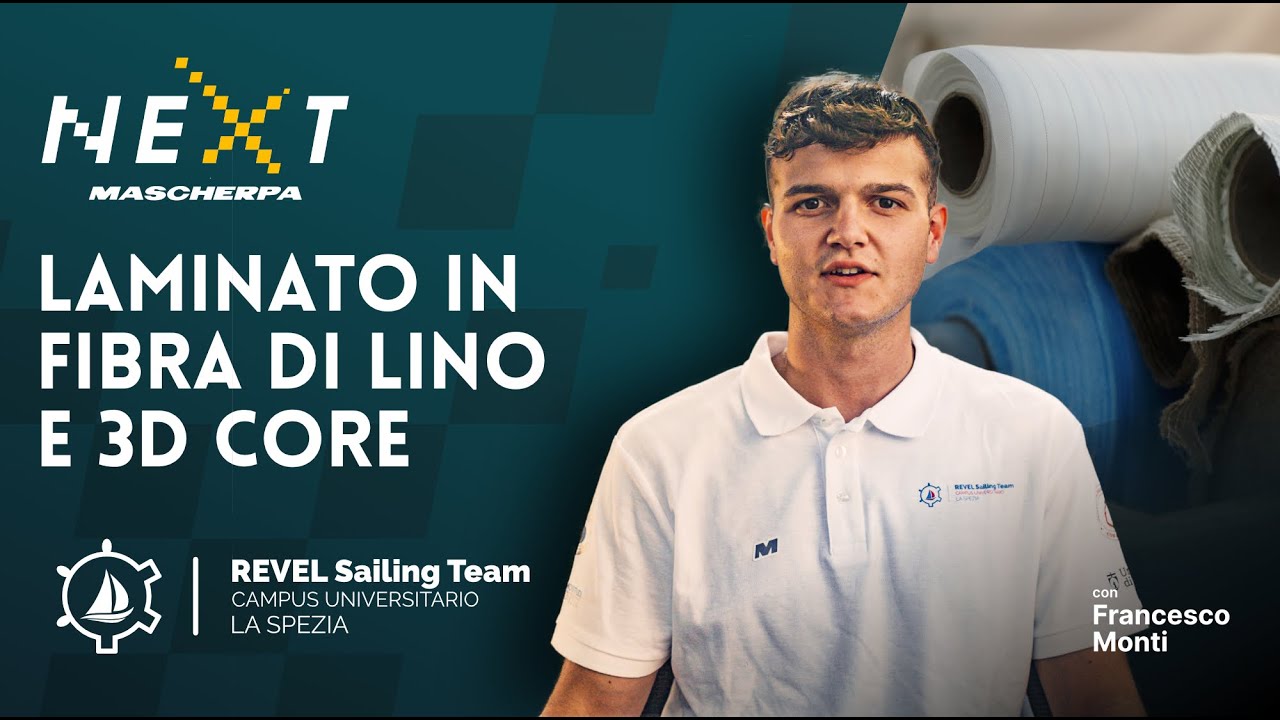
Core materials in the design of the Alba skiff with the Revel Sailing Team
In the Alba skiff project, developed by the Revel Sailing Team within the Mascherpa NEXT program, core materials played a central role in defining the sandwich structure of the hull.
Recycled PET 3DCore was used, chosen for its ability to adapt to the boat’s geometries and for its behavior during the infusion process. The The hexagonal structure of the material helped create an effective connection between the inner and outer skin, improving laminate cohesion and reducing the risk of delamination.
In particular, solutions such as 3DCore GR HX 75 have made it possible to increase structural rigidity without significantly affecting weight, leveraging the typical principle of sandwich structures. At the same time, the configuration of the core material facilitated the resin flow during infusion, improving the final quality of the component.
This approach highlights how the core material is not just a passive element, but an active part of the laminate behavior and the production process, in line with what occurs in the most advanced industrial applications.

The use of core materials in the rail sector
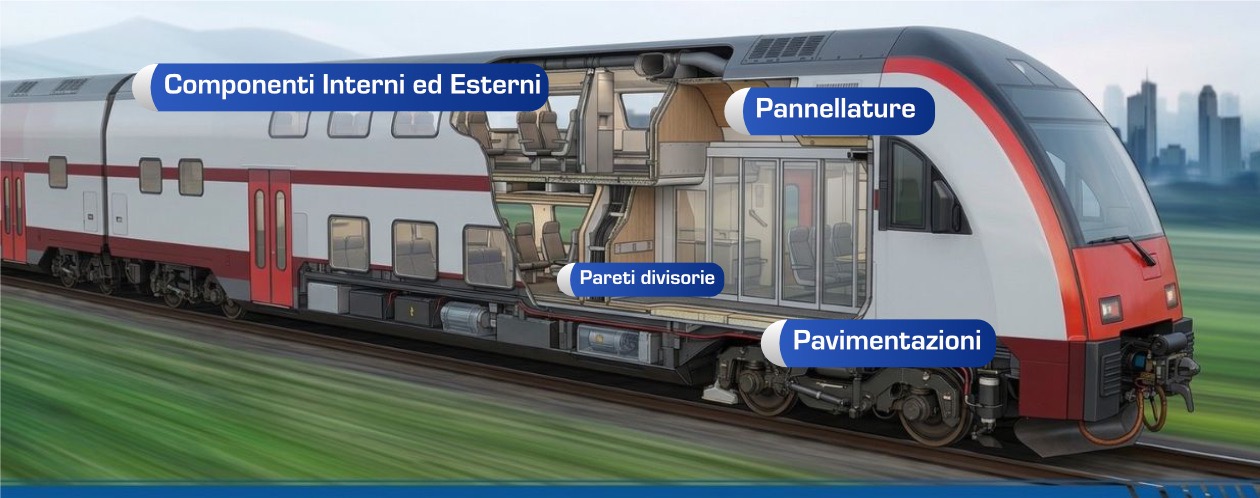
In the rail sector, core materials are used in:
- paneling,
- partition walls,
- flooring,
- internal and external components of the vehicle.
In this industrial sector, the issue is not only weight, but also safety and long-term durability.
Trains are designed to operate for decades, subjected to continuous cycles of acceleration and deceleration. Added to this are stringent regulatory requirements, such as compliance with fire safety standards.
For this reason, materials must meet precise requirements:
- fatigue resistance,
- dimensional stability,
- thermal and acoustic insulation,
- corrosion resistance,
- compliance with safety regulations.
In this context, core materials allow not only for the reduction of the overall weight of the vehicle, but also for the integration of multiple functions into a single component. This approach allows for the optimization of both design and maintenance in the long term.
Applications of core materials in road transport
In the transport sector, the use of core materials is mainly linked to the need to increase load capacity by reducing vehicle weight.
Core materials are used in paneling, flooring, and structural components, directly contributing to the overall efficiency of the vehicle.
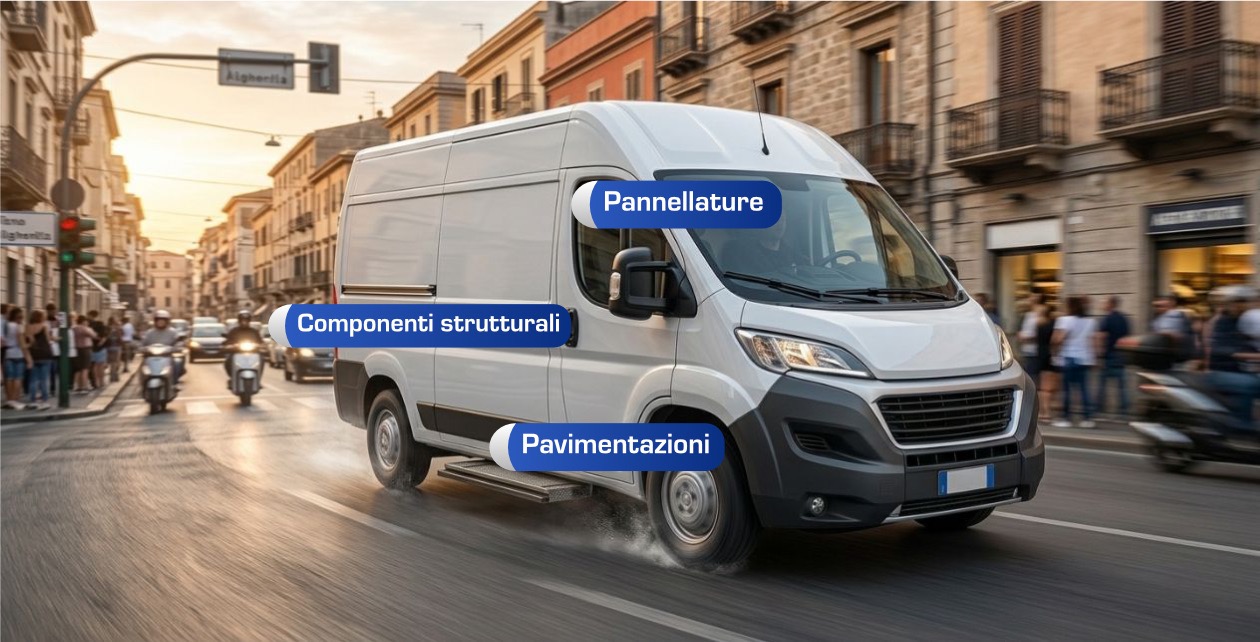
The main challenge is reducing mass without compromising structural rigidity. This is particularly relevant in commercial vehicles, where the ratio between weight and payload has a direct impact on profitability.
The advantages are concrete:
- greater load capacity,
- reduction in consumption,
- lower environmental impact,
- reduction in operating costs.
In this scenario, the use of advanced core materials allows for maintaining high mechanical performance even with reduced thicknesses, improving the efficiency of the system as a whole.
The role of core materials in automotive
In automotive as well, weight reduction has become an absolute priority, especially with the increasing complexity of vehicles and on-board electronics.
Core materials are used in components such as hoods, seats, structural panels e battery housings, where it is necessary to combine lightness, resistance e safety.
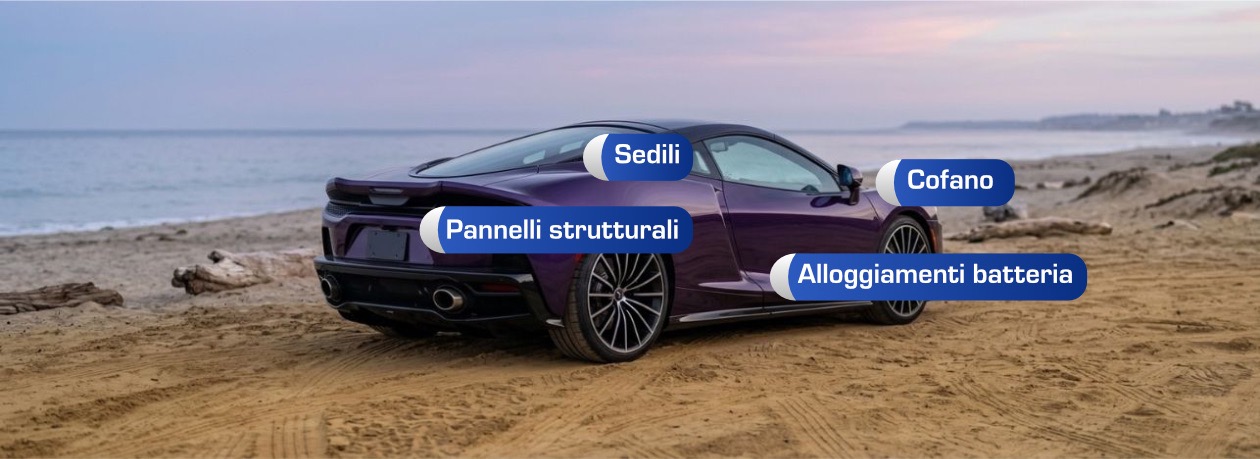
The main requirements concern:
- reduction of overall weight
- maintaining rigidity
- impact resistance
- ease of processing
The use of advanced core materials allows these needs to be met without compromising performance. Furthermore, the structure of the core material contributes to improving the behavior of the component under load, with benefits in terms of both safety and durability.
Applications in sports and leisure
In the sports sector, core materials are used in products that must guarantee high performance under high loads, while maintaining low weight.
We are talking about applications such as surfboards, snowboards, skis, canoes, and kayaks, where the behavior of the core materials directly influences the user experience.

In these contexts, core materials offer:
- flexural resistance,
- lightness,
- long-term stability,
- water resistance.
Closed-cell core materials, such as those used in 3D|CORE™ technology, do not absorb water and guarantee a homogeneous and durable structure. This is particularly important in water sports, where material degradation can rapidly compromise performance.
The role of core materials in design and architecture
In the architectural sector, core materials are used to create facades, panels, roofing, and complex design elements.
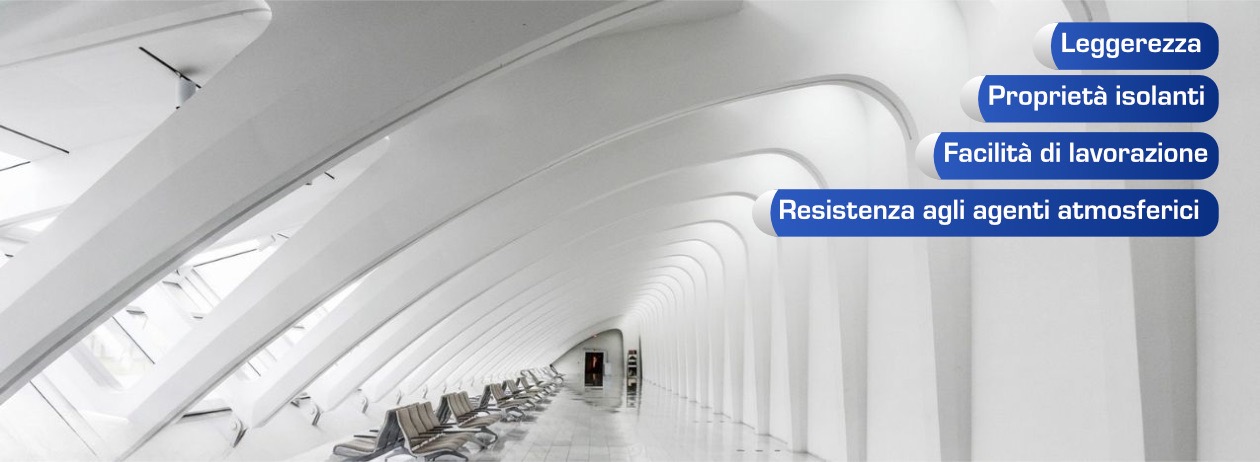
Here the focus is not only technical, but also design-oriented. Core materials must allow for formal freedom, installation speed, and cost reduction.
Required characteristics include:
- lightness,
- resistance to atmospheric agents,
- insulating properties,
- ease of processing.
3D|CORE™ materials allow for the creation of lightweight and complex structures, maintaining high stability and durability in both indoor and outdoor environments. At the same time, they contribute to reducing the consumption of raw materials and improving the efficiency of the construction process.
Applications in wind energy production
In the wind energy sector, core materials are fundamental for the creation of large-scale components such as rotor blades, nacelles, and spinners.

Here the main theme is production efficiency.
The design must take into account:
- large dimensions of the components,
- the need to reduce consumption,
- optimization of production times.
In this context, the use of solutions such as 3D|CORE™ Rolls allows for managing large surfaces more efficiently, while customized assembly kits allow for reducing times and production waste.
The result is a reduction in costs and an improvement in energy efficiency already in the production phases.
3D|CORE™ core material technology
The true distinguishing element of 3D|CORE™ core materials is not just the material, but the structure.
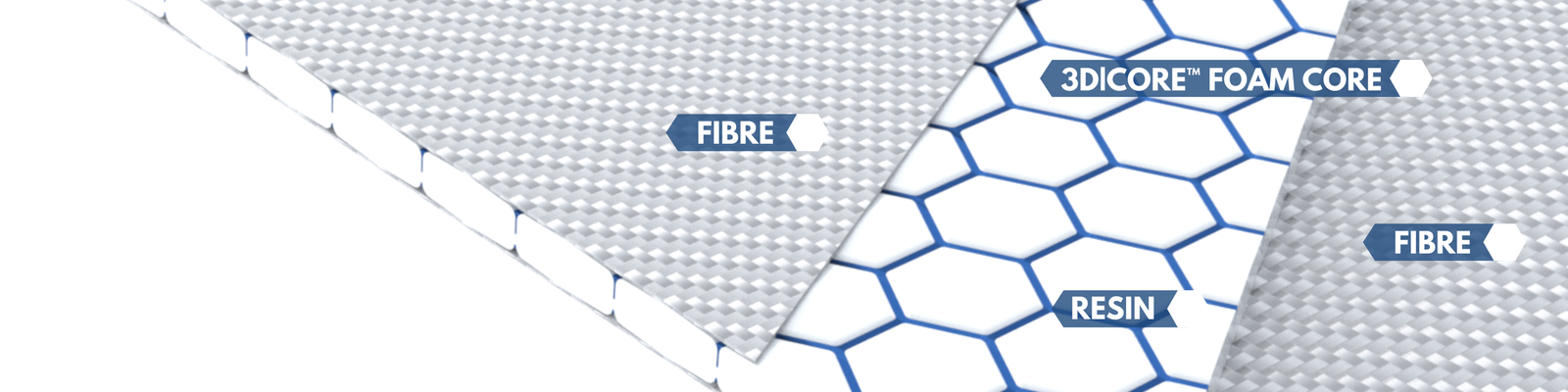
It is an integrated honeycomb configuration within a closed-cell foam core, designed to improve both mechanical behavior and the resin impregnation process.
This structure allows for:
- connecting the surface layers through the core materials,
- preventing delamination,
- ensuring a uniform distribution of the resin,
- improving the dimensional stability of the component.
From a mechanical point of view, the system behaves like a double-T structure, significantly improving performance compared to traditional cores, in compression as well as in shear and flexion.
At the same time, the internal structure acts as an integrated flow system, eliminating the need for auxiliary materials and making the production process faster and more controllable.
Learn more about the role of core materials in different industrial sectors
Core materials for composites are today a central element in industrial design. It is no longer just about choosing a core material, but about defining a system capable of optimizing performance, weight, and the production process.
In this context, solutions such as 3D|CORE™ represent a concrete evolution compared to traditional cores, allowing for more efficient handling of challenges across different industrial sectors.
For more information regarding core materials and their applications, contact our Mascherpa experts.