Key points of the article
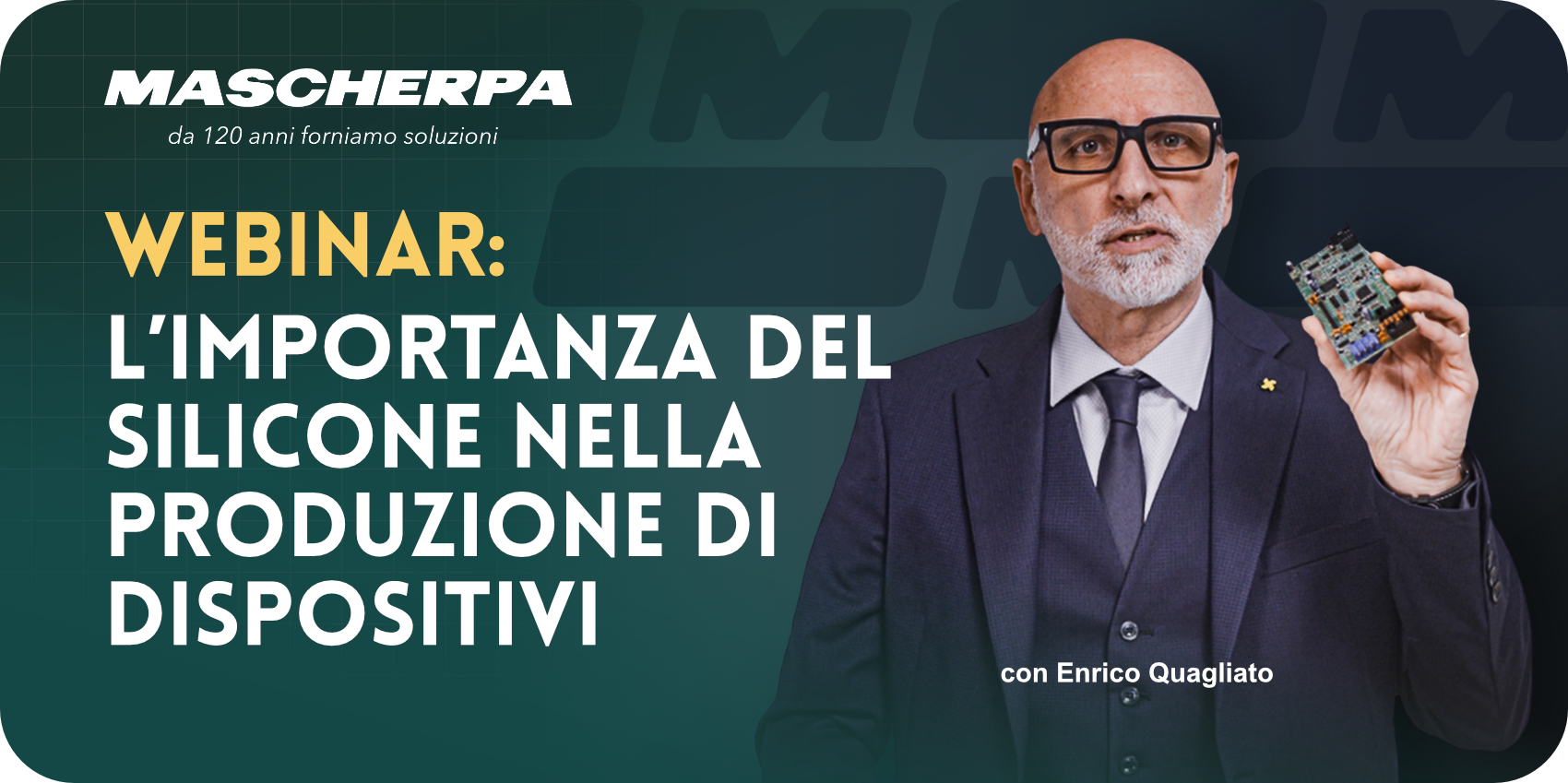
- Following the webinar dedicated to the importance of silicones in the production of electronic devices, we have collected the main questions that emerged during the meeting.
- Silicone has a release nature: if it contaminates certain areas of the PCB, it can compromise the adhesion of non-silicone conformal coatings.
- The choice of material must always consider application, chemical contact, type of exposure, and production process.
- For reworking activities, there are liquid and gel solutions for the removal of cured silicone.
- There are no universal answers: coatings, potting, adhesives, and silicone gels must be evaluated based on the actual project.
In the webinar held by Enrico Quagliato and dedicated to the importance of silicone in the production of electronic devices, we explored the role of silicone materials in the protection of PCBs and electronic components.
During the meeting, several questions emerged related to concrete application cases:
- adhesion of the conformal coating;
- silicone contamination,
- reworking,
- application of silicone products in the automotive sector,
- selective dispensing,
- differences between flowable and thixotropic products;
- combination of silicone and organic potting.
In this article, we have collected the answers provided by Enrico Quagliato, in order to offer a useful technical reference for those working in electronic protection.
Index
- Can a silicone like DOWSIL™ 744 contaminate the PCB and prevent conformal coating adhesion?
- Are there silicones suitable for medical, pharmaceutical, and food applications?
- Are there solvents for removing cured silicone residues?
- Is silicone suitable for automotive applications in contact with oils?
- Which Dow products are suitable for locking TH components on PCBs?
- Can a conformal coating dispensing machine use both silicone and organic products?
- Is it correct to apply an acrylic conformal coating first and then a layer of silicone?
- What is the difference between DOWSIL™ 3140 and DOWSIL™ 3145?
- Is it possible to apply a layer of silicone first and then an organic resin?
- Learn more about silicones for electronics
Can a silicone like DOWSIL™ 744 contaminate the PCB and prevent conformal coating adhesion?
Yes, it can happen. The point to consider is that only other silicone adheres to silicone. Consequently, if after applying a silicone product you proceed with a conformal coating of a different nature, for example acrylic or polyurethane, the coating will not adhere correctly in the areas contaminated by the silicone.
Silicone, by its nature, has a release behavior. This means that if it is used first for component locking and then a non-silicone conformal coating is applied, there will be no adhesion in the areas where silicone is present.
The solution, in these cases, can be to reverse the application sequence: apply the conformal coating to the PCB first and then the silicone for component locking.
Are there silicones suitable for medical, pharmaceutical, and food applications?
Yes, there are silicones intended for applications with specific approvals, for example for contact with food, drinking water or for use in the medical field.
Regarding electronic grade products, however, Mascherpa does not distribute silicones with these types of specific approvals for the medical, pharmaceutical, or food sectors.
The situation changes for some industrial applications. In the field of industrial silicones products with FDA approvals for contact with food or drinking water are indeed available.
So the answer must be distinguished based on the field of application: for electronics, products of this type are not available in the range distributed by Mascherpa, while for industrial use, solutions with dedicated approvals can be evaluated.
Are there solvents for removing cured silicone residues?
Yes, there are specific solutions for the removal of cured silicone, in both liquid and gel form.
The solvent is applied and left to act on the silicone layer to be removed. The time required depends on two main factors:
- the type of silicone to be removed;
- the thickness of the silicone layer.
Once the product’s action is complete, the area must be rinsed with deionized water.
This type of process can be useful in PCB electronic board reworking activities. For example, it allows you to remove a faulty electronic component, replace it and then re-apply the silicone, conformal coating or potting necessary to protect the board.
In the case of silicone, an important aspect is that the new silicone material can develop adhesion to the existing silicone previously applied.
Is silicone suitable for automotive applications in contact with oils?
In general yes, silicone can also be used in the automotive sector, including applications where contact with oils or other chemical substances is expected.
However, the evaluation must be made on a case-by-case basis. It is necessary to identify the most suitable product based on:
- chemical substance the material will come into contact with;
- type of exposure;
- permanent or accidental contact;
- actual operating conditions of the application.
The automotive sector widely uses silicones, especially in under-the-hood applications, where temperatures, vibrations, oils and other critical conditions are present.
Which Dow products are suitable for locking TH components on PCBs?
For locking TH components on PCBs it is possible to identify suitable Dowsil products, but the choice cannot be made generically.
In fact, it is necessary to evaluate:
- the specific application;
- the type of component;
- the geometry of the board;
- the application process;
- the expected operating conditions.
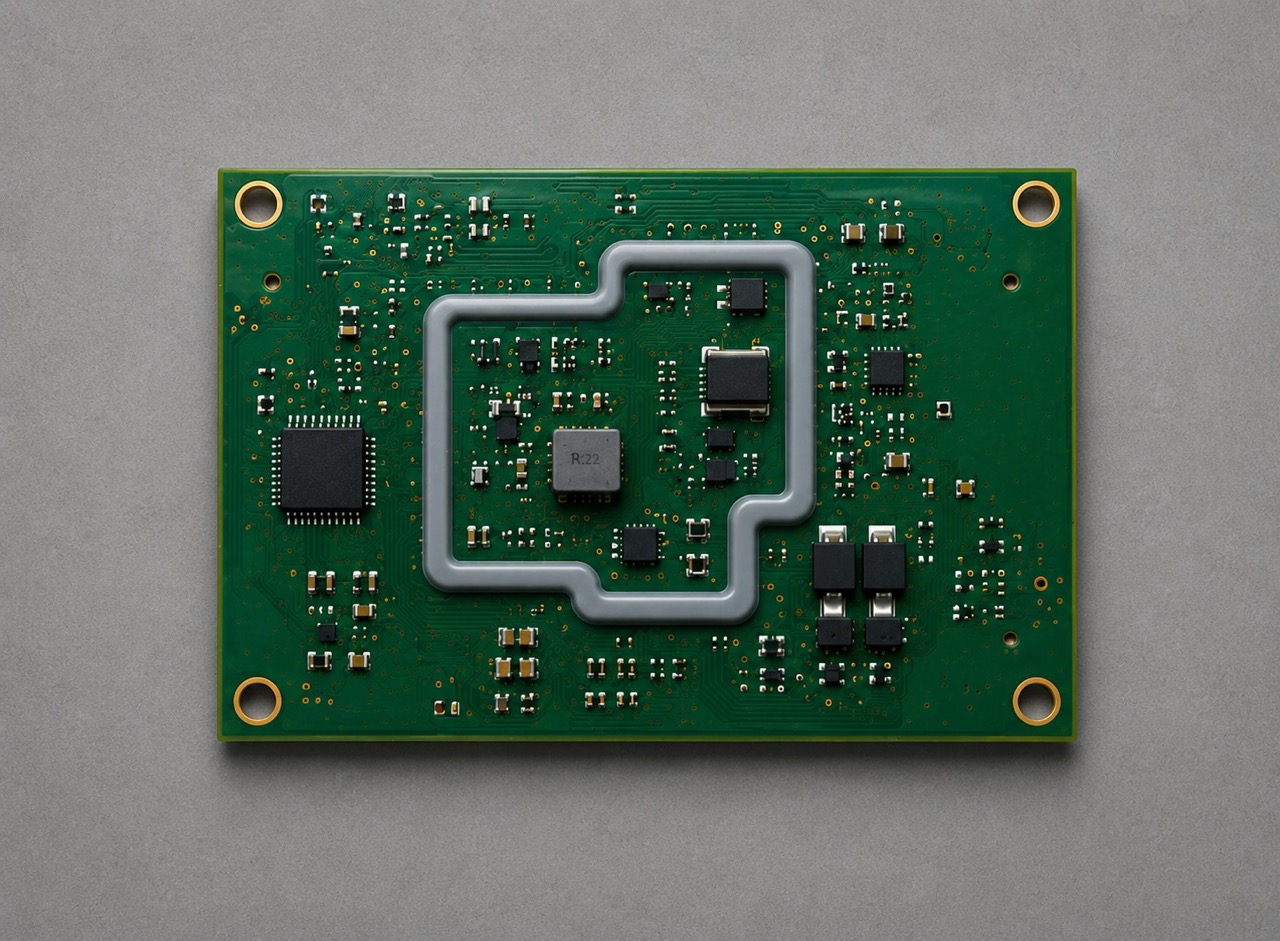
Among the most used solutions for this application is DOWSIL™ 744 RTV Adhesive Sealant, a one-part paste-like and non-slump silicone.
Contact our experts to understand which Dowsil product is best suited for your application.
Can a conformal coating dispensing machine use both silicone and organic products?
From the machine’s point of view, a selective conformal coating system can apply products of different chemical natures, such as silicone, acrylic or polyurethane.
The critical issue is another: having the same system work first with a silicone product and then with an acrylic or polyurethane product is strongly discouraged.
The reason is always linked to the release nature of silicone. Silicone residues inside the system can contaminate the organic conformal coating subsequently loaded, compromising its adhesion and performance. For this reason, the suggestion is to work with systems dedicated to the chemical nature of the product.
If, however, it were necessary to switch from a silicone to an acrylic or polyurethane coating, it would be necessary to replace tanks, hoses and proceed with a very thorough cleaning of the system. In this case, the system manufacturer will then identify the most suitable valve for spraying the specific material.
Is it correct to apply an acrylic conformal coating first and then a layer of silicone?
It may make sense, but there is no answer valid for all applications.
If during the design phase it was chosen to apply an acrylic conformal coating first and then a layer of silicone, this sequence probably responds to a specific need for device protection.
The evaluation should therefore be made by analyzing the technical reason for the choice: what must the first layer the protect, what must the silicone guarantee , what are the , what are the operating conditions e behaviors expected from the complete system.
? In other words, it is not an operation to be automatically considered correct or incorrect. It must be verified on the actual application.
What is the difference between DOWSIL™ 3140 and DOWSIL™ 3145?
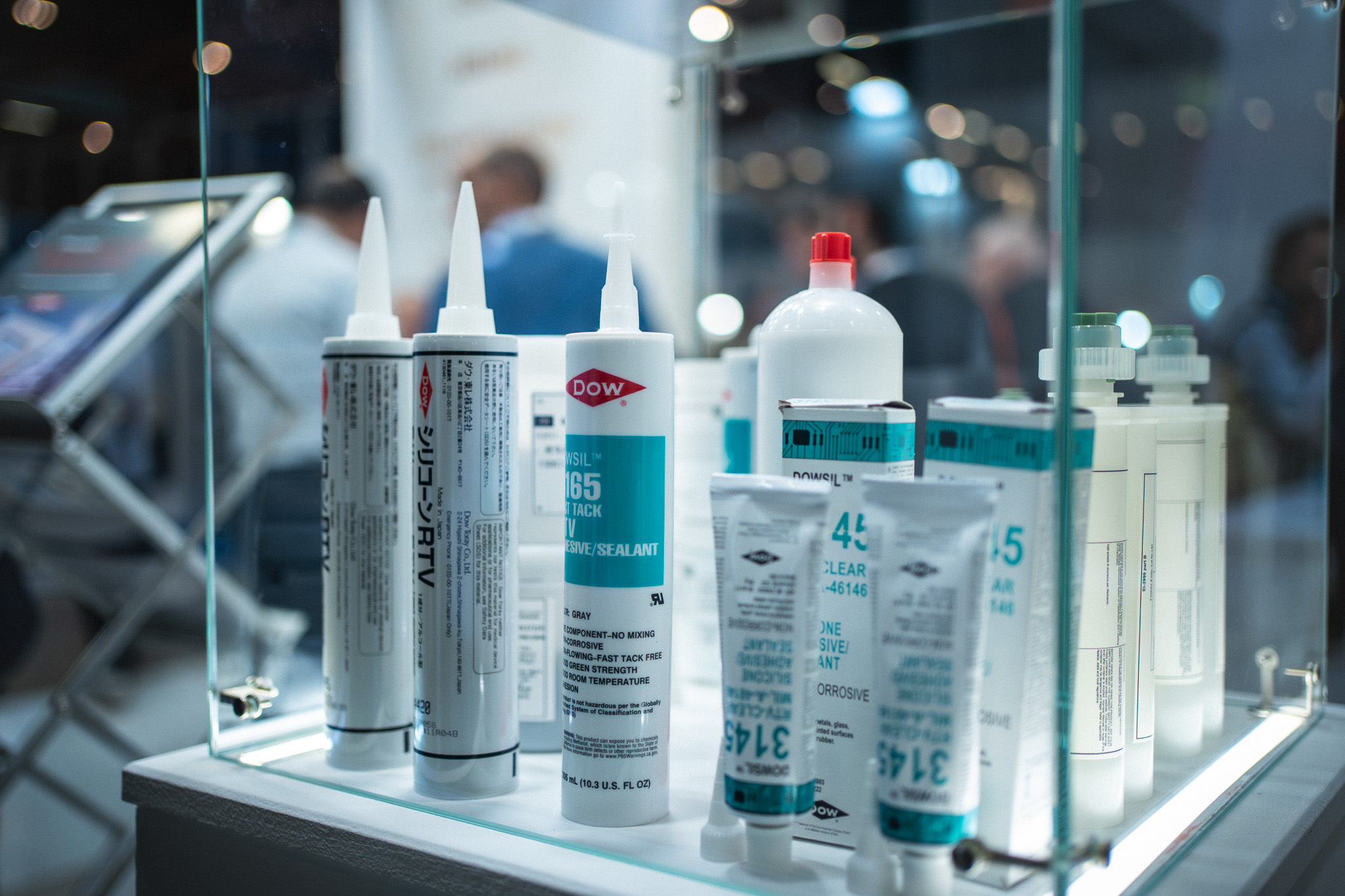
The main difference between Dowsil™ 3140 and Dowsil™ 3145 concerns the viscosity and therefore the behavior of the product after application.
Dowsil™ 3145 is a paste-like and thixotropic product. This means that it does not self-level: once applied, it remains in the area where it is deposited. Due to this property, it can be used when it is necessary to keep the material in a precise position, , create more high o thicknesses or fill certain .
Dowsil™ 3140, on the other hand, is a flowable and self-leveling product. After application it therefore tends to spread, occupying a wider area depending on its viscosity.
In summary: Dowsil™ 3145 is more suitable when a paste-like product is needed that stays in place at the point of application, while Dowsil™ 3140 is more fluid and tends to distribute over the surface.
Is it possible to apply a layer of silicone first and then an organic resin?
Yes, in some cases this technique can be considered. A typical situation is when you want to protect the PCB and electronic components from the stresses generated by organic resins that are stiffer or less capable of absorbing thermal expansion.
In these cases, a layer of silicone product can be applied first in direct contact with the PCB and then an organic potting, for example epoxy or polyurethane.
However, it is necessary to consider a fundamental aspect: there will be no adhesion between silicone and organic potting. For this reason, the organic potting can only adhere to the walls of the housing or other compatible surfaces.
This combination can still have a technical rationale. The silicone layer contributes to stress management , and the and expansion, while the organic potting can offer a surface stiffer protection and greater resistance to resistance extreme conditions corrosive gases or and aggressive chemicals.
In this way, some characteristics of silicone can be combined with those of an organic resin, but always after a specific application evaluation.
Learn more about silicones for electronics
The choice of a silicone for electronics should never be considered just as a product choice.
Adhesion, compatibility with conformal coating, interface behavior, chemical resistance, stress management, and application process are all aspects that influence the final reliability of the PCB and the electronic device.
To learn more about the topic, on the Mascherpa website you will find technical content dedicated to materials for electronic protection, conformal coatings, silicones and solutions to improve the operational continuity of PCB boards. You can also download our guide dedicated to silicones for electronics:
For more information on your application case and the specifications of silicone products for electronics, contact our Mascherpa experts.