Key points of the article
- RTV silicone is a technical material far more versatile than a simple sealant: it can be used to protect, bond, insulate, and dissipate heat.
- The RTV designation indicates the true advantage of the technology: the material vulcanizes at room temperature, without requiring high-temperature processes.
- Not all RTV silicones serve the same purpose: adhesive sealants, conformal coatings, and thermally conductive adhesives address very different application requirements.
- In electronics, RTV silicone plays a central role, as it helps protect PCBs, modules, and components from moisture, contaminants, vibrations, and thermal shock.
- Selecting the correct product does not depend solely on the RTV name, but on substrate, process, cure times, thermal requirements, dielectric properties, and operating conditions.
RTV silicone is a widely used technical solution when flexible, durable materials are needed that can be applied without resorting to high-temperature processes.
These products have the ability to adapt to different needs: from electronic component protection to industrial sealing.
To truly understand when to use it, however, it is important to start with the correct definition and the meaning of RTV technology.
Index
- What is RTV silicone and what does it mean?
- What is meant by room temperature vulcanization?
- RTV silicone and generic silicone: what is the difference?
- How to distinguish types of RTV silicone
- Advantages of RTV silicone
- Application sectors for RTV silicone
- How to choose the correct RTV silicone
- Why RTV silicone remains a cross-functional technical solution
What is RTV silicone and what does it mean?
RTV silicone is a silicone material that vulcanizes at room temperature. The RTV designation stands for Room Temperature Vulcanizing and indicates the material’s ability to polymerize without the use of high temperatures.
By RTV silicone we mean a silicone-based material that, after application, initiates a crosslinking process without the need for ovens or elevated heat. Once polymerized, the material becomes elastic, stable, and durable.
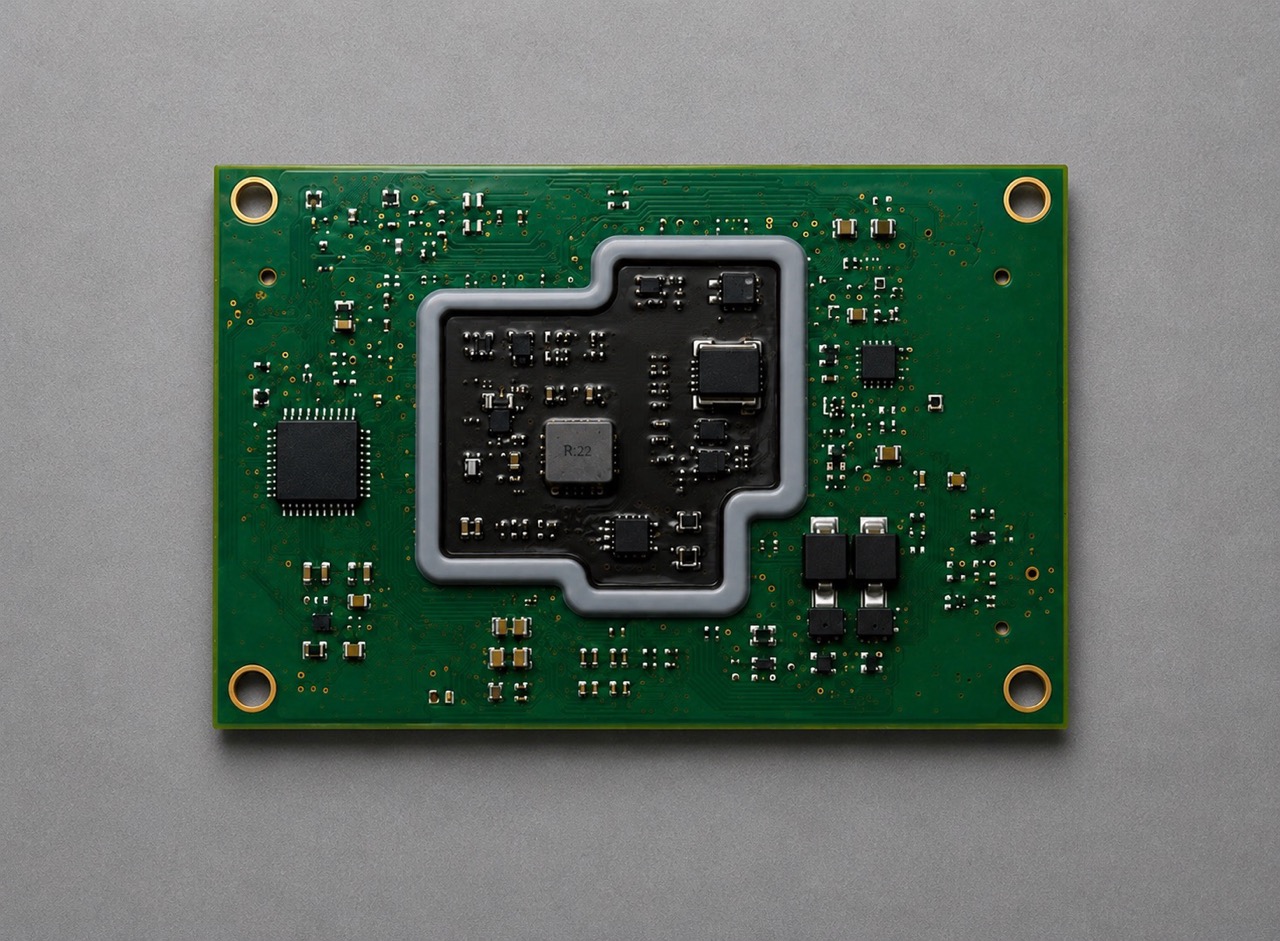
Depending on the formulation, an RTV silicone can be presented in liquid, paste, thixotropic, gel, or non-slump form. This variety allows it to be used both for precision applications, such as protecting electronic circuits, and for more industrial activities, such as sealing, bonding, and in-place gaskets.
What is meant by room temperature vulcanization?
Room temperature vulcanization is the process by which RTV silicone crosslinks without high temperatures, thanks to atmospheric moisture or a catalyst.
RTV technology allows silicone to transition from a workable state to an elastic and stable state. This process is particularly useful when the material must be applied to sensitive components, delicate surfaces, or complex geometries.
In one-component systems, often designated as RTV-1, polymerization occurs through moisture present in the air. The product is ready to use and crosslinks progressively after application.
In two-component systems, called RTV-2, the reaction begins with mixing of base and catalyst. This technology allows greater process control and is used primarily for silicone rubbers, potting, and industrial applications where precision and repeatability are required.
An important parameter in RTV-2 systems is pot life, which is the time within which the mixture can be worked after mixing. This determines mold quality, ease of application, and final result.
RTV silicone and generic silicone: what is the difference?
RTV silicone is a silicone, but not all silicones are RTV: the difference primarily concerns the polymerization system and the technical application of the material.
When discussing RTV silicone and silicone in a generic sense, we are not comparing two separate materials. RTV silicone belongs to the family of silicones. However, the RTV designation specifies that the material is formulated to vulcanize at room temperature.
The term silicone, on the other hand, is broader. It indicates a family of synthetic polymers based on silicon, oxygen, and other elements such as carbon and hydrogen. Within this family, different materials can exist in terms of consistency, curing process, and application function.
Therefore, the correct question is not “RTV or silicone,” but which type of silicone is needed for the specific application. An RTV silicone adhesive, an RTV adhesive, and an RTV silicone rubber are all silicone materials, but they address different needs: sealing, bonding, protecting, insulating, or reproducing details.
This distinction is important because in common language “silicone” is used generically. In technical contexts, however, it is necessary to understand whether the product is RTV, whether it is one-component or two-component, how it polymerizes, and what performance it guarantees.
How to distinguish types of RTV silicone
RTV silicones are distinguished by number of components, crosslinking system, consistency, and final application.
Discussing RTV silicone generically is useful for introducing the topic, but it is not sufficient for selecting the correct product. The main types to consider are:
- RTV silicone adhesives and RTV sealants;
- RTV thermally conductive silicone adhesives.
RTV silicone adhesives and RTV sealants
RTV silicone adhesives and RTV sealants are used when adhesion, elastic sealing, and stable protection on different substrates are required.
RTV sealants are designed primarily to seal joints, openings, covers, housings, or areas exposed to moisture and contaminants. RTV silicone adhesives have a function more oriented toward adhesion and fixation.
In industrial practice, these functions often overlap. This is why we speak of RTV silicone adhesive sealants: products that bond and seal in the same process, maintaining an elastic and stable joint after polymerization.
| Product | Type | Applications | Key Characteristics |
| DOWSIL™ 7092 High Green Strength Adhesive and Sealant | One-component silicone adhesive sealant | Bonding and sealing of glass, metals, and plastics where rapid handling of assembled parts is required. | – instant green strength; – room temperature cure; – excellent adhesion to glass, metals, and plastics; – paste-like, non-slump consistency; – durable and flexible rubber after cure; – does not require temporary supports for strength buildup. |
| DOWSIL™ 7091 Adhesive Sealant | One-component silicone adhesive sealant | Bonding and sealing on metals, glass, and plastics in applications requiring high adhesion and flexibility. | – alkoxy cure system; – room temperature cure; – paste-like, non-slump consistency; – easy to apply; – durable and flexible rubber after cure; – excellent adhesion to numerous substrates. |
| DOWSIL™ 7093 Adhesive Sealant | One-component silicone adhesive sealant | Sealing and bonding applications requiring high movement capability and good adhesion to various substrates. | – alkoxy cure system; – room temperature cure; – paste consistency; – low modulus for high movement capability; – good adhesion to numerous substrates; – easy application. |
| DOWSIL™ 7094 Flowable Sealant | One-component self-leveling silicone adhesive sealant | Sealing of components and assemblies on metals, glass, and plastics requiring a flowable, self-leveling material. | – alkoxy cure system; – flowable and self-leveling; – excellent primerless adhesion to many substrates; – non-corrosive to metals; – primerless adhesion to mixed substrates. |
RTV thermally conductive silicone adhesives
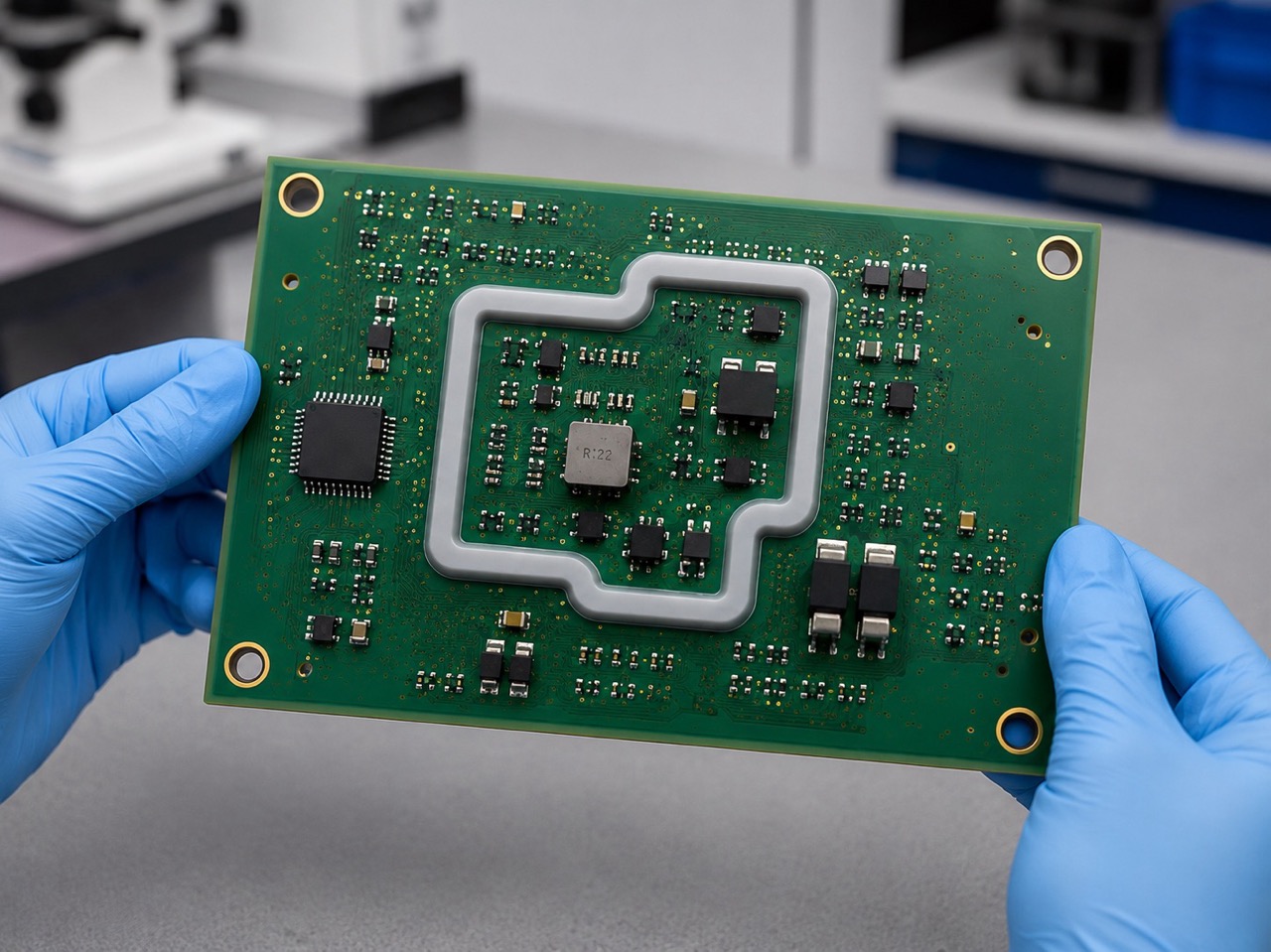
RTV thermally conductive silicone adhesives combine adhesion, protection, and heat management.
This type is used primarily in electronics, power electronics, power modules, sensors, inverters, and converters. In these cases, RTV silicone must not only bond or seal, but also contribute to heat transfer toward heat sinks or exchange surfaces.
Selection requires precise technical data:
- thermal conductivity;
- dielectric properties;
- viscosity;
- hardness;
- cure time;
- substrate adhesion;
- temperature range.
| Product | Type | Applications | Key Characteristics
|
|---|---|---|---|
| DOWSIL™ SE 9184 RTV Adhesive | Heat-conductive adhesive | Applications requiring higher thermal conductivity and greater flame resistance. |
|
| Electrolube RTV Thermally Conductive Oxime TCOR | Thermal conductive paste | Electronic components, heat sinks. |
|
| DOWSIL™ EA-9189 White RTV Adhesive | Heat-conductive adhesive | Printed circuit boards PCBs, heat sinks. |
|
Advantages of RTV silicone
RTV silicone is chosen because it combines room temperature workability, elasticity, durability, and adaptability to many industrial applications.
The first advantage is polymerization without high temperatures. This allows the material to be applied to sensitive components, electronic circuits, and delicate substrates without subjecting them to aggressive thermal stress.
A second advantage is flexibility. After crosslinking, RTV silicone maintains elastic behavior that makes it suitable for sealing, absorbing vibrations, compensating for expansion, and protecting components subject to movement.
RTV silicones are also valued for their resistance to heat, moisture, weathering, UV rays, and various chemicals. In the electronics sector, a decisive advantage is electrical insulation, useful for protecting circuits, modules, and components from dust, contaminants, and short circuits.
Application sectors for RTV silicone
RTV silicone is used in many sectors because it can seal, bond, insulate, protect, or reproduce details with precision.
RTV silicone applications are broad because the technology can be adapted to different needs. Some products are developed for electronics, others for gaskets, industrial sealing, or protection in complex environments.
RTV silicone for electronics
In the electronics sector, RTV silicone protects circuits, modules, and components from moisture, dust, vibrations, contaminants, and thermal shock.
Electronics is one of the most important areas for industrial RTV silicones. Here the material is used to protect sensitive components and improve the reliability of devices and systems.
Applications include printed circuit boards, electronic modules, housings, covers, power components, sensors, inverters, converters, and control units. RTV silicone can perform functions of:
- sealing;
- bonding;
- electronic protection;
- electrical insulation;
- mechanical stabilization;
- encapsulation.
In this field, brands such as DOWSIL™ represent important references for adhesive sealants, protective materials, potting, and industrial electronics solutions.
| Product | Type | Applications | Key Characteristics
|
|---|---|---|---|
| DOWSIL™ SE 9188 RTV Adhesive | Electronics adhesive | Printed circuit boards PCBs, covers and housings. |
|
| DOWSIL™ 744 RTV Adhesive Sealant | Electronics adhesive | Battery, printed circuit boards PCBs, covers and housings |
|
| DOWSIL™ 3145 RTV Mil-A-46146 Adhesive / Sealant | Electronics adhesive | Electrical cables, printed circuit boards PCBs, covers and housings, thermal interface |
|
| DOWSIL™ 3165 Fast Tack RTV Adhesive Sealant | Electronics adhesive | Electrical cables, printed circuit board PCBs, covers and housings, thermal interface |
|
RTV silicone conformal coatings for PCBs
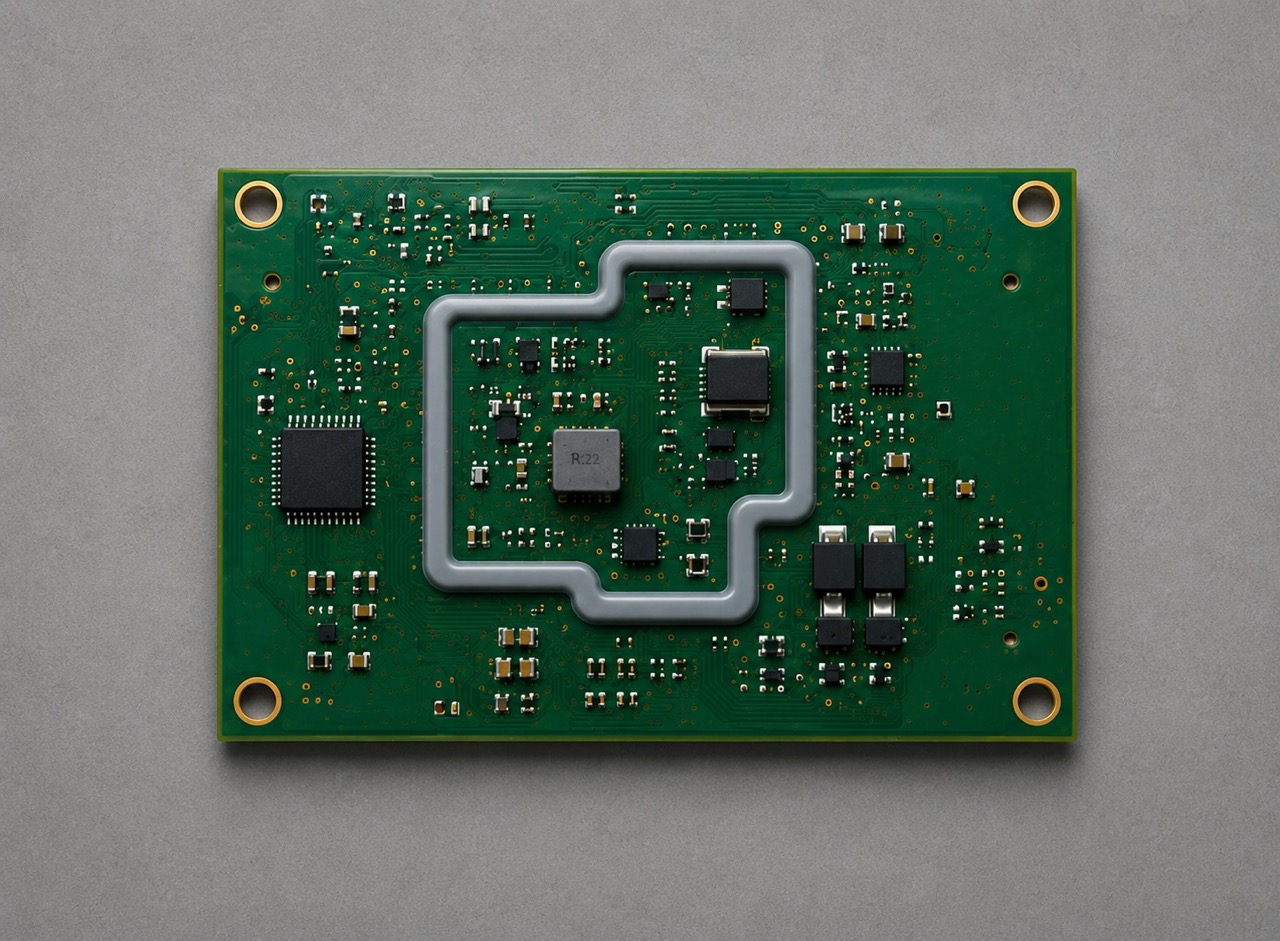
RTV silicone conformal coatings protect printed circuit boards and electronic boards by creating a thin, insulating, and durable coating.
In the electronics sector, an important part of RTV solutions concerns conformal coatings. These coatings are applied to PCBs and electronic circuits to help protect against moisture, contaminants, abrasion, and stress.
Compared to an adhesive sealant, a conformal coating has a more specific function: it does not primarily serve to bond or fill, but to create a protective coating that conforms to the board geometry.
| Product | Type | Applications | Key Characteristics
|
|---|---|---|---|
| DOWSIL™ 1-2620 Dispersion RTV Elastoplastic Conformal Coating | Conformal coating | Printed circuit boards PCBs, electronic circuit protection. |
|
| DOWSIL™ SE 9189 L RTV | Conformal coating | Electronic protection. |
|
| DOWSIL™ 3-1944 RTV Coating | Conformal coating | Printed circuit boards PCBs, electronic circuit protection. |
|
| DOWSIL™ 3140 RTV Coating | Electronics adhesive / RTV coating | Printed circuit boards PCBs, electronic circuit protection. |
|
RTV silicone for aerospace and defense
In the aerospace sector, RTV silicone is chosen when stability, reliability, and protection of critical components are required.
In aerospace and defense, RTV silicone adhesive sealants can be used to protect electronic modules, seal wiring, stabilize components, and support applications subject to vibrations, thermal shock, and high technical requirements.
In these contexts, product selection depends on rigorous specifications. Thermal stability, mechanical strength, low volatile emissions, reliable adhesion, and compliance with industry standards may be required.
Among the products indicated for technical applications is DOWSIL™ 3145 RTV Mil-A-46146 Adhesive / Sealant, a one-component silicone adhesive sealant with room temperature cure, high thermal stability, and MIL-A-46146 Group II/III, TY I certification.
How to choose the correct RTV silicone
Choosing the correct RTV silicone depends on application, substrate, process, cure times, and required performance.
To select an RTV silicone, start with the application, not the generic category. The same designation can indicate very different products.
For electronic applications, consider electrical insulation, protection from moisture and contaminants, thermal shock resistance, compatibility with PCBs and components, elastic modulus, and long-term stability.
For industrial adhesives and sealants, substrate adhesion, chemical resistance, elasticity, temperature behavior, cure times, and application method matter.
For RTV thermally conductive silicone adhesives, even more specific data are required: thermal conductivity, dielectric properties, thermal stability, and compatibility with heat sinks, modules, and electronic components.
Why RTV silicone remains a cross-functional technical solution
The value of RTV silicone lies in its ability to adapt to different needs while maintaining a clear technical principle: polymerize at room temperature and transform into a flexible, stable, and functional material.
Therefore, discussing RTV silicone does not mean discussing a single product, but a technology applicable to different contexts and various industries. The correct choice always requires an evaluation of substrate, application method, process times, operating conditions, and final performance.
For more information on RTV silicones and to evaluate whether these products are the right solution for your application, contact our Mascherpa experts.